|
• Actual: How did America Get its Name?
• Middle East Update
• The Most Incredible Adventure?
• Illustrated Catechism for Dummies
• The Vision
BLOG – Thought of the Month
“Stop believing, and learn.” André Gide
“Where there is knowledge, it will pass away. For we know in part and we prophesy in part, but when perfection comes (Christ or Messiah), what is in part disappears”. Paul, 1 Corinthians 13
Every month a sharing of ideas linked to current events.
Thought of the Month — 2026
Thought of the Month — 2024 - 2025
Thought of the Month — 2022 - 2023
October 2026
Like apples of gold in settings of silver is a ruling rightly given. Like an earring of gold or an ornament of fine gold is the rebuke of a wise judge to a listening ear. Like a snow-cooled drink at harvest time is a trustworthy messenger to the one who sends him; he refreshes the spirit of his master. (Proverbs 25:11-13)
How Do We Handle Correction ?
Having it demonstrated that you are wrong about a point—a point that might be the only thing you thought you knew—is never easy to accept. However, if you can summon the humility needed to embrace this challenge to your convictions and then learn things the right way, it can change your life.
Paragraphs:
1. You are Deeply Mistaken
2. “Don't get Offended”
3. Through Gentle Whispers
4. Will God make an exception for Me?
5. God is Wary of the Wise
6. A Personal Example
7. About Gwen Shaw
8. The Walls and Gates of Jerusalem
9. But What Is Jerusalem ? (updated on October 5)
10. What did Jesus Say about the Tribes?
11. Will Gentiles be Admitted in the City ?
12. Where is Our Inheritance?
13. Two Telling Examples
14. About Zebulun
15. About Issachar
16. Understanding the Times (updated on October 10)
17. How To Conclude ? (updated on October 5)
• Links and Teachings Picked This Month (Will be Completed)
You are Deeply Mistaken.
In Mark 12:18, Jesus had to answer the Sadducees—who asked Him a question about the resurrection of the dead even though they were known not to believe in it—by pointing out that their very question proved they were gravely mistaken, for they understood neither the Scriptures nor the power of God.
Jesus repeatedly rebuked Peter for his hasty assumptions. Nicodemus was a leading teacher of Israel in matters of religious learning. He came to Jesus by night to ask his questions; Jesus then shattered his certainties with a single sentence and revealed a truth he was incapable of grasping. Saul of Tarsus was a prominent figure in the realms of religion and theology. The account of his encounter with Jesus on the road to Damascus—and how he was struck blind by a brilliant light just as he believed he had unmasked the machinations of this new sect—has gone down in history as a classic and unforgettable episode. In the Old Testament, Saul refused to heed the challenge posed by David’s attitude; instead of learning from his example and aligning himself with the Spirit of God, he sought to pin David to the wall. We also know the story of the young prophet sent to deliver a specific message (1 Kings 13). He obeyed, but crossed paths with an older prophet who—likely feeling somewhat unsettled at being outdone on his own turf by this newcomer—ended up setting a trap for him, an act that cost the young prophet his life. I sometimes pray that I never turn bitter and risk derailing someone's destiny. Jesus has His own way of dealing with young prophets, and He knows how to guide them.
“Don't Get Offended”
Are we driven by our emotions or guided by faith? When we allow ourselves to be led by our emotions, it is easy to feel offended or to offend others. John Bevere wrote an excellent book titled *The Bait of Satan*, which addresses the very issue of offense. When we feel offended, we should thank God and realize that there is something within us that needs to die; otherwise, it risks becoming an obstacle at some point in our spiritual journey. Indeed, numerous biblical passages show us that God’s thoughts are not always our own and that His way of acting differs greatly from our impulsive reactions. In the Gospel of Matthew (11:6), Jesus declares: “Blessed is the one who does not stumble because of me!” (or "who does not take offense at me"), thereby emphasizing that true faith does not waver when God’s ways differ from our expectations. The Book of Proverbs (19:11) states: “Wisdom makes a man slow to anger, and it is to his honor to overlook an offense,” teaching us that it is honorable not to dwell on minor slights.
Through Gentle Whispers
Elijah was a man of authority and command. After putting to death the four hundred priests of Baal appointed by the godless Queen Jezebel, he fell into depression. This level of authority was more than he wished to bear, and he was losing sight of his God. He had to relearn how to hear God’s voice in the whisper. Sometimes we come to God, intoxicated by a new sense of authority and the revelations His Spirit imparts to us, and we enter His garden trampling over His flowerbeds. That is how King Saul lost his kingship. Moses, too, had to be brought to order. He had accomplished great things in Egypt, but when he approached God’s presence, it was revealed to him that he must first remove the sandals from his feet. We sometimes wonder why God remains silent. "Why do You not answer me, O God?" Perhaps He has already answered, but His reply is so far removed from what we are willing to hear—and His thoughts so much higher than ours—that we fail to perceive what He is whispering to our hearts. In reality, the entire process of knowing God’s will hinges on learning to listen. For God established His will from all eternity, and it is found in His Word. From the first day of Creation, God has been speaking, and Jesus is His Word made flesh.
Will God Make an Exception For Me?
Can we twist God's arm to make Him change His mind? Have you ever seen one of those children who know how to stare their mother in the eye until she gives in to their whim? “I so much want that toy, c'mon”. “I want to go our with my friends, c'mon, Mum”. “Can't I have sex with my girlfriend before marriage? C'mon, God, I guess if we love each other, it is all right, isn't it?” Some pastors and priests would even agree. How do I know? I know. … And then, they eventually realize they don't like that toy, and they break it into pieces. But what does the Bible say? “How shall the young man keep his path pure? By directing it according to Your word”. (Psalm 119:9). 1 Thessalonians 4:3-8: States that God's will is for believers to avoid sexual immorality and control their own bodies in holiness and honor, rather than in passionate lust like those who do not know God. 1 Corinthians 6:18-20: Commands believers to "flee from sexual immorality," noting that sexual sin is uniquely a sin against one's own body and that bodies are temples of the Holy Spirit. Hebrews 13:4: Declares that "marriage should be honored by all, and the marriage bed kept pure, for God will judge the adulterer and all the sexually immoral. 1 Corinthians 7:2: Advises that "because of the temptation to sexual immorality, each man should have his own wife and each woman her own husband," presenting marriage as the appropriate boundary for sexual expression. Galatians 5:19-21: Lists "sexual immorality" and "impurity" among the "works of the flesh" that prevent people from inheriting the kingdom of God.
The Bible has answers for all our questions, and it's either: we believe all of it and we don't pick and choose, of we reject all of it.
God is Wary of Those who consider Themselves Wise, but He Rewards Those whom He can Trust.
Hebrews 12:10 says: “Our fathers disciplined us for a short time as they saw fit; but God disciplines us for our own good, that we may share in His holiness. It is true that all discipline seems at first a cause for sorrow rather than joy; but later it yields the peaceful fruit of righteousness to those who have been trained by it”. We can easily accept being corrected on matters of discipline. But how do we react when it touches upon what constitutes our identity, our gifts, or our pride?
“Let few of you seek to teach the Bible, for you will be judged more strictly”. This is another area where we must remove our sandals before venturing in. What about prophecy? God encourages us to seek the precious gift of prophecy. But He also warns us that this is holy ground. He takes speaking in His name so seriously that, under the Old Covenant, false prophets who repeatedly invoked His name in vain were put to death. Not only is it wrong to seek to please men, but it is even worse to use prophecy to exercise dominion over people.
Let me Share a Personal Example
God recently corrected me through a dream. He showed me instances where I had taken liberties in interpreting biblical concepts, and how those flawed interpretations ultimately strayed from the truth and became misleading. To take one example: I have long been interested in the tribes of Israel. Not so much because they represent the history and identity of the people of Israel, but rather because I instinctively knew that each of these tribes represents a spiritual identity—a set of characteristics meant to form our heritage and to guide us in our choices. Knowing how God has blessed us can truly help us become the person He intends us to be and understand our place in the mosaic of humanity. This knowledge can also make us more attuned to how God leads us toward a ministry team, a work partner, or even a spouse. Of course, this knowledge is meant to equip us, but it must never replace the leading of the Holy Spirit, nor become a guide or an end in itself. In reality, God is the one directing this design. If we allow Him to lead us by His Holy Spirit, we will find that He has guided us to the person with whom we are truly "equally yoked." For while compatibility exists, there are also people with whom resolving compatibility issues would consume a vast amount of our energy.
Have you Ever Heard of Gwen Shaw?
If that is the case, you are likely not as young as you once were. Gwen Shaw, a native of Canada—a servant of God born on October 1, 1924, who now dwells in heavenly glory—taught on the subject of the tribes of Israel. Some viewed her as a heretic due to her unconventional teachings. Having endured the monotony of evangelical churches for too long, I found her teachings all the more appealing. She lived a life of deep devotion to the Lord, and works such as *Pour Out Your Heart* became a source of inspiration for many people's prayer lives. I was fortunate enough to attend a seminar organized by Messianic Jews in the south of France, where she addressed this topic alongside other edifying themes—a complete revelation to me at the time. That was back in the 1980s, when I was still a young believer. The teaching spanned three short sessions and culminated in a rather dense summary. Yet, it was enough to pique my curiosity. I obtained the recordings and later acquired her books—excellent works, in my opinion, and quite unique in their subject matter. Perhaps the fact that I had been "corrupted" by astrology before becoming a Christian drove me to seek to redeem that knowledge. Astrology had taught me that people are born with certain tendencies and characteristics. Through this teaching, I could now access a different, biblical perspective on human families. However, knowledge is only useful when it is practical; I therefore attempted, through various clues and forms of revelation, to discover which tribe I belonged to and the identities of my family members. One day, as I was baking a cake and listening to the recording, the teacher mentioned her love for French pastry as she was talking about a particular tribe that produces delicacies. I had my moment of revelation. I also identified my family members based on similar criteria and assumptions. Was this quest legitimate? I suppose so. However, lacking guidance, I had to rely on my knowledge of the Zodiac signs and draw connections between astrology (despite it being forbidden) and tribal symbols or the months of the year—a real muddle, I must admit—all while proceeding by guesswork. The Internet did not exist to provide useful information. I was not even aware of the existence of a Jewish calendar. I had only my intuition to guide me. Without the support of spiritually more mature believers well-versed in this knowledge, I was likely headed for failure. Although I am not inclined to place blind faith in mystical texts and rabbinic commentaries—as opposed to the Bible itself—I recently discovered a Jewish correspondence chart that shook some of my hypotheses. In fact, I found several that sometimes contradict one another, proving that this is not an exact science. I will not, therefore, set out here the erroneous associations I likely made, so as not to unduly influence others. However, a few people have read the draft of a book I wrote some years ago—a work in which an entire chapter describes my findings—and they must know that I have come to the conclusion that my descriptions ought to be viewed merely as speculation, devoid of proof. I wish to apologize for this, as well as to my family members for the labels I assigned to them—labels that may not have reflected their true identities. The excesses of astrology teach us that erroneous claims can act like curses; I know that some people have been affected—or even repelled—by the Bible because of my approach. Moreover, the Bible does not paint a flattering portrait of every tribe; some are the subject of stern warnings and bear heavier burdens. Thus, presenting people with an unflattering image of themselves while positioning oneself as a wise and kind person can inevitably give rise to tension.
Rebuilding the Walls of Jerusalem and Restoring the Gates
This whole situation came back to mind while I was listening to a testimony recently. An anointed teacher was recounting Nehemiah’s experience in restoring the walls and gates of Jerusalem. After interceding for four months from his place of captivity, Nehemiah was commissioned by the King of Persia—at his own request—to rebuild the city of Jerusalem. He undertook a journey of over 1,600 kilometers, which probably took another three to four months, only to discover that his arrival was not exactly welcomed. The elders were skeptical, and he faced fierce opposition from neighboring governors—some linked to Ishmael, others to the worship of the Moon god. Forced to build with "a trowel in one hand and a sword in the other," they had to persevere; ultimately, they succeeded thanks to God’s support and the approval of the Persian King Artaxerxes. The builders were also able to clear away the rubble and restore free access to the city’s fresh-water wells. Nehemiah was then able to gather the people in a way that fostered joyful community life, safe from the constant threats of their enemies. The teacher emphasized that this situation applies to many places in our modern world—particularly where she lives. God calls His people to work locally—in small groups or cells—on a specific section of the wall, while keeping the ultimate goal in mind: rebuilding Jerusalem and restoring its gates. People pray and evangelize in a specific home, neighborhood, or city, yet they belong to—and participate in—a greater whole: that magnificent plan to bring the liberating Gospel of the Kingdom of Christ. The city lies in ruins, vulnerable and in the grip of the trends of the times. Wells of living water have been filled with earth—dead traditions, false teachings that breed unbelief. Access to them is blocked; Jesus said to the Pharisees: "Woe to you, teachers of the Law and Pharisees, you hypocrites! You shut the door to the kingdom of Heaven in people’s faces. You yourselves do not enter, and you do not allow those who are trying to enter to do so." Yet, beyond dead religion or the artifices of the "New Age", or even the appeal of churches seeking primarily to please "spiritual seekers," people yearn for authenticity and a genuine revival. They yearn for a relationship with Jesus. In a way, they retain a memory that there was something more at the beginning—There is no doubt that God is guiding this person and their team along their path and in their endeavors. But why did this teaching rekindle memories of the time when I was obsessed with the tribes of Israel?
What is Jerusalem?
We—Jews, non-Jews, and Muslims—talk a great deal about Jerusalem. Yet, if we ask each group about it, we find that their visions of what Jerusalem should be differ—even from person to person. What does the Bible say? An entire book would likely not suffice to cover everything there is to say on the subject, but based on my simple understanding of the Scriptures, here is what Jerusalem represents, as expressed in Psalm 122:
“I was glad when they said to me, “Let’s go to the house of the Lord.” Our feet are standing Within your gates, Jerusalem, Jerusalem, that has been built as a city that is firmly joined together [whose parts are joined together]; To which the tribes go up, the tribes of the Lord—An ordinance for Israel— To give thanks to the name of the Lord. For thrones were set there for judgment, The thrones of the house of David. Pray for the peace of Jerusalem: “May they prosper who love you. May peace be within your walls, And prosperity within your palaces.” For the sake of my brothers and my friends, I will now say, “May peace be within you.” For the sake of the house of the Lord our God, I will seek your good.”
Some versions of the Bible state: “Jerusalem, you are built like a city forming a perfect whole,” or: “Jerusalem, you are built like a city whose parts harmonize perfectly with one another.” I once read that, beyond its obvious meaning—“City of Peace”—the name Jerusalem implies the idea of a place “where fullness is attained.” Clearly, God is not referring here to walls, stone edifices, or the palaces of rulers. The hope shared by Jews and Christians alike is “Immanuel”—God with us. The psalm begins by noting that Jerusalem is the house of the Lord; it is the place where God has established His throne on earth. And over which people does He reign? “The *Shebet* of Yahh, in accordance with the mission entrusted to Israel: to celebrate the renown of Adonai. For there, thrones of judgment were set up—the thrones of the house of David.” The parts of Jerusalem, skillfully assembled, represent the tribes and the families of humanity—notably, there is no suggestion that those outside the lineage of Jacob are to be excluded. In Genesis 12:1-3, we read:
“The Lord said to Abram: “Go from your country, from your kindred, and from your father’s house to the land that I will show you. I will make of you a great nation, and I will bless you; I will make your name great, and you will be a blessing. I will bless those who bless you, and I will curse those who curse you; and all the families of the earth shall be blessed in you.”
Jerusalem is thus the seed—the microcosm or the miniature model, if you will—of a system of organization and governance that is of divine origin. This model is destined to fill the entire earth. Indeed, this is what is foretold in the prophecies of Daniel 2, in which "a stone cut out without human hands strikes the statue and shatters it. Then, that stone becomes a great mountain and fills the whole earth." In Daniel 7, Daniel sees four beasts that likewise symbolize world empires. After their destruction, authority is given to one resembling a "Son of Man" (Daniel 7:14). This theme is echoed in Luke 1:33: "He will reign over the house of Jacob forever, and his kingdom will have no end."
In Isaiah 65:18, God says, “But be glad and rejoice forever in what I will create; for I will create Jerusalem to be a delight and its people a joy. I will rejoice in Jerusalem and be glad in my people.”
What did Jesus Say About the Tribes?
In Matthew 19, from verse 27, we read:
“Then Peter responded and said to Him, “Behold, we have left everything and followed You; what then will there be for us?” And Jesus said to them, “Truly I say to you, that you who have followed Me, in the regeneration when the Son of Man will sit on His glorious throne, you also shall sit upon twelve thrones, judging the twelve tribes of Israel. And everyone who has left houses or brothers or sisters or father or mother or children or farms on account of My name, will receive many times as much, and will inherit eternal life. But many who are first will be last; and the last, first”.
We see, then, once again, that Jesus’ apostles were appointed as representatives of the tribes of Israel, acting on behalf of those very tribes. And if you still need convincing that Christians from the Gentile world fit into the vision described here, here is what nailed it for me. God revealed it to me while I was reading the Book of Revelation: the city of gold—the New Jerusalem—has twelve gates, and each one bears the name of one of Jacob’s sons. As for the foundation stone—the threshold—it bears the name of one of Jesus' apostles, and this even though Jesus affirmed in John 10:9 that He is the door to our salvation. Moreover, salvation cannot be separated from the idea of our reunification with the concept of Jerusalem. Thus, the twelve apostles form the thresholds of the gates, while the patriarchs provide access to the city of God. Yet, interestingly, there is no thirteenth gate in this account designed for the nations! The idea that the Door of Saint Peter is reserved for Catholics is a myth. Hmm... Unless you plan to skydive into the city or enter through a tunnel, that should give you something to think about. Furthermore, Jesus warned those who might try to enter by other ways or means that they would be cast out, into the place of weeping and gnashing of teeth.
Do the Gentiles have a Place in the City of God?
But what about us, converted Gentiles—are we counted as Jews in the eyes of God? Here is what Paul wrote to the Gentiles of Ephesus, in Chapter 2 of the Epistle to the Ephesians, starting at verse 15:
“His purpose was to create in himself one new humanity out of the two, thus making peace, and in one body to reconcile both of them to God through the cross, by which he put to death their hostility. He came and preached peace to you who were far away and peace to those who were near. For through him we both have access to the Father by one Spirit. Consequently, you are no longer foreigners and strangers, but fellow citizens with God’s people and also members of his household, built on the foundation of the apostles and prophets, with Christ Jesus himself as the chief cornerstone. In him the whole building is joined together and rises to become a holy temple in the Lord. And in him you too are being built together to become a dwelling in which God lives by his Spirit.”
The subject is once again Jerusalem in the broad sense, God's family, and Paul lets us know that in Christ, we are no longer strangers, but fellow citizens of God’s people and members of his family. If, then, we are members of his family, and if entering the New Jerusalem requires a pass to go through a specific gate, how can anyone claim that the tribes of Israel belong to the past and no longer concern us?
Where is Our Inheritance?
Thank you for reading that long introduction. Let us now examine the benefits that come from belonging to one of the tribes of Israel. Because, beyond becoming heirs to the promises made to Abraham—just like the Jews—we become members of his household; which I understand, simply put, as being part of his family. The House of Israel and its tribes constitute the Family of God; this is not limited to the ancient kingdom of Israel or the modern nation called Israel. Rather, it refers to those who have been gathered from nations across the globe into the *ekklesia* of Jesus Christ. We are not speaking here of a particular church, but of people who persevere with God, who earnestly seek His blessings, and who, through baptism, have become His covenant people, called to reign with Him—which is the very meaning of the word ekklesia. Those who belong to the ekklesia do not in any way replace the original Israel; however, since Israel was chosen to be a light to all nations, they walk alongside them, in accordance with 2 Corinthians 2:14–16:
“But thanks be to God, who always leads us as captives in Christ’s triumphal procession and uses us to spread the aroma of the knowledge of him everywhere. For we are to God the pleasing aroma of Christ among those who are being saved and those who are perishing. To the one we are an aroma that brings death; to the other, an aroma that brings life”.
Beyond these general blessings, we also inherit specific blessings. I will not elaborate on them here, as it would take too long, but we can read about them in the Bible. The blessings of Abraham are mentioned in Genesis 49 and those of Moses in Deuteronomy 33. The former blessed his sons, the latter the tribes descended from the patriarchs, confirming that these blessings are transmissible and relatively universal.
Two Telling Examples Inspired by the Teachings of Gwen Shaw
Since this column focuses on the month of October, let us see what we can find to illustrate the previous explanation. In her teachings, Gwen Shaw states that she belongs to the tribe of Zebulun. Incidentally, she was born on October 1, 1924. Now, if there is a link between the tribes and a specific month of the year, it should be found in the Hebrew calendar. The corresponding Hebrew month is Tishri, which spans September and October. Traditionally, rabbinic culture associates this month with the tribe of Ephraim, from which the judge Deborah came. However, to my knowledge, nothing in the Bible confirms this choice. In fact—perhaps I have overlooked something—nothing in the Bible establishes a connection between the tribes and the Hebrew calendar (which originated from the Babylonian calendar); one must therefore bear in mind that these are merely my own speculations. Manasseh was born first, yet his younger brother, Ephraim, received from his grandfather Jacob the superior blessing reserved for the firstborn. We know that Joseph received a double portion because God willed that he be comforted for the suffering he endured during his rejection by his brothers and his imprisonment in Egypt. Thus, if Gwen Shaw claims to belong to the tribe of Zebulun and was born during the month of Tishri, one might assume that she received a divine revelation regarding this affiliation. Perhaps birth dates relate to the zodiac, and the concept of celestial bodies governing times and seasons should not be applied to our study of the tribes. Or perhaps Tishri is the month of Zebulun, while Ephraim is assigned the following month, Heshvan (October–November)—a month normally associated with his brother Manasseh. I mention all this here to prompt reflection and highlight the difficulties inherent in this study.
That said, let us say a few words about Zebulun and his full brother Issachar, for the two are blessed together. They are said to be closely linked and to inspire one another.
“Zebulun will live by the seashore and become a haven for ships; his border will extend toward Sidon. “Issachar is a rawboned donkey lying down among the sheep pens. When he sees how good is his resting place and how pleasant is his land, he will bend his shoulder to the burden and submit to forced labor”. Genesis 49:13-15.
“About Zebulun he said: “Rejoice, Zebulun, in your going out, and you, Issachar, in your tents. They will summon peoples to the mountain and there offer the sacrifices of the righteous; they will feast on the abundance of the seas, on the treasures hidden in the sand.” Deuteronomy 33:18-19.
About Zebulun
Zebulun was the tenth son of Jacob and the sixth born to Leah. He embodied Leah’s hope; upon his birth, she declared, “God has given me a good dowry; now will my husband dwell with me, because I have born him six sons”. His name derives from a Hebrew root meaning "dwelling," "habitation," or "honor." His symbol is the ship, for Zebulun loves to travel. He is a haven for weary travelers; he delights in welcoming people and sharing his blessings. On his deathbed, Jacob prophesied that “Zebulun will live by the seashore and become a haven for ships; his border will extend toward Sidon”, a name meaning "fishing place". Zebulun lived where Jesus lived—by the Sea of Galilee. The prophet Isaiah foretold that the region of Zebulun and Naphtali, once humbled, would one day see a great light (Isaiah 9:1–2). This prophecy was fulfilled when Jesus established much of His earthly ministry in Galilee. This tribe was renowned for its courage. During the time of the Judges, Zebulun answered the call of the prophetess Deborah and the military leader Barak, risking their lives to fight against Sisera’s army (Judges 5:18). Zebulun is a missionary tribe; its blessing flourishes when it goes forth on mission. Its ministry consists of calling peoples to the mountain of God, while itself living a life of sacrifice. Zebulun is unpretentious and loves justice. God promises him the abundance of the sea—a symbol of the nations. He is blessed with treasures hidden in the sand: give him a Bible, and he will extract unsuspected treasures from it—right where others walk daily, unaware of the connections that lie in the depths. The Book of Judges (5:14) states that Zebulun possesses the hand of a scribe; members of this tribe make remarkable authors. Many blessings are also shared between these two tribes.
About Issachar
Issachar means “It paid off”. In the struggle for pre-eminence, Leah secured a night with Jacob in exchange for the mandrakes found by her son Reuben, and was thus able to conceive Issachar. Issachar’s symbol is the donkey. This may seem unflattering, but donkeys can be very endearing and friendly. They are also devoted and loyal, capable of carrying heavy loads. Here in Switzerland, livestock farmers facing wolf attacks place a few donkeys in their pastures. Despite their placid nature, donkeys know how to defend themselves against a small pack of wolves; those that have suffered their kicks and bites do generally not come back. Furthermore, donkeys display great patience, but if one throws you off, it means you have crossed a line. Donkeys sometimes perceive the invisible. Balaam’s donkey was able to see the angel standing in the middle of the path with a drawn sword. I leave it to you to judge whether she acted rightly, but she saved her master's life by refusing to move forward, despite the blows he rained upon her. She even spoke. Have you ever heard of a donkey capable of speech? God can perform such a miracle. However, they are generally noisy only when neglected and unhappy. It was not without reason that Jesus chose to enter Jerusalem riding a young donkey—a colt. Jesus could have entered Jerusalem on a white horse, but He knew the time was not yet right. He honored the spirit of the prophecies and deemed the humble young donkey a fitting companion to carry the Suffering Servant to the cross. Incidentally, this was the animal's first mission, and it proved itself reliable and trustworthy. Was it its last mission? There is something touching about donkeys: they bear a cross-shaped mark on their backs.
Understanding The Times
David took with him "two hundred chiefs of Issachar, men who understood the times and knew what Israel ought to do." The prophet Elisha, on the other hand, had a servant named Gehazi—a man of a completely different nature, utterly lacking in discernment regarding propriety and timing. After Gehazi went to the Syrian general to obtain goods from him, "Elisha said to him, 'Was not my spirit with you when that man stepped down from his chariot to meet you? Is this the time to take money or to accept clothes, olive groves, vineyards, sheep, oxen, male servants, or female servants?'" Elisha was clearly exasperated with this apprentice prophet, and Gehazi’s lack of judgment cost him dearly. Be vigilant about whom you marry or partner with in business, especially if God has called you to a specific mission. And do not draw near to a prophet if you do not fear God. If you are unwilling to be in sync with him or her, it could land you in trouble, even if that person is well-intentioned.
In Matthew 24, Jesus warns us by citing the examples of Lot leaving Sodom and Noah quietly building the ark; He emphasizes that God is currently granting the earth a reprieve in order to fill His ark. He states elsewhere that even if Abraham were among us today, people would not listen to him. Although it took Noah a generation to build the ark, the end will come like a thief, at a moment when no one expects it. We must therefore live in a state of vigilance. Jesus mentions that some will be taken and others left—though there is debate over whether this means being taken away to escape judgment or being spared to rebuild the earth later. Our primary concern should undoubtedly be preserving our own souls from the wave of lies and demonic deception engulfing the earth. Yet Jesus makes it clear that not all people will share the same fate. His warning culminates in verse 18:
“Then will appear the sign of the Son of Man in heaven. And then all the peoples of the earth will mourn when they see the Son of Man coming on the clouds of heaven, with power and great glory. And he will send his angels with a loud trumpet call, and they will gather his elect from the four winds, from one end of the heavens to the other.”
Quoting Jesus, Luke adds a touch of mystery (Luke 21):
“Teacher,” they asked, “when will these things happen? And what will be the sign that they are about to take place?” He replied: “Watch out that you are not deceived. For many will come in my name, claiming, ‘I am he,’ and, ‘The time is near.’ Do not follow them. When you hear of wars and uprisings, do not be frightened. These things must happen first, but the end will not come right away.” Then he said to them: “Nation will rise against nation, and kingdom against kingdom. There will be great earthquakes, famines and pestilences in various places, and fearful events and great signs from heaven.”
“Be careful, or your hearts will be weighed down with carousing, drunkenness and the anxieties of life, and that day will close on you suddenly like a trap. For it will come on all those who live on the face of the whole earth. Be always on the watch, and pray that you may be able to escape all that is about to happen, and that you may be able to stand before the Son of Man.”
How Should We Conclude This Page?
Rabbinic traditions associate Issachar with the month of Iyar (April–May). Yet Jim, Gwen Shaw’s husband—whom she affectionately called her "Issachar" (her devoted donkey)—was born on June 5, 1919. Although she was born in early October—the month of Tishrei—and claims her heritage from Zebulun, Zebulun is associated in some traditions with the month of Sivan (May–June). So there is no reliable database, and perhaps that is in the normal order of things. Our identity is a precious thing that takes shape in our relationship with God. And sometimes, God redirects our expectations. "Simon bar-Jonah, do you love me?" Simon—you who hear me, son of "the dove"—you are henceforth *Petros*, a rock. His destiny shifted: from an ordinary, impulsive fisherman, he became with the help of the Holy Spirit a foundational leader and a bold spokesperson for the early Christian Church. Strong of his academic baggage, Saul of Tarsus felt entitled to impose and demand—which is, in fact, what the name Saul signifies. He thought he saw through the little game of this new sect. Yet the light of Christ blinded him. He became the man who considered himself the least of the apostles, as the name Paul suggests. Yet God made him one of the greatest. Abram, the "exalted father," became Abraham, the "father of a multitude," and God asked him to leave his native land for a new inheritance. After wrestling with the angel of the Lord and triumphing over his old nature, Jacob, the man of devious character, became Israel, the "prince of God". I was so satisfied being an olive tree planted in a peaceful spot, producing my olives—the oil gives the skin a glow, and even those who disliked being photographed appreciated their portraits. It may be that I have followed my own inclinations up to this point… But God never lacks imagination, and He has no retirement plan in store for us. As long as we are willing to be His servants, God builds Jerusalem out of living stones, and He wants to include all of us in this magnificent architecture. So we shall see. In conclusion, I would say that this knowledge must never confine us to a box or an ivory tower. Gwen Shaw used to say she prayed to receive the special blessing she admired in other tribes. From which tribe did Jesus come? From the tribe of Judah, according to the Scriptures. But as the co-Creator of the tribes, the glorified Jesus embraces them all; and since He has bestowed His Holy Spirit upon us, perhaps we should do the same. “Redeem the time, for the days are evil.” If this has piqued your curiosity but you do not wish to be slowed down in your race by looking back, you can move forward and pray Jesus, asking Him if He has for you that "white stone with a new name written on it, known only to the one who receives it." This name, which Jesus gives to the one who overcomes (Revelation 2:17), should guarantee your entry into glory, regardless of any stamps or visas missing from your passport. The New Jerusalem will be the place where the hidden principles that have existed from the beginning will serve to build the eternal city with unshakable foundations.
Links and Teaching Picked This Month (more will be added)

Dwell With Us | Elihana — Sukkot Worship From Israel
• How Long Will You…
• Jesus Can't Be Savior If He's Not Lord
 Jewish Man Believes JESUS is the Messiah After Discovering This... 🔥 🔥 Jewish Man Believes JESUS is the Messiah After Discovering This... 🔥 🔥
After 22 years of searching for peace through New Age spirituality, Jeffrey Morgan found himself battling depression, spiritual torment, and a marriage that was falling apart. But an unexpected encounter at the gym led him to a church, where he discovered something about Jesus that changed his life forever.
 Tactics of the Religious Spirit to Stop Your Assignment! | Alicia Cummings Tactics of the Religious Spirit to Stop Your Assignment! | Alicia Cummings
The enemy wants you to quit, but God is calling you to keep building! The religious spirit will try to intimidate, discourage, and hinder your God-given assignment, but do not allow the opposition to stop what God has called you to do. God is not looking at your past to hire you in His building work.
 Do Not Abort The Mission ! Adapt And Continue | Alicia Cummings Do Not Abort The Mission ! Adapt And Continue | Alicia Cummings
Many of you have been feeling discouraged and ready to give up, but the resistance you’ve been facing is not a reason to quit - you’re closer to a breakthrough than you realize!
• How God is Breaking Off Your Past From Your Future
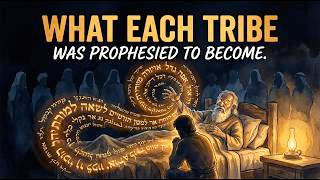 Every Tribes of Israel and What They Represent Every Tribes of Israel and What They Represent
Most people know there were twelve tribes. Almost nobody knows what each one represents — or what they're all pointing toward in Revelation. The Twelve Tribes of Israel descend from Jacob (renamed Israel), whose sons and grandsons formed the foundational tribes of the nation.
Jewish Woman Seeks Jesus And Is SHOCKED! | HIGHWAY 53 - by Jeff Morgan
 Stacy grew up believing that following Jesus meant betraying the Jewish people. She was so opposed to Jesus that she even refused to attend her own Jewish brother's baptism when he came to faith in Jesus! But everything began to change when she walked into a church and discovered they were worshiping the God of Israel. Then Isaiah 53 helped confirm what she was discovering, and her life was transformed through Jesus, the Jewish Messiah. Stacy grew up believing that following Jesus meant betraying the Jewish people. She was so opposed to Jesus that she even refused to attend her own Jewish brother's baptism when he came to faith in Jesus! But everything began to change when she walked into a church and discovered they were worshiping the God of Israel. Then Isaiah 53 helped confirm what she was discovering, and her life was transformed through Jesus, the Jewish Messiah.
• Spirit of Stacy – Shorts
 BERESHIT בְּרֵאשִׁית | Genesis 1–6:8 | Scripture & Original Music |ELIHANA ELIA | אליחנה BERESHIT בְּרֵאשִׁית | Genesis 1–6:8 | Scripture & Original Music |ELIHANA ELIA | אליחנה
Experience Torah portion Bereshit through Scripture audio accompanied by our original music production. Journey through creation, the Garden of Eden, the first Shabbat, humanity’s fall, and the generations leading to Noah. Listen, reflect, and worship as the words of Genesis unfold through music.
Every Tribe of Israel Explained: What Each One Represents | Deep Made Simple
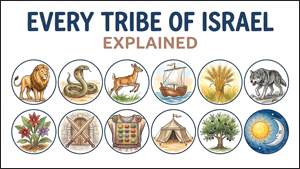 Have you ever wondered why the twelve tribes of Israel are so central to the Bible? It’s not just a list of names to memorize. It’s a blueprint, a prophetic story that begins on a deathbed in Genesis and concludes with the very gates of the New Jerusalem in Revelation. Each name is a prayer, a cry of hope from a forgotten woman, and a piece of God's master plan for His people. This study unpacks the profound meaning behind every tribe of Israel. From Jacob’s unsettling prophecies to the strange list of tribes in Revelation 7, you will see this ancient family tree in a completely new light. This deep dive into the twelve tribes of Israel reveals how God builds a nation not from perfect people, but from the broken, the overlooked, and the rivalrous. We explore the journey from Leah's heartbreak to Judah's praise, understanding why the Messiah is called the Lion of the Tribe of Judah. You'll discover the dark prophecy over the tribe of Dan, why Joseph received a double portion through Ephraim and Manasseh, and how the ten “lost tribes” were never truly lost to God. This isn't just history. It is a powerful illustration of how God takes human pain, struggle, and longing and weaves it into an eternal story of redemption that includes you. Have you ever wondered why the twelve tribes of Israel are so central to the Bible? It’s not just a list of names to memorize. It’s a blueprint, a prophetic story that begins on a deathbed in Genesis and concludes with the very gates of the New Jerusalem in Revelation. Each name is a prayer, a cry of hope from a forgotten woman, and a piece of God's master plan for His people. This study unpacks the profound meaning behind every tribe of Israel. From Jacob’s unsettling prophecies to the strange list of tribes in Revelation 7, you will see this ancient family tree in a completely new light. This deep dive into the twelve tribes of Israel reveals how God builds a nation not from perfect people, but from the broken, the overlooked, and the rivalrous. We explore the journey from Leah's heartbreak to Judah's praise, understanding why the Messiah is called the Lion of the Tribe of Judah. You'll discover the dark prophecy over the tribe of Dan, why Joseph received a double portion through Ephraim and Manasseh, and how the ten “lost tribes” were never truly lost to God. This isn't just history. It is a powerful illustration of how God takes human pain, struggle, and longing and weaves it into an eternal story of redemption that includes you.
Every Tribe of Israel Explained: Their History, Their Territory, and Their Legacy — A Masterpiece
 📖 From Jacob's deathbed blessings to the gates of the New Jerusalem, this is the complete, uncut story of every tribe of Israel: their origins, their rivalries, their territories, their triumphs, their failures, and the prophetic future that still awaits them all. Twelve sons. Twelve destinies. One epic narrative spanning the entire biblical record. 🔥 What's covered: Jacob and Esau's stolen blessing, the four mothers and the birth of the twelve sons, Reuben's fall, Simeon and Levi's massacre at Shechem, Judah and Tamar's scandalous encounter that produced the royal line, Joseph's dreams and his rise to power in Egypt, the crossed hands over Ephraim and Manasseh, Benjamin the ravenous wolf, the Exodus and the tribal camp around the tabernacle, the spies and forty years in the wilderness, Joshua's conquest and the division of the land, the chaos of the Judges, the civil war that nearly destroyed Benjamin, Saul's tragic reign, David's golden age, Solomon's temple and the seeds of division, the kingdom torn in two, the Assyrian conquest and the mystery of the ten lost tribes, Babylon's destruction of Jerusalem, the exile, the return, and the prophetic visions of Ezekiel and Revelation that promise a restoration the world is still waiting for. 📖 From Jacob's deathbed blessings to the gates of the New Jerusalem, this is the complete, uncut story of every tribe of Israel: their origins, their rivalries, their territories, their triumphs, their failures, and the prophetic future that still awaits them all. Twelve sons. Twelve destinies. One epic narrative spanning the entire biblical record. 🔥 What's covered: Jacob and Esau's stolen blessing, the four mothers and the birth of the twelve sons, Reuben's fall, Simeon and Levi's massacre at Shechem, Judah and Tamar's scandalous encounter that produced the royal line, Joseph's dreams and his rise to power in Egypt, the crossed hands over Ephraim and Manasseh, Benjamin the ravenous wolf, the Exodus and the tribal camp around the tabernacle, the spies and forty years in the wilderness, Joshua's conquest and the division of the land, the chaos of the Judges, the civil war that nearly destroyed Benjamin, Saul's tragic reign, David's golden age, Solomon's temple and the seeds of division, the kingdom torn in two, the Assyrian conquest and the mystery of the ten lost tribes, Babylon's destruction of Jerusalem, the exile, the return, and the prophetic visions of Ezekiel and Revelation that promise a restoration the world is still waiting for.
How Christians Should Think About Israel Right Now 🔥 | Troy Brewer
 How should Christians think about Israel when politics, media, and culture are pulling people in completely different directions? Pastor Troy Brewer calls believers back to biblical wisdom, the fear of the Lord, and loyalty to the heart of Jesus. In this message, discover why our response to Israel and the Jewish people must be shaped first by Scripture rather than political affiliation, cultural pressure, or popular voices. Pastor Troy examines the events surrounding October 7, biblical patterns connected to Israel, and the difference between earthly wisdom and the wisdom that comes from God. Drawing from James 3:17, Proverbs 9, Jeremiah 31, Romans 11, and other passages, he challenges the Church to reject antisemitism while still thinking clearly about governments, politics, and people. The central challenge is simple: love what Jesus loves and remain fiercely loyal to Him. Troy connects that loyalty to the fear of the Lord, which Scripture calls the beginning of wisdom. How should Christians think about Israel when politics, media, and culture are pulling people in completely different directions? Pastor Troy Brewer calls believers back to biblical wisdom, the fear of the Lord, and loyalty to the heart of Jesus. In this message, discover why our response to Israel and the Jewish people must be shaped first by Scripture rather than political affiliation, cultural pressure, or popular voices. Pastor Troy examines the events surrounding October 7, biblical patterns connected to Israel, and the difference between earthly wisdom and the wisdom that comes from God. Drawing from James 3:17, Proverbs 9, Jeremiah 31, Romans 11, and other passages, he challenges the Church to reject antisemitism while still thinking clearly about governments, politics, and people. The central challenge is simple: love what Jesus loves and remain fiercely loyal to Him. Troy connects that loyalty to the fear of the Lord, which Scripture calls the beginning of wisdom.
• How to Know Where God Wants You
 Anti-zionist archetypes on the far left and right explained by Elica Le Bon 🤓 Anti-zionist archetypes on the far left and right explained by Elica Le Bon 🤓
A non-Jewish perspective on anti-Zionist archetypes on the far left and far right, the co-rationalization of collective movements, and the mechanism of persecution. Elica defines anti-Zionism—whether stemming from the right or the left—and explains the process that leads to this mindset.
• Socialism is the deadliest ideology in history. Why is it rising in popularity on the American left?
 Motivational Message by Sister Gwen Shaw — New Orleans WC 2001 Motivational Message by Sister Gwen Shaw — New Orleans WC 2001
Sister Gwen Shaw Speaking on "Joan of Arc" and some personal experiences in New Orleans. The World Convention 7-22-2001. Part: 2.
• A Gwen Shaw Playlist
• Gwen Shaw, 2008, “Keeping the anointing depend on your willingness to move” — From an era that predates the craze for “seeker-sensitive” churches; a time when truth and genuine love prevailed. So good.
 The Approach That’s Leading Muslims to Christ | Sean McDowell and Belle Liu The Approach That’s Leading Muslims to Christ | Sean McDowell and Belle Liu
Belle Liu is 21 years old. After moving past her student rebellion and her attraction to the LGBT community, and undergoing training with Youth With A Mission, she embarked on full-time ministry this year and set herself two missions: raise a biblically literate generation, and make Muslims Christian. “I first heard about her this summer then Scottie asked if I knew her. What struck both of us watching her street conversations wasn’t the arguments, it was that you can tell she actually loves the person in front of her. Her testimony is remarkable and she tells it herself here”.
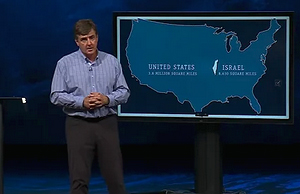 Israel & the Jewish People | Pastor Allen Jackson Israel & the Jewish People | Pastor Allen Jackson
Christian churches come together with Jews to commemorate the events of the October 7 attacks. The core of this message focuses on a biblical mandate for Christians to stand with Israel and the Jewish people, a stance that has gained significant prominence following the October 7, 2023, attacks and subsequent regional conflicts.
What Every Christian Needs to Understand About the Jewish People | Allen Jackson
 What happens when an Israeli family watches America change and recognizes things they never thought they would see in the West? In this episode of Culture & Christianity, Pastor Allen sits down with Israeli residents and friends Adam and Gili Focht to discuss what it’s really like to live in Israel, the growing hostility toward Jews and Israel, and why Christians need to understand the spiritual significance of what is happening. They also talk about their journey to faith in Jesus, Israel’s military culture, and the changing attitudes toward Jewish believers in the Israeli Army. Their perspective offers an important reminder of why Christians must know the truth about Israel, stand with the Jewish people, and remain faithful to God’s Word. What happens when an Israeli family watches America change and recognizes things they never thought they would see in the West? In this episode of Culture & Christianity, Pastor Allen sits down with Israeli residents and friends Adam and Gili Focht to discuss what it’s really like to live in Israel, the growing hostility toward Jews and Israel, and why Christians need to understand the spiritual significance of what is happening. They also talk about their journey to faith in Jesus, Israel’s military culture, and the changing attitudes toward Jewish believers in the Israeli Army. Their perspective offers an important reminder of why Christians must know the truth about Israel, stand with the Jewish people, and remain faithful to God’s Word.
Can You Love Jesus and Hate Israel? | Behold Israel with Amir Tsarfati — Short
Can someone claim to love Jesus while hating the people He came from? Scripture presents a serious challenge to anyone who tries to separate the Messiah from His people Israel.
 Their Mistake Was to Make it Political | Behold Israel with Amir Tsarfati — Short Their Mistake Was to Make it Political | Behold Israel with Amir Tsarfati — Short
The debate over Israel reaches far beyond politics. From Genesis to the prophets, Scripture presents God’s relationship with Israel as a covenant issue, and warns that the nations’ treatment of His people and land carries consequences.
 You've Never Heard This About America's History | Real Life You've Never Heard This About America's History | Real Life
Historian William Federer explains that America's unique self-governing system mirrors the dispersion of power at the Tower of Babel by shifting authority from top-down kings to "We the People." Bill Federer breaks down the entire history of our American government and how we lost track of our original governmental design.
 Why Erin Molan Supports Israel | Exclusive Interview 🕊 Why Erin Molan Supports Israel | Exclusive Interview 🕊
In this exclusive Friends of IDF interview, Australian broadcaster and journalist Erin Molan reflects on her decision to publicly support Israel, how her father impacted her and her viewpoints, and what sacrifices she has made to stand by her principles.
A Solid Presentation by Former IRGC Member and His Warning About Islam and the West - Mohamad Faridi | Truth & Liberty CC 2026 🔥 🔥
 Mohamad Faridi is a former Muslim from Iran whose life was transformed after an encounter with Jesus Christ. After facing persecution for sharing the Gospel, he fled to America in 2012. Today, he serves as President of Iranian Christians International, equipping believers to reach Muslims with the truth of the Gospel. Mohamad is an author, speaker, and teacher at Charis Bible College. Mohamad Faridi is a former Muslim from Iran whose life was transformed after an encounter with Jesus Christ. After facing persecution for sharing the Gospel, he fled to America in 2012. Today, he serves as President of Iranian Christians International, equipping believers to reach Muslims with the truth of the Gospel. Mohamad is an author, speaker, and teacher at Charis Bible College.
• “They Never Cared About the Palestinians ; All They Wanted was to Destroy Israel”
What?? The Pro-Palestine argument is one of the biggest farces in history?
• The Greatest LIE Ever Told: ‘PALESTINE’
• To Those Who Accused Israel of Apartheid : Where Are Your Jews ? …
Who is "All Israel"? Paul's Explanation in Romans 9-11 | Joel Richardson
 At the end of Romans chapters 9 through 11, the Apostle Paul makes a statement: "And so all Israel will be saved." This is undoubtedly one of the most disputed, debated, and controversial assertions in the entire New Testament. Understanding and interpreting this statement has deeply divided the Christian Church in the past and continues to do so today. In the last session, we examined the Old Testament passages that, in my view, clearly lay the foundation for it. They form the backdrop to Paul’s entire argument in Romans chapters 9 through 11. In fact, the question is actually quite simple. At the end of Romans chapters 9 through 11, the Apostle Paul makes a statement: "And so all Israel will be saved." This is undoubtedly one of the most disputed, debated, and controversial assertions in the entire New Testament. Understanding and interpreting this statement has deeply divided the Christian Church in the past and continues to do so today. In the last session, we examined the Old Testament passages that, in my view, clearly lay the foundation for it. They form the backdrop to Paul’s entire argument in Romans chapters 9 through 11. In fact, the question is actually quite simple.
Return to Summary
September 2026
Great footballer (in the making)
I owe you a confession: football has never been my cup of tea. So you can imagine my bewilderment when a man of God looked at me and said: "Hum, interesting ! I have this word for you: 'great footballer'."
That was 40 years ago during a school of evangelization. The American pastor's name was Dan Sneed, and his words left me puzzled. I had such terrible memories of playing football at school. The anticipation, quick reactions, and daring that are essential to the practice of this art were sorely lacking in me. Suffice it to say that instead of knowing how to place the ball, I was all too often the one in the path of a ballistic projectile fired at point-blank range. Dazed or breathless, but not stupid, I came to terms with it and found satisfaction in activities better suited to my calm and solitary nature, and in the end, I didn't miss that collective energy too much. However…
Paragraphs:
1. Come out, you mighty warrior !
2. Not out of our own strengths or will.
3. Manichaeism and cultural chameleon tactics.
4. One Truth, One King.
5. Love your enemies ?
6. Why chose ? (Updated Sept. 3)
7. Let's keep it simple.
8. Peace on earth to people of goodwill.
9. Know your adversaries and encourage your teammates.
10. What did you just say, will save our Country ? (Updated Sept. 3)
11. We will reap a harvest if we do not give up.
12. We must prepare for the final battle.
13. Are you ready for the victory ?
Sometimes, God has the gift of surprising us by awakening things that we have taken care to anaesthetize, whether it is a frustration, a wound of the soul, a painful failure, a fear or even a dream that we no longer believed in. If he had seen me playing on the lawn with others, I might have thought that the dashing young man was using sarcasm. Hard to believe, but I wasn't too bad myself forty years ago. However, something hasn't changed much in those forty years and its my reserved and sometimes shy nature. But why was God bringing me back through the words of this prophet, to an almost shameful time of my life—my school days and the beginnings of social life—by stating the exact opposite of what my experience had been? Was he describing another person or another life? In fact, God has another look on us than the way we perceive ourselves.
Come out, you mighty warrior!
One might think of Gideon, hidden in the cellar of his father's winepress, threshing his wheat out of sight of the Midianites. The angel of the Lord appeared to him and said, "The Lord is with you, mighty warrior!" Gideon replied, in essence (I'm taking some liberties with the text): "Are you kidding me ? Have you looked at me and my people?" Gideon obeyed nonetheless and began by overturning the altar of Baal and the statue of Asherah, the "blessed Queen of Heaven," erected in the village by his own father. He almost got stoned for this idol-killing act, but his father was able to convince the people that Baal himself had to deliver justice if he existed, and the people then understood that this was a move of great spiritual importance, part of God's plan to free them from the Midianites who, along with the Amalekites, systematically engaged in pillaging like a swarm of locusts. This striking story is recounted in the Book of Judges, beginning in chapter 6.
Another story stems from the early days of faith. In Genesis 18, Abraham was resting among the oaks of Mamre when three men appeared, whom Abraham immediately recognized as the Lord (YHWH). This by the way is another hint of the triune God. After Abraham had prepared a meal for them, one of them said to him, “I will surely return to you about this time next year, and Sarah your wife will have a son.” Sarah was listening at the entrance to the tent, which was behind him. Now Abraham and Sarah were old, well advanced in years, and Sarah's fertility had passed. She laughed to herself, saying, “Now that I am old, will I still have desires?” My lord is also old. The Lord said to Abraham, “Why then did Sarah laugh and say, ‘Should I really have a child, now that I am old?’ Is anything too hard for the Lord? At the appointed time I will return to you, at this time next year, and Sarah will have a son.” Sarah lied, saying, “I did not laugh,” for she was afraid. But he said, “You did laugh.”
Not out of our own strengths or will
This brings us to the point. Gideon was ordered to send home most of the men who had joined him to fight the Midianites and to keep only a handful whom God himself selected for him. God wanted to demonstrate that the victory would be attributed not to the power of men, but to God's own strategy and support. And long before Gideon, Abraham and Sarah had learned some lessons too. The promised offspring had not materialized during the years when they could have been fertile. They had undoubtedly lost hope after their recent scheme, involving the Egyptian servant Hagar. This plan resulted in the birth of Ishmael. “He will be like a wild donkey. His hand will be against everyone, and everyone’s hand against him” (Genesis 16:12). Ishmael shamed Sarah and later persecuted Isaac, the son God had promised (Isaac means laughter). God had promised Abraham that He would bless his descendants, and God does not break His promises—a fact that can prove formidable when we misuse His blessing. This older son Ishmael became the ultimate ancestor of the Prophet Muhammad, founder of Islam, who would later produce the Muslim Brotherhood, which as we know, is instigating this diabolical global war of Islam against the rest of the world. But Isaac wasn't born yet and Abraham and Sarah had probably given up on themselves. The reasonable prospect was a deserved retirement under the holm oaks or the palm trees of an oasis.
But how could Abraham have forgotten the call he received while in Haran and simply enjoyed a peaceful retirement? In Hebrew, Abraham means "father of a multitude" or "father of many nations"; this name derives from the original Aramaic form, Abram, which means "exalted father." The sound introduced by the letter "H" in Abraham’s new name evokes the intervention of the breath—or the Spirit—of God. Interestingly, Sarah lost the "H" from her name to Abraham. He was supposed to lead. I will make another confession by telling you that this word I had received, and which included a second part, remained buried in my mind for decades. Getting myself sorted wasn't a problem—I could manage my life to be content and God was blessing the work of my hands. I could have been successful in whatever I wanted, if I really wanted it. But like he did with Jacob, God knows how to blow us a quick punch in the hip before he leaves us to our own endeavours. The second part of this word was this: “God has given you some ability, but you must use it for Him”. ´C'mon… By being part of a team work? No way, forget it. You know I can't work with others. Can't I just be on my own and explore more of your beautiful nature with a camera?´. My handicap has always been and still remains, dealing with others. But how can we envisage the rise to goal of a Pelé, who was then cited to me as an example, of a Ronaldo or a Mbappé to be up to date, without these scorers having a team at their side? The point of football is to score goals, but it is teamwork and not that of an individual. Moreover, a footballer who is too independent is penalised by being called “offside”. Jesus also warned his overly enterprising disciples, like Peter, and those two brothers he called Boanerges (“Sons of Thunder”). The history of cults speaks volumes about the risks associated with an independent spirit. “Fear of God is the beginning of wisdom” says the Bible. Faith, knowledge of God, evangelization, remain a collective enterprise subjected to rules. Because, if the players' jerseys wear distinct numbers, the team has one and the same name. We talk about team spirit, and Jesus is the captain of our Team, which he directs by his Holy Spirit. The name of the arbiter could be the Bible, or sometimes the law when the fault is serious, or censorship or popular criticism when unreason takes hold of us. Yellow cards, often justified, must be acknowledged even if not always deserved. Paul says that we must be subject to the authorities, because they are established by God. But of course, authority does not always act justly and legitimately and God knows this and will judge our authorities. Peter says, in 1 Peter 2:17: “Honour everyone; love the brothers; fear God; honour the king.” This same Peter said before the Sanhedrin: “Judge for yourselves: is it right before God to obey you, rather than God? As for us, we cannot remain silent about what we saw and heard.” Acts 4:19. Showing respect to unjust authority, while ultimately submitting to the will of God, is also “heaping burning coals” on the heads of those in power.

Cultural Chameleon Tactics
It is no secret that what's at stake right now in the political arena, is the future of the world. Not that politics has the power to decide whether the world's future will be red, green, white, or black. The world doesn't belong to us and its final purpose was defined at the very moment of its conception. But history is a winding road on which several drivers sit in the front seat, vying for the wheel, veering successively left, and then right, braking or accelerating, intoxicated as they are by the illusion of being in control. Many have realized that we are currently in the midst of a clash of civilizations. And if we're willing to see it, it all boils down to two mindsets, two camps, and two teams. But the world doesn't want us to see it that way. We generally dislike the term "Manichean," because we want to perceive the world, and the extent of our freedoms, in multiple shades of black, of red, green, gray, pink—the entire spectrum of the rainbow according to the whims.
What can Manichaeism teach us today?
It should perhaps warn us about cultural Chameleon Tactics. Today, we see the rise of a movement called Noahism, or Noahidism,
a monotheistic Jewish religious movement aimed at bringing to non-Jews, a law based on the Seven Laws of Noah, a set of universal moral imperatives given by God in Jewish tradition to all of humanity. The morals are good and the intention is to favour global peace to the world by implementing a common law, which is praiseworthy, especially if this can save us from the excesses of the Sharia. But what could we miss if the world was placed under the guidance and control of this “non-religious non-proselitising” law ? Who will interpret the law when it comes to set the true God apart from the idols for instance? And why not use the code of Hamurabi, or the Ten Commandments of Adonai ? Manichaeism was a major world religion founded in the 3rd century CE by the Parthian Iranian prophet Mani within the Sasanian Empire. It taught a complex dualistic cosmology, describing the struggle between a spiritual world of light and a material world of darkness. Manichean missionaries translated their texts using the vocabulary of local religions to gain converts: In the West, they used Christian terms, calling Mani the “Paraclete” (Holy Spirit). In the East, they adopted Buddhist and Taoist terms. Mani was depicted seated on a lotus throne, like the “Buddha of Light.” Saint Augustine of Hippo was a fervent Manichean for nine years before becoming deeply disillusioned. He was dissatisfied with the belief that evil was a physical substance rather than a corruption of human free will. Another religion that the West is now discovering with dismay, teaches that there is only one God, but that this God promotes multiple shades of truth, so that its subjects can adapt to the context or situation in which they find themselves, with the final goal of betraying trust and taking control. It also teaches that evil is embodied in people of other races or faiths. How can this hatred for human beings be compatible with an universal God ?
One Truth, One King
Jesus also taught about an ultimate duality between good and evil, and he was very insightful about Heaven and Hell. But Jesus never said that the material world was evil, nor that certain groups of people were inherently not redeemable because of their beliefs. In fact, Jesus came to earth and he gave his life to reconcile all of creation with God, including us and our enemies. He came to purchase us back from the spiritual powers of evil that had taken hold of the world and of the minds of the sons and daughters of Adam. The Bible is very generous with vital information, and in the old Testament, the Word of God said of Rebecca, that two people would come from her. “Two nations are in your womb, and two peoples will be separated from within you; one people will be stronger than the other, and the older will serve the younger”. One of the twins was Esau. It is said that he was a virile man and a hunter. The other son was very different. Jacob lingered by the tents, which means that he was interested in learning stories from the elders and in benefiting from their experiences. And he really needed it, for as his name suggests ("supplanter"), Jacob was somewhat crooked. But later, after getting his comeuppance during his years with Laban, Jacob became Israel, the Prince of God. Esau pleased his father because he brought game to the table. But he eventually grieved his parents due to his disdain for their morals and tradition. Esau became the ancestor of Amalek, and God said that Israel would be forever at war with Amalek (watch the video in link below to learn more on Amalek and his link with the demonic watchers). No biblical record exists of any biological descendants of Amalek
who were friendly to Israel. But interestingly, later Jewish Rabbinic tradition (the Talmud) introduces an exception regarding individual descendants.
According to the Talmud (Sanhedrin 96b), some descendants of the Amalekite King Agag actually converted to Judaism. The tradition claims that these specific descendants ended up moving to Jerusalem and teaching the Torah to Israelite students. This may seem a minor detail, but we can see it as a red light. Today, the devil goes after our kids and education is his thing. If you look at the story of Agag in the Bible, this man was a sick and twisted individual. Defeated with his army, he nevertheless managed to win over King Saul and to almost make him his friend. But the prophet wasn't fooled, and it was Samuel who put him to pieces. King Saul failed, but later, another queen—also from the tribe of Benjamin—succeeded by having another evil descendant of Agag, Haman, eliminated.
Love your enemies ?
“You have heard that it was said, ‘Love your neighbor and hate your enemy.” “But to you who are listening I say: Love your enemies, do good to those who hate you, bless those who curse you, pray for those who mistreat you”. (Matthew 5, Luke 6). The first thing to know, in order to be a conscious Christian, is that the world belongs to God and to his Son. For God did have a Son born of his Spirit before the creation of the world. Scholars who don't know this should look in detail the first verse of Genesis—which is also the first verse in the Bible and the Torah—: Bereshit - "In the beginning…". And now, God the Father has also many adopted sons, born of the Spirit of his Son. We must also recognize that there are two kingdoms, and that these kingdoms transcend all physical boundaries, nationalities, forms of faith and heritage. Jacob and Esau had the same parents, the same grand parents and both were descendants of Abraham. That teaches that we must discern every aspect of this world in which children of light, known for their love and for the freedom they find in their submission to God, live amongst unteachable children of pride, known for their jealousy and arrogance. Two kingdoms implies two rulers. Just as in earthly kingdoms, subjects must love their king and pledge allegiance to him exclusively, for there can be no shared obedience between God and the world without a betrayal. Since we are all born of Adam, Christians do not consider people of other races or beliefs, and in fact anyone, as enemies because of where they came from—we were all born in sin. But they see others as lost brothers and sisters to be won and brought back to the Father, into Jesus' camp. Jesus is the captain appointed by God the Father, who is the true owner of this team. Christians must love their enemies as a testimony that evil cannot compete with the true God. Evil—or the devil—is a fake king who pretends to be God. He is not our father and he doesn't care about us. All he wants is to use us to exact his revenge. In the end, he has nothing to offer to his followers but eternal death and damnation, which are his own share.
Why chose ?
Some fight for the principality—the shadowy power of our time—rejecting any other king and wishing the world to remain immoral. This is how they prefer it for they can use craftiness and coercion to subject others to their narcissistic control and exploit them with impunity. Unfortunately, many followers of religion or social action remain subject, without even realizing it, to the spirit that governs this camp. While writing this column, I happened to hear an interview with a young doctor who considers himself the moral heir of the Calvinist Henri Dunant, founder of the Red Cross and the Swiss branch of the Christian organization YMCA. This man, heir to a left-wing parliamentary and trade union tradition, once a fervent admirer of Che Guevara and Castro, and a Chavista activist, was discussing his experience of the humanitarian crisis. Clearly, I am nowhere near his level of commitment. Now a right-wing Catholic, he says he has returned from his leftist explorations but has retained from it a taste for activism. He is one example among thousands that shows how, with poor initial information, one can support and defend a misguided cause. I remember my own years of rebellion and the spirit of camaraderie I found among a few friends—nonconformist, antimilitarist, and, moreover, pro-Guevarist. Being surrounded by people who reflect on the problems of our society and who seek alternatives to pure capitalism or isolationism can be reassuring, sometimes exhilarating. We need to give meaning to our lives, and revolutionary struggle can give us this illusion. For that is precisely what it is: the illusion of human power. In reality, communists and Islamists appropriate the symbols of our society to replace them with their own ideologies. Yet, God has shown us the path to the only revolution that will lead to the new humanity, the one that aims to change the human heart. But some still believe that humanity built itself ! On the other side are those who have tasted the fruits of sin—sweet at first, but bitter in the end—who have seen its consequences, have repented, and now yearn for the restoration of a kingdom of truth, ruled by the One they recognize as the true master of their lives, their world, and ultimately, the entire universe. Those who belong to Christ are his team, his army; they will be his friends and co-rulers in the world to come.
Let's keep it simple
Jesus said, “Let your ‘yes’ be ‘yes,’ and your ‘no,’ ‘no.’ Anything beyond this comes from the evil one.” Is there room for another ruler besides Jesus, the King? Can we challenge His rule, or can we allow the Queen of Heaven to exert some influence to preserve traditions? After all, she is Jesus' mother, isn't she? And why can't we believe in both Jesus and Allah simultaneously, or let Buddha guide us to Jesus in his own way? Suffice it to say, we have endured six thousand years of the old, divided reign, during which Jesus showed infinite patience towards us. But when He returns to reclaim His kingdom, no other name will have His place. In Acts 4:11, Peter says: “Jesus is “‘the stone you builders rejected, which has become the cornerstone.’ Salvation is found in no one else, for there is no other name under heaven given to mankind by which we must be saved.” And in Matthew 28:18-20, the resurrected Jesus speaks very clearly : “Then Jesus came to them and said, “All authority in heaven and on earth has been given to me. Therefore go and make disciples of all nations, baptizing them in the name of the Father and of the Son and of the Holy Spirit, and teaching them to obey everything I have commanded you. And surely I am with you always, to the very end of the age.”
Jesus reaffirms his authority. He says that to be saved, we must be immersed in the reality of the Triune God, the God mentioned in Genesis, in the “bereshit”, the very first verse of the Bible: the One God in threee persons who designed our world and to whom we belong. No other name has its place. Mīryām, the mother of Jesus, is not “the queen of heaven” and never will be. In reality, this title is insulting to her. It's like saying that Jesus is Allah. But here is what she will become, she and all of us who are saved by the blood of the Lamb : “And they sang a new song, saying: “You are worthy to take the scroll and to open its seals, because you were slain, and with your blood you purchased for God persons from every tribe and language and people and nation. You have made them to be kings and priests to serve our God, and they will reign on the earth.” Aren't these words from Revelation 5:9-10, wonderful? Jesus purchased for God persons from every tribe, people, and nation under the sun. Jesus is the Savior of all humanity, and there is no other.
Peace on earth to people of goodwill
As I began to integrate my messages into the current global political context—following the horrific events of October 7, brutal events reminiscent of 9-11, which deeply affected me, as they affected so many others around the world, and while the destabilizing COVID-19 crisis with its excesses and grey areas, was still very much on everyone's minds—I was relieved to see that many content creators had mobilized to try to set the record straight about what they perceived as a monstrous imposture, propagated by media outlets that, until then, had been relatively credible. Just as the blame for the COVID-19 crisis had been placed on a small harmless animal, the pangolin, to conceal the true causes of this pandemic, we were witnessing, in stunned disbelief, a global media disinformation campaign. This was indeed a deliberate shifting of responsibility in a war situation involving the sacrifice of a people, including women and children—a people held hostage by an extremist terrorist organization—with the aim of damaging the international image of another country and its people, and inciting hatred worldwide with a view to its ultimate destruction. It was becoming increasingly clear that we could no longer trust the information disseminated with the complicity of the official media, the same media that had previously displayed their support for the left by denigrating the American president and that were now echoing Hamas's rhetoric to fuel socialist ideology. But the real surprise came from the world of journalism, where whistle-blowers and critical voices had fallen silent, leaving the megaphone of national television in the hands of ill-informed journalists who had embraced this propaganda and were now spreading a nauseating antisemitic hatred imported from elsewhere. Most of them were not bad people, but they succumbed to a form of sentimentality, instrumentalized to fuel hatred of a designated oppressor, thus playing into the hands of an Islamist-Communist alliance that had found a new rallying cry in its anti-Western propaganda.
Know your adversaries and encourage your teammates
This fight to restore the truth about the attempted annihilation of Israel—an annihilation unfortunately supported by a segment of Christianity that has opted for the views of preterism, or the replacement of Israel by the Church—has become the cause. Why should we be obsessed with Israel? Because the entire universe revolves around it. Jesus is not coming back to the Church, but to Israel. People don't realize it but their eternal destiny depends on the position they take regarding the faith of Abraham. The most solid blessing was given to Abraham and his supporters, and it is reinforced by formidable curses. Anyone who curses the heritage of Abraham cannot prosper. The devil knows this, and that is why he incites the world to curse Israel. Those who allow themselves to be drawn into this infernal spiral of hatred embark on the path to destruction. I was probably lucky to have known this for a long time, and I discovered committed and sincere politicians who have also this hindsight. And among the media, journalists dedicated to their objectivity, often independent by necessity, like this former sports commentator—football again—, who immediately grasped what was unfolding on the international stage after October 7. Faced with the choice of inertia and her immediate well being, or the quality of the world she would leave to her daughter, she quit her job as a sport journalist and devoted herself entirely to informing people. The many ramifications of the conflict have opened my eyes to other personalities, ordinary citizens with limited resources, but with a heart for truth, who sustain the battle against the advancement of a system of ideological enslavement. Many are doing remarkable research and are publishing it online. Sometimes forced into exile from countries conquered by Islam or Communism, these beacons of light have a background that lends them weight, unlike perhaps other fashionable commentators who have jumped on the bandwagon for personal gain. I became familiar, already during his first term, with this interesting mix of Evangelicalism, Catholicism, and Judaism that constitutes the Trump family. These people are fighting to preserve what centuries of Bible inspired civilization have acquired for us, and that an idiotic new generation wants to vilify. Trump seems to crystallize all people's instincts. What's certain is that the devil doesn't like this man who thwarts his plans. Trump has reminded the occult, the communist, and the Islamist worlds, that our freedom as Westerners and Christians is not for sale or to be taken from us. He is not the messiah and we would be wrong to consider him as such, or to let him reassure us about the state of the world, but it is undeniable that this man is in God's hands. Some prophets perceived him as the new Jehu, the king who overthrew the murderous witch Jezebel. He can be criticized, but the man's courage and selflessness are remarkable and stand in stark contrast to the weakness of character and the policies for personal enrichment of his predecessors, brought to power by globalists. With the fall of Europe, the evangelical Christians of America are now the last bulwark of the Western spirit against the coming of the Antichrist. A leader who, as his name suggests, intends to behead the church and return the world to the situation that prevailed before the Christian era.
What did you just say, will save our Country ?
Thus we see the emergence of an ultimate battle between three prevailing entities: communism, Islamic extremism, and the Judeo-Christian world. This is the situation in a nutshell, but in reality this is only the visible face of a conflict which involves a fourth protagonist who has not yet emerged from the shadows, and I'm not talking about the Messiah. It is strange to see how the ideas of communism have taken hold of a generation that has never experienced the oppression of an upper class. But university education has instilled guilt in them by making them believe that their parents are responsible for the poverty of other countries, which is inaccurate to say the least. Governments that have enriched themselves through the oppression of the poor have never lasted, while those that have applied divine principles of equity have enjoyed lasting prosperity. But it is certain that, just as everywhere else, our academics have been brainwashed and are massively moulded to the ideas of communism. It is only a matter of time before an alliance of fools overthrows the bastion of the reason. When I say fools, I use the word in the biblical sense, which states that "The fool says in his heart, 'There is no God'". Communism and Islam have this in common: the arrogance engendered by the absence of a personal relationship with a God who is the Father and Creator. This lack of personal accountability to a God to whom one must answer for every deed and thought, makes all the difference. This also affects, to some extent, institutional Christianity, where one obeys a system created by man and elevated to the rank of god, or a philosophy. This departure from the faith leads to what Paul calls a “seared conscience”. Since God is now dead for some, and remained hung to the cross for others, pastors have joined the ranks of the universalists who say that even Hitler will be saved at the end, and Catholic prelates are rallying to the unifying rhetoric of an Islamizing interfaith alliance. Many no longer believe in God, but instead rely on the hypothetical moral qualities of humankind. The prevailing view is that, in its absolute form, the expectation of a God who would come to restore everything is counterproductive. Humanity must assume adulthood and take its future into their own hands.
We will reap a harvest if we do not give up
“Let us not become weary in doing good, for at the proper time we will reap a harvest if we do not give up”, is found in Galatians 6:9. Sometimes we are tempted to doubt that our actions can change anything. The house is on fire, and we are doing what is right by sounding the alarm and speaking the truth: "It’s burning—get out!" But can a fire of cosmic proportions really be extinguished by sharing a few YouTube videos? Who, for that matter, actually looks at this page and its links? Can we hope to alter the course of events leading to the end of the world by instituting new rules or laws? A new morality? New religions? Should we even attempt to change the course of history? There are thousands of insignificant Christians like myself who doubt that their actions can change anything. But I was listening to the testimony of a woman who, while she was traveling by plane, heard the inner voice of God who was asking her to offer her personal Bible to the gentleman sitting next to her. He was very touched by this intention and took it, and she heard nothing more about it. It wasn't until 24 years later that she had the opportunity to meet this gentleman's daughter, who, upon bringing her the Bible, told her in detail the story of how her father and her entire family had been transformed by this gift. So, even though the outlook is bleak and we don't see spontaneous results from our actions and could be tempted to leave the world to its fate and go enjoy the outdoors while we can, we don't lose heart. We do what Ecclesiastes suggests (11:1): “Cast your bread upon the waters, for after many days you will find it again.” The waters represent the inhabitants of the world. The bread is the truth of the Bible and the Word of God. Every Christian must strive to use their natural abilities and those God spontaneously bestows upon them in service of our mission, which is to proclaim the kingdom of God on earth. “Blessed are those who sow in tears, for they will reap with joy.” Few people appear at the time of plowing and sowing, but more will appear at harvest time. The seed needs time to grow before it can bear fruit, and what makes it grow is also bad weather. Even though the world is sinking into madness and vanity, more and more people are becoming aware of a major change taking place behind the scenes.
Satan knows this too and he has prepared his lures and his countermeasures. So let us not be deceived or discouraged by the enemy's tactics. They are his last retortion measures before his definitive defeat. Several European governments have adopted restrictive laws that will allow them, under the pretext of fighting intolerance, to block content that deviates from the spirit of the feast they are organizing and to prosecute creators. And as if by chance, Christians are now in their crosshairs, and not so much radical Islamist or abortion activists. They are thus paving the way for the coming diabolical government. When it is in place, it is likely that Christian resources and videos will be systematically banned and their creators prosecuted, or worse. Some warnings appeared regarding the acquisition of the largest Bible publishing house by a Muslim family. Will they be transformed by it or will they want to publish a revised comprehensive version of the Bible, like Chinese authorities do? Jesus declared in John 9:4, “As long as it is day, we must do the works of him who sent me; night is coming, when no one can work.” If you intend to spend a long life here, prepare for the blackout by acquiring at least an original printed Bible, and save the Bible online and some helpful resources, such as inspired messages… But of course, they already know about us.
We must prepare for the final battle
With the advent of "the man of sin," as the Bible describes him, some supporters of the global leader expect a "golden age." But they are sorely mistaken because everything will fall apart. As we mentioned at the beginning, the struggle can be summarized in two camps or two teams or two heart dispositions. On the one side you have the unbelievers who base their actions on the human capacity for adaptation, regardless of collateral damage. And on the other side you have the believers in the Messiah. The Messiah works in the hearts of people to prepare them on an individual level for the new world, the one not built by man's hand but by God. The focus of the fight is now placed on information. Disinformation characterized by arrogance and mockery, and discrediting campaigns, are targeting our youth in particular, turning them into mindless supporters of these ideologies. This is demonic. Everything about God could soon be banned from political discourse, banned from our streets, from churches, from social networks and even from people's private lives. This is what the Bible reveals about the intentions of the future government. Altruistic love will grow cold, and "humanity," exalted in all the splendor of its rebellion, will henceforth consider itself God and embrace a ruthless dictatorship.
Jesus reassures us: Satan—the divider—is divided against himself. Consequently, he cannot last for long. These violent ideologies have embarked on an endless fratricidal and deadly battle that has gripped most of the world's countries, where communism and Islam have already claimed more lives than all wars combined. Prophecies point to a massive persecution of the common enemy: the believers in the God of the Bible—Jews and Christians. Why doesn't the devil allow us to practice our religion in peace? Could it be that, like Judaism, Christianity is a fundamentally political religion and constitutes a very real threat to these untenable ideologies? This, at any rate, was the threat perceived by the Roman emperors, which drove them to undertake large-scale persecutions, before Christian politics could be co-opted, institutionalized and integrated into the empire's new tool of domination: culture. Today, people are afraid of a global war, and many seek, a new, a strong empire that will merge the migrants with the locals under the aegis of a government moreover aware of environmental issues. Much of the world has been brainwashed as to see God and his followers as the ones responsible for the failure at this assimilation. The man who will be able to enforce peace will be considered by many as a messiah. But God calls him "the Beast," because he will act like one by killing millions of individuals, for there is nothing in him of divine love.
“And the beast opened its mouth to blaspheme God, to blaspheme his name and his dwelling place, and those who dwell in heaven. And it was given power to make war with the saints and to conquer them. And authority was given it over every tribe, people, language, and nation. And all inhabitants of the earth will worship it, everyone whose name has not been written from the foundation of the world in the book of life of the Lamb who was slain. If anyone has ears to hear, let them hear!” Revelation 13:6-9.
However, a world government akin to that of Babel cannot be re-established, for God personally ensures this. God will thwart their plans; yet, it is worth recalling Nero’s attitude when fires devastated a large part of Rome: he shifted the blame for the disaster onto the Christians, just as his predecessors had accused the Jews of sabotaging their country’s integration into the Empire. It is precisely here that the root cause of antisemitism must be found, since this small people—and the children of Abraham in the broad sense—represent the impossibility and the foretold end of the devil's empire over the world.
The devil’s madness will not stop at the slaughter of Christians and Jews. In reality, a third of humanity will perish from the plagues it inflicts upon itself while under this influence. Imagine what the extermination of one-third of the planet’s eight billion human beings—dying for ideological reasons—would mean! Will there still be any talk of social policy or a religion of peace? Yet the decisive moment will come with the final assault on Jerusalem. For that is when the Defender of Israel will appear, coming on the clouds with His armies, in all the power of His glory.
Are you now ready for the victory ?
During a football match, a lot of time is spent traversing the pitch, hoping for an opening. Throughout this effort, each team sizes up the opponent, assesses the potential of a tactic, of a forward run. The reward isn't immediate and the players know it. Together, they prepare their champions' play and sacrifice themselves, accepting that those who score will receive the recognition. And when they score, the whole team shares in their joy. In God's team, the most engaged players prevail, says Jesus. Lukewarmness has no place in Jesus' kingdom. Satan is the king of the feint, but Jesus has an unstoppable shot. He wants us to grasp the value of his message for the lost world which belongs to him. We could be tempted to consider ourselves deserving or lucky, and forget that without the efforts of those who reached to us with the Gospel—who by the way were Jews—, we would be lost and on our way to hell. Without him, without Jesus and his sacrifice, the world perishes.
People perish because they do not know the truth. Most of the world's population hopes that if they are doing well enough, they will eventually be accepted by God. But it's entirely false. What Jesus offers us is not a reward for our works, but a wedding. What if you came to your designated husband after living your own life for eighty years and more, and told him: “If you think that I deserved it, will you marry me now?”. We might be greeted with something like: “But who are you? I never knew you, go your way!”. This is precisely what Jesus warns us of. And so, every person rescued from the anonymity of that life and restored to a privileged relationship with him now, is priceless in his eyes. His people are a deserved reward for the suffering he endured. He deserved us, we didn't deserve him.
So let your light shine. “You are the light of the world. A town built on a hill cannot be hidden. Neither do people light a lamp and put it under a bowl. Instead they put it on its stand, and it gives light to everyone in the house. In the same way, let your light shine before others, that they may see your good deeds and glorify your Father in heaven”.
It's not about our own success—for, in reality, the Gospel will rarely earn us the world's love and recognition. But our witness may glorify God, and people be pressed to eventually reach to Him in order to be restored in a personal relationship with their Heavenly Father. Soul winners aren't just those in the public eye—pastors, evangelists, men and women of God—but all those who love Jesus unconditionally and whose hearts burn brightly for humanity as seen through his eyes. People like you and me who share a small piece of the gospel while waiting in line at the supermarket, who relay information from their offices, on social media, or within their circles of influence. These are the ones who offer their financial support for the advancement of the gospel. These are young people who talk about their faith with their friends. I happened to be working this week with a man who had a large tattoo on his arm: "Only God can save me." I'm not a fan of tattoos, but why not wear a t-shirt with a catchy slogan? Or put a sticker on your car? They are also grandmothers who read the Bible and pray fervently for their families and for the world. In the privacy of their living rooms, they are not just knitting; they are preparing for a victory that will soon transform the world. Jesus doesn't ask all of us to be the brave champions who run on the forefront. Most of us are called to be team supporters, simple vessels who accept to pour out for others the water He fills us with. But he asks us to remain faithful to the very end. Faithful in supporting the people he has shown us. Faithful to the talent he has entrusted to us, faithful in placing our five loaves and two fish at his disposal, or in taking the torch he has kindled from the vessel of our timidity. And if we act in this way, placing ourselves in the Lord's hands, our modest contribution could have repercussions far beyond what we can see or imagine.
Links and Teaching Picked This Month (more will be added)
 Prophetic Word: Builders, ARISE! It Is Time to Dig New Wells! 🔥 | Alicia Cummings Prophetic Word: Builders, ARISE! It Is Time to Dig New Wells! 🔥 | Alicia Cummings
God is calling builders to rise up and build! It is time to conquer new territories and dig new wells! Drawing on the account of the mission entrusted to Nehemiah—rebuilding the walls of Jerusalem—Alicia leads us to understand a plan that engages every builder in a shared synergy, aiming to rebuild the local Jerusalem and restore access to the source of living water.
Antisemitism Is Rising - Will the Church Stay Silent? | Arielle Randle
 Arielle Randle of Jews for Jesus joins us for an honest conversation about the spiritual roots of antisemitism, the Church’s history of silence, the need to break down the things that divide us, and the opportunity this generation has to build greater unity in the Body of Christ and change the story. Will this generation stand against antisemitism—and leave a different legacy? Arielle Randle of Jews for Jesus joins us for an honest conversation about the spiritual roots of antisemitism, the Church’s history of silence, the need to break down the things that divide us, and the opportunity this generation has to build greater unity in the Body of Christ and change the story. Will this generation stand against antisemitism—and leave a different legacy?
 God Is Taking You Out of Old Environments to Complete Your Healing | Alicia Cummings God Is Taking You Out of Old Environments to Complete Your Healing | Alicia Cummings
In the Gospels, we find the story of Jesus healing a blind man by helping him break free from his old patterns. The path he offers you requires clarity of vision. It sometimes involves separating yourself from your surroundings, confronting painful memories, and letting go of old habits. But in the end, you will find yourself and see Jesus more clearly.
• God is Fighting Battles You Can't see
• God is bringing Dead Things Back to Life in this Season
• If You Feel Pushed in Opposite Directions
• Waiting on God, the Hardest Part

John Piper's Urgent Message to The Next Generation
The problem with us is that we don't want to be happy enough? In this Everyday Radical episode, David Platt and Austin Huang talk with John Piper about Christian Hedonism, global missions, AI, and why joy in God fuels everything.
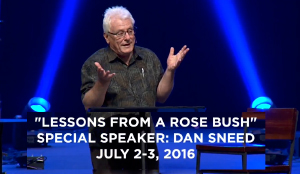
Lessons From A Rosebush — Dan Sneed
Dan was a young man when he prophesied over me. But I must admit that I never reached what God promised, mostly because I did not make my priority of what he is talking about in this message.
 Prophetic Word: You are being PRUNED for the PROMISE! 🔥 Alicia Cummings Prophetic Word: You are being PRUNED for the PROMISE! 🔥 Alicia Cummings
You are being tested to bear more fruit! Keep moving forward. The reward is infinitely greater than what God removes or prunes! John 15:1-2 “I am the true vine, and my Father is the gardener. Every branch in me that does not bear fruit he cuts off, and every branch that does bear fruit he prunes so that it will be even more fruitful.”
• Prophetic Word: God Is Calling You to Build an Altar Before the Assignment
 False Teachers Are Coming Like Never Before False Teachers Are Coming Like Never Before
In this episode, Pastor Jack Hibbs uses Scripture to examine what makes a gospel false and how believers can recognize false prophets and teachers. Jesus warned us to beware of those who come as “wolves in sheep’s clothing.” Discover how the Bible equips us to identify spiritual deception and remain grounded in the true Gospel of Jesus Christ.
 Give Him Your Bible | Lysa TerKeurst Give Him Your Bible | Lysa TerKeurst
Sometimes the God of the universe pauses in the midst of all His creation to touch the heart of one person. Twenty-four years ago, I believe God paused for a man named Ron. God seated Ron and I together on a plane and pressed on my heart to give him my Bible… — The Rest of the Story
• Another Simple but Courageous Testimony — Jennifer Cruz
• Cait Taylor's Bible Readings to Soothe Your Soul
• How I Received my Heavenly Prayer Language – Alicia Cummings
Truth vs Lies
• The Information Crisis: Who Is Failing Us ?
• Jesus Sent Us an Ultimatum ? … Or is He Holding Out His Hand to Us ?
• Christianity is Weird
• It's the Other Six and a Half Days That Make You a Christian
• A Lot of People Pray — Few People Believe
• Three Things That Spoil The Devil's Game
• There is Power in Speaking the Word Loud
• After living as a Slave of Allah, I found Jesus' Love
• Hamas Destroyed Gaza — Not Israel
• Every Christian Needs to Hear This – Netanyahu’s Urgent Message on Israel & Faith
• The Word Appointed for Benjamin on the Day of Purim
• God Never Breaks a Promise to His People
• When I Went To Israel For the First Time…
• I've Been a Catholic For 75 Years
• Arab Muslim: Israel Is Fighting for Humanity | Loay Alshareef
• I Went to Mecca as a Muslim... and It Led Me to JESUS 🌅
• Douglas Murray: Why Is the World Obsessed With Israel?
• Have We Forgotten What America Really Is? Marco Rubio Has a Message
• Charlie Kirk’s Chilling Warning About America’s Future…
• Forget the Followers, Look at the Founders
• Is Christianity like Islam: A Political Ideology ?
• David Kaufman: The One Word That Changed Everything After October 7
• “But It’s the Jews, So It’s Different” | Douglas Murray
• Israel's Mindset: No More Games, Only Retaliation
• Person Who is a Teacher In a Public School System…
• Is Donald Trump Really to Blame for Our Weakness?
• Trump: A Filthy Racist ?
• A Catholic Archbishop Said WHAT About a Mosque?
• Kora Refuted on "MOHAMMED the FINAL PROPHET of God" By Christians Women
• Can Jesus Who Died and Rose Again Meet the Definition of God ?
• Christianity Expert: If You DON'T Believe In a God You NEED to Hear This!
• Dara Horn: The Soviet Origins of Modern Antizionism
• Why Did the Quran Erase the Passover ?
• Elon Musk Brutally Honest !
• There Is Only Two Places We Go When We Die
• The Home and Heaven Analogy
• Atheist Question: Who Created God ?
• The Gospel — Socially Awkward ?
• Revival Days in California
• I Brought My Bible
• ALL Christian Denominations EXPLAINED in Under 40 Minutes | Live Free with Josh Howerton
 God's Everlasting War with Amalek | Joel Richardson God's Everlasting War with Amalek | Joel Richardson
Who was Amalek, and where did he come from? What is his lineage, and what are his connections to other biblical figures—or even to Leviathan? Joel Richardson takes us to the land of Edom for an illuminating history lesson.
God’s Irrevocable, Everlasting Covenant Promise to Israel
 Does the fact that God made a new covenant, justify the replacement theology? God’s Irrevocable, Everlasting Covenant Promise to Israel, lasts beyond the “days of the nations”. Moreover Jesus will come back to his people of Israel according to the Scriptures. Joel Richardson takes us through the Scriptures to debunk the replacement theology. Does the fact that God made a new covenant, justify the replacement theology? God’s Irrevocable, Everlasting Covenant Promise to Israel, lasts beyond the “days of the nations”. Moreover Jesus will come back to his people of Israel according to the Scriptures. Joel Richardson takes us through the Scriptures to debunk the replacement theology.
What is the Everlasting Covenant?
 In this session, we're going to continue and we're going to look at not just the Abrahamic covenant. We're going to continue the discussion and look at the Mosaic covenant and at the Davidic covenant. And then at the new covenant as described in the Old Testament. And what we'll see is that this phrase very commonly used throughout the scriptures, the everlasting covenant. The Abrahamic, the Davidic, and the new covenants form all together the everlasting covenant. It's essentially the gospel. What is the gospel? Well, God has promised that he's going to redeem the earth. He's promised that he's going to restore Eden. In this session, we're going to continue and we're going to look at not just the Abrahamic covenant. We're going to continue the discussion and look at the Mosaic covenant and at the Davidic covenant. And then at the new covenant as described in the Old Testament. And what we'll see is that this phrase very commonly used throughout the scriptures, the everlasting covenant. The Abrahamic, the Davidic, and the new covenants form all together the everlasting covenant. It's essentially the gospel. What is the gospel? Well, God has promised that he's going to redeem the earth. He's promised that he's going to restore Eden.
 The Apostle’s Vision and the Calling of You | Jonathan Cahn The Apostle’s Vision and the Calling of You | Jonathan Cahn
Even the greatest and most powerful in God's Kingdom had their moments, their weaknesses, and their down times. So did one of the apostles. But he had a vision. Jonathan Cahn reveals the secrets of turning weakness into victory

The “He Gets Us” Campaign to Turn Christians into Losers ?
A look with Raymond Ibrahim at the real message behind the "He Gets Us" commercials—including the latest, which urges Christians to lose not only their pride and popularity, but athletic events and arguments as well.
Why Is the Jew the Enemy? Rawan Osman Describes How Arab Antisemitism Is Built, and How to Break It
 She ran out of the grocery store so fast she left her purse in the shopping cart. Rawan Osman was in her twenties, newly arrived in Strasbourg, and she had just seen four Orthodox Jewish men for the first time in her life. Then she went home, sat on her windowsill, and spent weeks watching the neighbors she'd been raised to fear, asking herself a question she had never considered: why is the Jew the enemy? Rawan grew up in southern Lebanon, an area dominated by Hezbollah, in a secular family that sent her to a French Catholic school. She never met a Jew. That absence, she argues, was the whole architecture: there was nobody present to contradict what school, television, and Al Jazeera told her. Today she's a researcher at the Jerusalem Center, the founder of the Arabic-language forum Arabs Ask, and a convert to Judaism who has visited Israel roughly twenty-five times since October 7. She ran out of the grocery store so fast she left her purse in the shopping cart. Rawan Osman was in her twenties, newly arrived in Strasbourg, and she had just seen four Orthodox Jewish men for the first time in her life. Then she went home, sat on her windowsill, and spent weeks watching the neighbors she'd been raised to fear, asking herself a question she had never considered: why is the Jew the enemy? Rawan grew up in southern Lebanon, an area dominated by Hezbollah, in a secular family that sent her to a French Catholic school. She never met a Jew. That absence, she argues, was the whole architecture: there was nobody present to contradict what school, television, and Al Jazeera told her. Today she's a researcher at the Jerusalem Center, the founder of the Arabic-language forum Arabs Ask, and a convert to Judaism who has visited Israel roughly twenty-five times since October 7.
She Went to Mecca Searching for God — What Happened Next Changed Everything
 She went to Mecca searching for forgiveness. She came home with more questions than answers. DoC was raised in a devoted Sunni Muslim family. She knew the Quran, practiced Islam sincerely, and eventually made the journey millions of Muslims dream of making — the Hajj to Mecca. She went hoping to draw closer to Elohim, find forgiveness for her sins, and return spiritually renewed. But when she came home, something was still missing. Then she discovered Yeshua. She went to Mecca searching for forgiveness. She came home with more questions than answers. DoC was raised in a devoted Sunni Muslim family. She knew the Quran, practiced Islam sincerely, and eventually made the journey millions of Muslims dream of making — the Hajj to Mecca. She went hoping to draw closer to Elohim, find forgiveness for her sins, and return spiritually renewed. But when she came home, something was still missing. Then she discovered Yeshua.
 Historian Gives the Most BRUTAL Breakdown of Islam You’ll Ever Hear Historian Gives the Most BRUTAL Breakdown of Islam You’ll Ever Hear
Bestselling author and historian Bill Federer reveals the disturbing history behind the rise of Islam, what traditional sources say about Muhammad, the role of warfare and conquest, Sharia law, and the shocking contrast between Muhammad and Jesus Christ. When Muhammad arrived in Medina, a predominantly Jewish city, as a refugee, he stirred up the minorities, and five years later, there wasn't a single Jew left. What did Mamdani mean when he claimed that his ancestors were refugees in Medina?
Return to Summary
August 2026
I'm Afraid Jesus Wasn't Very Catholic.
This morning, a thought woke me up concerning my August column, and once again, it seems the subject won't win me many friends. God cares more about the salvation of his children than his popularity, and for him, a Christian should also focus on the concerns of his time. So let's go. I've said it before and I'll say it again: religion won't save us from an eternity without God. And what's true for Catholicism applies intrinsically to every form of belief, every religion, every faith or philosophy. "You believe that there is one God? You do well ! Even the demons believe that—and shudder !", says James (2:19). It is often when we cross the threshold from this reality to the next that we realize, but too late, what the demons know perfectly well: hell exists, there is indeed an eternity of separation from God, and it is not funny at all. My mother, who has since passed away, died in the emergency room a few years ago. She was so terrified by what she saw and felt on the other side of the veil that she came back to life four minutes later, laughing and crying with relief. Some boast of their ties to the devil and their ability to defy God with impunity. But I tell you, their fear will drive the devil away from them when they come face to face with the reality of the true God… (click to read more)
Read more
Paragraphs:
1. We cannot escape the spiritual world that dominates on us.
2. What matters is not believing, but in whom we believe.
3. Having a discerning mind can save us.
4. Is life supposed to be a cruise to Pleasure City ?
5. Can religion be detrimental to our salvation ? (completed August 2)
6. God made us a gift, and it's not what you think.
7. The supreme biblical perspective is linked to a condition.
8. The solid foundation.
9. God meets us in the secret place.
We cannot escape the spiritual world that dominates on us.
Muslims claim to have purified their religion of false gods, to worship only Allah. What they have done is that they rebranded Baal worship. Communists did the same exclusion with existing religions, elevating their socialism to the status of a full-fledged religious system where leaders arrogate to themselves the status of gods, endowed with the power of life and death over their subjects. How could it be otherwise? The Bible teaches that we are beings half-god, half-human. It is impossible to reduce us to the identity of evolved animals. And since the spiritual world is controlled by the Elohim who manipulate us like pawns on their chessboard, their entire art consisting of concealing their existence and their maneuvers from us, we are done like lab rats. Only Jesus can set us free and change the course of our lives, so that we no longer are caught in this evil game of deception. We believe ourselves to be masters of our destiny when, in reality, outside of God's care, our lives are pre-programmed and doomed to torment. We have no idea of how grim the reality of death is. People who think and speak lightly of death should have asked my mother what she experienced when she fell, fully conscious, through the emergency room floor in an endless and unstoppable descent where the darkness and even the rancid smell of earth were unbearable. Thank God she didn't have time to reach the levels where the terrifying spirits of darkness await their victims, and owed her salvation only to the quick thinking of a resuscitation team. Her convictions as a practicing Catholic were seriously shaken by this experience though.
What matters is not believing, but it is in whom we place our faith and how that faith transforms our lives.
Have you realized that every religion, denomination, church, and individual knows or promotes a different version of Jesus? While sometimes similar in appearance, these portrayals can mask perspectives that are diametrically opposed in their essence. James was not only an apostle of Jesus, but he was also born into the same family. Jesus was his older brother. James and their brother Jude were swaddled with Jesus and later accompanied him to the synagogue. This was not enough to make them saints, since elsewhere it is said that Jesus' brothers did not believe in him. Even his parents worried about him. They thought he had lost his mind, and understandably so. Their mistrust evolved, and they eventually became messengers of the Gospel of Christ. But what I want to emphasize is that the Gospels and Epistles explicitly tell us what some would prefer to hide from us: that Jesus was not the only child of Joseph and Mary, but that he had four brothers and at least two sisters—half-brothers and sisters, in fact, since Jesus was born of a virgin, as the Scriptures mention. One could debate whether a woman impregnated by God can remain physiologically a virgin after giving birth, but that is not the point. Miriam was the promised virgin in Isaiah 7:14 :
“Therefore the Lord himself will give you a sign: The virgin (`Almah`: young woman of marriageable age) will conceive and give birth to a son, and will call him Immanuel, God with us.”
The Gospel goes on to tell us that Joseph and Mary consummated their marriage after the birth of Jesus. They had other children, but this particular case of a remarkable family did not support the dogma of Mary as the Virgin Queen of Heaven, and was therefore denied by Catholic theology, which, to perpetuate this deception, added lie upon lie. Yet, this is a simple and undeniable truth that some strive to conceal for obscure reasons. This is just one example among many of the errors taught by religion. Catholicism contains numerous errors that can cost you your salvation. Evangelicalism, sometimes too. Islam and Mormonism are deceptive by nature. And we won't even touch on Eastern religions, where devil worship is commonplace. For, what was God's response to the corruption of our world? He gave us a child, first to save us, but then this child will judge the world.
Having a discerning mind is not always a flaw and can save us from a misstep.
But how is it that we believe everything we are told in church, synagogue, or mosque—or in any temple of this world, be it the university, the sect we belong to, social media, or our party's political meetings—without questioning whether what we are told is actually true? Overly trusting people are gullible, and the world is in the hands of wolves who hold them captive with fables they cannot prove and promises they cannot keep. My poor mother was the most unfortunate of Christians, for she had placed her faith in a religious system. Her religion, instilled in her from her youth, represented God. Her good conduct and reputation were guarantees of her salvation, and the holy Queen of Heaven, whose images she had placed everywhere and to whom she prayed regularly, held her eternal future in her hands. Yet she was what many would consider a highly deserving woman. The cruel fate she ultimately chose angered me, and I remain outraged. Now, I can only hope that God has a way of guiding deserving bigots to true conversion after their death.
Catholics defend Catholicism, Jews Judaism, humanist Protestants abandon their values and turn to universalism. While Muslims promote Islam as the supreme faith, one that is destined to destroy all other religions, the younger generation, exasperated by the previous generation's greed and indifference to the environment, pins its hopes on a communism that will strip the rich of their possessions and offer them on a silver platter to the idle. Their respective ideologies are not only impossible and unviable, but they are also totally incompatible with each other, and yet, they all aspire to peace. When men are devoid of absolute moral guidelines, “anything” can become the only truth, as evidenced by the flood of absurdities that proliferate on social networks. This phenomenon is observed not only among illiterate people, but also among those interested in prophecies, as evidenced by the many conflicting theories about the identity and religion of the Antichrist. But even though knowledge and persuasion are relative, we still possess an inner compass. And we should trust it more, knowing that the “nonsense” we have adopted as truth will be difficult to defend once we stand alone before God, the judge of all beings. This compass is of course our heart. “Guard your heart above all else, for from it flow the springs of life,” says Proverbs 4:23. Of course, the heart can also be deceitful, as the Bible also teaches us. We can always choose to ignore our heart – or the voice of our conscience – and obey more insistent urges. A tree falls where it leans. An evil heart goes astray and is untrustworthy. Human qualities have little value before God if they are not based on truth, as the worship of the Queen of Heaven proves. Even a good heart can lead us astray, and we see it all around us, as evidenced by the false narrative about Palestine. I am always surprised to see that people of my generation, even within my own family, remain indignant toward modern Israelis after the repeated attacks they have suffered for nearly 80 years at the hands of their neighbors, who are waging total war against them. People still haven't grasped the reality of the conflict. It is an offensive by globalists, led by an alliance of socialist and Islamist interests, and with the media in their pocket, they don't hesitate to twist the narrative to portray the victims as the perpetrators. And it works: Judaism and Christianity are denounced and socialism takes the ground. Young people have malleable minds, and while some demonstrate remarkable qualities and maturity, many simply lack experience. Our young students, still naive, are trained by teachers who know precisely what they want to instill in them, leading them to believe themselves superior to their elders. You know the communist version of the commandment “Honor your father and mother so that it may go well with you and that you may enjoy long life on the earth.” There is a play of words in French: “Honore ton père et ta mère” becomes “Au nord, ton père et ta mère !” (To the gulag, with your father and mother). This trend in education breeds blatant arrogance, and the contribution to the advancement of civilization is deplorable.
Is life supposed to be a cruise to pleasure city ?
Following the sex scandal that erupted during the environmental activists' cruise to Gaza, another story has emerged on social media: that of LGBTQ+ missionaries to the Muslim world. Their ship was rightly denied entry to Turkey, and they are now attempting to infiltrate Egypt. These displays of moral failing only bolster the arguments of Islamists for the destruction of Western culture, which they hold responsible for the degeneration of human society. It is true that our individual freedoms permit this immorality, even if the God of the Bible condemns it. God himself allows the world to continue to exist despite harboring immoral religions like Islam, and by definition, most, if not all, other religions, and this should encourage us to seek wisdom for ourselves. Jesus warned us against the inherent hypocrisy of religion: “For I tell you, unless your righteousness surpasses that of the scribes and Pharisees, you will certainly not enter the kingdom of heaven” (Matthew 5:20). Now, the people mentioned belonged to the elite of the religious clergy.
Too many beautiful people will miss out on life due to narcissism and a lack of moral and social awareness. A tragic biblical story bears witness to this. Absalom, one of David's sons, was renowned for his incomparable beauty and for never having received the slightest reproach from his father. Unfortunately, Absalom's fate took a turn toward pride, to the point that he sought to supplant his father. He raised an army and seized power. He met a tragic death in battle, caught in the branches of a tree by his abundant hair. His father was inconsolable. The fall of Absalom, blinded by his pride, foreshadows that of Lucifer, who takes up arms against the king of kings and his armies, and who will soon be annihilated along with all those he has dragged down with him.
But if the heart is humble and eager to learn, it will eventually guide us to what is true and precious, even if it involves steps before reaching the whole truth. A pure heart recognizes the truth and resonates with its rhythm. Some disciples encountered the resurrected Jesus on the road to Emmaus, but they could not recognize him. When they finally understood who this stranger was, they said, “Were not our hearts burning within us while he talked with us on the road and opened the Scriptures to us?” (Luke 24:32).
Here's why being a good Catholic is likely to be detrimental to our salvation.
Despite its pretensions, and like all world religions, Catholicism is a man-made religious system built in defiance of God. It's certainly not the worst system, but it is insidious and ultimately serves to control people and steer them in a specific direction. I'm not going to list every point where Catholicism deviates from the Bible, but you can check out the page where I discuss different sects if you want to know more. Yes, Catholicism does meet the definition of a sect, and I speak as a former Catholic. But rather than condemn it, I prefer to highlight certain biblical facts generally ignored by most of the world's belief systems. For, as you will have understood, what I want to emphasize, beginning with Catholicism, applies to every belief system, even the most dynamic and elaborate Pentecostal denomination. In fact, some Pentecostal preachers remind me more of greedy demons than of Jesus. Like Simon the magician in the Acts of the Apostles (chapter 8), many preachers have resorted to the power allegedly offered by the spirits of Kundalini, to impress their audience. I can only remind you of 1 Timothy 5:22: “Do not submit lightly to the laying on of hands, so that you do not share in the sins of others. Keep yourself pure.” Watch also the Kundalini videos linked below in this page as a warning.
Whether you are Catholic or of another denomination, no group of chosen people can transmit God to you through the laying on of hands or any other form of sacrament. I myself had to free myself from what had been passed down to me in that way. In Acts 19, Paul lays hands on a group of newly baptized people. By doing so, he breaks the hold that demons have on these people, and then the Holy Spirit descends upon them of His own accord. The Holy Spirit is powerful, but He is not a force. Force comes from the word “sourcia”, which is the root of the word “sorcery”. God is a person, and He seeks people with whom to share His thoughts, heart, and Spirit. I risk disappointing God at any moment if I don't strive to preserve what has been given to me as His most precious gift: His friendship. You know what friendship is: a reciprocal relationship. But here again, one must be attentive. A well-known man of God had written a book he titled “Welcome, Holy Spirit”, which I read with interest. I then became involved with the movement he belonged to, which claimed to want to bring spiritual awakening to the whole world, and I left it two years later, feeling emptier and more disgusted than ever because of what I had seen in this church. People were shaking violently while praying, behaving strangely, worshipping God only to enter a kind of trance, guided by hyperactive and authoritarian gurus. I left behind the illusion provided by this collective euphoria, and God welcomed me into His Word. God knows how to recognize His true friends among people from all walks of life. “Lord, I want to be your friend. Help me to be your humble servant and your friend, even if it means some solitude for me.”
The faith that saves us is a gift, but that gift may not be what you think.
“For it is by grace you have been saved, through faith—and this is not from yourselves, it is the gift of God—not by works, so that no one can boast.” (Ephesians 2:8-9) Reading this passage, we understand that God has given us direct access to Heaven by pure grace, through the sacrifice of his Son. This is true, but it is not what the apostle Paul is saying here. Paul explains that we could go to great lengths if we thought that our actions would earn us merit. For we are not saved because of what we have done or are doing, but because of who we have become, for God has given us his presence as a gift. It is God in us who saves us from death and judgment. Elsewhere, John says, “Whoever has the Son has life; whoever does not have the Son of God does not have life.” (1 John 5:12) If you are Catholic, you might think, “I have to take communion at church on Sunday so that God can dwell in me.” But that’s not relevant, because there’s nothing magical about the Christian faith. The host, the matza or unleavened bread, is merely a symbol: that of the body of Christ, that is, of his people, still broken and scattered, like the Hebrews were scattered in Egypt, Egypt representing the world in which the Israelites were enslaved by evil domination spirits. As you know, the land of Israel is only an intermediate stage. The ultimate stage, the one we are approaching now with the final war, is the reconquest by the Messiah supported by his angels and his followers, of the entire earth, including the lower heavens, still subject to the fallen angels. This requires far more than just weapons and human armies. It is an angelic battle, and they are already waging it. True communion is communion with the Word of Christ, which carries his spiritual presence and his victory. The goal is to fill us with the presence of Christ so that he gives us the strength to detach ourselves from the world and abide in God's love and protection, while the rest of the world sinks into self-destruction. Think of Noah's ark. We remain in the world, but we are no longer of the world. And, as Jesus taught us, “Man shall not live by bread alone, but by every word that comes from the mouth of God”. “It is the Spirit who gives life; The flesh (the bread) is of no use”. “The words that I have spoken to you are spirit and life.” Jesus also said that his words are a sword that separates the soul from the spirit, actions stemming from sentimentality from those which carry prophetic and eternal spiritual significance. Communion—or the Lord’s Supper, or the Passover meal— encompasses all these aspects.
In John 15, Jesus says: “As the Father has loved me, so have I loved you. Now remain in my love.” “If the world hates you, keep in mind that it hated me first. If you belonged to the world, it would love you as its own. As it is, you do not belong to the world, but I have chosen you out of the world. That is why the world hates you”. And in 1 Corinthians 11:26, Paul reminds us what the meaning of sharing these symbols during a meal taken together is : “For whenever you eat this bread and drink this cup, you proclaim the Lord’s death until he comes.” Communion is the expression of the longings of God's children for the passage of their Messiah, (Passover, which also foreshadows our rapture), like the Israelites were waiting in their homes that night for Moses to take them out of Egypt. And bread and wine stand for the lamb's blood, which was a sign of separation, and for his flesh—the word of Messiah, which was supposed to sustain them in their long journey. The disciples are miraculously accompanied, and life is in their expectancy. But I fear that, separated from this hope, the idea of consecrated bread bearing God and endowed with magical virtues comes from another tradition, far removed from our biblical reality.
The supreme biblical perspective is linked to a condition.
“Make every effort to live in peace with everyone and to be holy; without holiness no one will see the Lord. See to it that no one falls short of the grace of God and that no bitter root grows up to cause trouble and defile many. See that no one is sexually immoral, or is godless like Esau, who for a single meal sold his inheritance rights as the oldest son”. Hebrews 12:14-16
In this passage, the apostle Paul reminds us that our hope lies in the prospect of meeting the Lord face to face. “We shall all be changed—in a flash, in the twinkling of an eye. For the perishable must put on the imperishable, and the mortal must put on immortality.” “For he will wipe away every tear from our eyes.” “He will repay each person according to what their works.” To see the Lord is to enter into the glorious reality that God has prepared for those who have loved him since the beginning of the world. And if you have ever been filled with awe at a spectacle of Creation, you will be overwhelmed by the stunning glory of the original Creation and the magnificence of its King, which will also be reflected in us. This is the most exhilarating prospect we could ever live for.
But I fear that, despite its great accessibility, this perspective is not sought by everyone. Sadly, many despise the God of Creation, and this is reflected in their way of life, their words, and their futile pursuits. Paul exhorts us, saying that God is patient with each of us: “Let us therefore be careful that none of us is like someone who arrives too late.” Do you remember the story of the two thieves crucified with Jesus? Their behavior toward him sealed their eternal fate. While one despised him, it took only a few moments for the other to express what he felt deep in his heart and to join Jesus in eternal rest.
“Praise be to the God and Father of our Lord Jesus Christ! In his great mercy he has given us new birth into a living hope through the resurrection of Jesus Christ from the dead, and into an inheritance that can never perish, spoil or fade. This inheritance is kept in heaven for you, who through faith are shielded by God’s power until the coming of the salvation that is ready to be revealed in the last time. In all this you greatly rejoice, though now for a little while you may have had to suffer grief in all kinds of trials. These have come so that the proven genuineness of your faith—of greater worth than gold, which perishes even though refined by fire—may result in praise, glory and honor when Jesus Christ is revealed. Though you have not seen him, you love him; and even though you do not see him now, you believe in him and are filled with an inexpressible and glorious joy, for you are receiving the end result of your faith, the salvation of your souls”. 1 Peter 1:3-9.
Why is a solid foundation in the Word of Christ essential?
Words and concepts shape the values we pledge to serve and defend. I hesitate to be so blunt, but I observe that some influencers and politicians are completely out of touch. And some have one thing in common: their religion. Why do Catholic commentators and politicians oppose the views of their non-denominational or Scripture-bound political colleagues, and some even confront them personally? It's strange and sad, but not really surprising. The world is being tested and purified, and the fire will reveal what is hidden in the hearts of many, purifying them if they so choose, or condemning them. I'm not saying that consensus is always right, nor that Scripture-bound Christians are, but the world will eventually align itself, willingly or unwillingly, with the Word of Christ, as Isaiah prophesied:
“Then the glory of the Lord will be revealed, and all the peoples will see it together. For the mouth of the Lord has spoken.” A voice says, “Cry out!” And I said, “What shall I cry ?” “All the peoples are like grass, and all their faithfulness like the flower of the field. The grass withers and the flower falls when the breath of the Lord blows over them. Yes, the peoples are like grass. The grass withers and the flower falls, but the word of our God endures forever.” You who bring good news to Zion, go up on a high mountain. You who bring good news to Jerusalem, lift up your voices with shouts of joy; lift them up, do not be afraid; say to the cities of Judah, “Here is your God!” (Isaiah 40:5-9)
This promise is echoed in Revelation 1:7-8:
“Look, he is coming with the clouds, and every eye will see him, even those who pierced him; and all the tribes of the earth will mourn because of him.” Amen. “I am the Alpha and the Omega,” says the Lord God, “who is, and who was, and who is to come, the Almighty.”
And in 1 Thessalonians 4:17:
“Then we who are still alive will be caught up together with them (the resurrected) in the clouds to meet the Lord in the air. And so we will always be with the Lord.”
Here is the wonderful promise of a people who will be reunited with their God and His purposes. This event is imminent, and anti-Zionist rhetoric will not change that. And we, who are already reunited with our Lord in spirit, will be lifted up to greet Him in the air! An absolutely extraordinary prospect, a phenomenon of such magnitude never before seen on Earth. I remember, in my twenties, listening to Chi Coltrane's song, “Go Like Elijah.” “I wanna go, Lord, Just let me go like Elijah when my time comes, I wanna rise right up into the sky, And ride white horses with fiery eyes.” (Elijah ascended to heaven in a "chariot of fire" pulled by horses). I had no idea what Chi was talking about in that song, but I had heard the story of Elijah in catechism, and the idea took root. Some men mentioned in the Bible had this experience as forerunners. But imagine the whole world, filled with awe, at the sight of God coming to earth and millions of people lifted into the air and instantly transformed into glorious beings, all disappearing for a few years while hell rages on earth, then returning all in glory and power to eradicate evil and establish a glorious millennium of peace and harmony on earth! Did your catechism lessons teach you what has always been the deepest hope of Christians? We are far removed from the stories that are told about Heaven. The first believers needed strong hopes to sustain them while they were tortured by fire, reduced to slavery or thrown to the lions. It is promises that keep us going. If some Islamists are brave enough to blow themselves up for false promises borrowed from the tales of the Arabian Nights, how much more should Christians bear loving witness to Him who is the Way, the Truth and the Life, without fearing death, fortified by the prospect of the glorious return of their Lord, which comes as surely as the dawn, bringing our rewards.
God meets us in the secret place.
What does God want from us now? He wants us to become his friends! “Draw near to God while he is near.” This may surprise you, but we don’t encounter God in churches, mosques, or synagogues. He is sometimes present in these public places when his spirit is shared, and we may experience a kind of collective exaltation during a religious service. But the feeling is not God, and most of the time, we remain far from Him. God can only truly be encountered in the secret of our hearts. And this makes perfect sense, since humanity was only made in the image of God when God breathed his Spirit into us. To be born again means exactly that. Jesus, as we see, never addressed God in a formal or impersonal way. The only time he said “my God” was when he was crucified, quoting David’s words in Psalm 22, a psalm that describes his torment with astonishing details, to remind everyone that he was fulfilling the prophecies. “My God, my God, why have you forsaken me?” in Aramaic (written as Eloi, Eloi, lema sabachthani). Otherwise, he always said: Father! And he taught us to address him in the same personal way: “Our Father in heaven, hallowed be your name, your kingdom come, your will be done, on earth as it is in heaven.” In this passage from Matthew 6, Jesus also prefaces his prayers with an instruction: “When you pray, do not be like the hypocrites, for they love to pray standing in the synagogues and on the street corners to be seen by others. Truly I tell you, they have received their reward in full. But when you pray, go into your room, close the door and pray to your Father, who is unseen. Then your Father, who sees what is done in secret, will reward you.” “When you pray, do not babble on like the pagans, for they think that by their many words they will be heard. Do not be like them, for your Father knows what you need before you ask him.” (Matthew 6:5-8)
The truth Jesus reveals to us is that we cannot escape a personal encounter with the God who created us. We can accept Him now and meet Him in the secret of our hearts, be renewed by reading His Word, and transformed by the gift of His Holy Spirit within us. Otherwise, we will have to face Him on Judgment Day, and we may deeply regret not having recognized Him as our Father when we were able. Because the Bible teaches that ultimately there are only two categories of individuals on earth: the children whom God has found and those whom he is still searching for, those who have become his sons and daughters, and those who remain children of the devil, the proud and rebel one.
But if you've read this far, it means you've already opened the door to God, and here is what he has to say: “Here I am! I stand at the door and knock. If anyone hears my voice and opens the door, I will come in and eat with that person, and they with me.” Revelation 3:20
I pray that all who desire it may experience a deep and loving communion with their Heavenly Father, being born of His Word, in a persevering and lasting discipleship relationship with the Savior and Messiah, the Lord Jesus Christ, while awaiting His return and the magnificent world He promises us !
Links and Teaching Picked This Month
• Your Past Doesn't Get The Final Word
• Are You Sure You're on The Right Side of History ?
• My Experience with the False Holy Spirit (Kundalini Spirit) in the Church – Shawna Sanders
• Most Christians Don't Realize What's Happening… Jesus Warned Us About This
• The Best 3 Minutes of Preaching
• How Old Is The Earth ?
• Why Did Graves Open When Jesus Died ?
• Is The Rise of Islam Ushering In The Events of the End Times ?
• They Are Saying Things Like…
• The Old Covenant Ends… With What the New Starts With
• I Don't Believe in God Because He Allows Evil in the World
• Are You One of These ?
• Historical Evidence That Jesus Existed, 91 AD
• Who Spoke to Muhammad — Angel or Something Else ?
• Everything Jesus Warned US About is Happening Now…
• While Western Christianity Died Out…
• Children Are Mirrors ?!
• This Is A Nice Word
“Guard your heart above all else, for from it flow the springs of life,” Proverbs 4:23
 The Secrets of Rising – from the Messiah | Jonathan Cahn The Secrets of Rising – from the Messiah | Jonathan Cahn
Everyone wants to succeed. Everyone wants to rise in some way. But does the Lord hold the key? Jonathan Cahn reveals what is the secret of rising. And could it be radically different from everything else ?
Your Brain Was Designed Like a Garden ft. Dr. Anita Phillips
 Trauma therapist, pastor, and bestselling author Dr. Anita Phillips brings both clinical insight and biblical clarity to a conversation the Church desperately needs. Drawing from her book, ‘The Garden Within’, she unpacks how God designed our inner world like a literal garden — where words become seeds, emotions shape the soil, thoughts grow like plants, and our lives bear fruit from whatever has taken root within us. Together, Dr. Anita and Rebecca explore why emotions are more than just feelings, how trauma rewires the brain and reshapes our beliefs, what scripture actually says about mental health, forgiveness, and why inner healing requires more than simply “thinking better thoughts.” This is a rich, eye-opening conversation for anyone longing to cultivate healing, wholeness, and emotional freedom in Christ. Trauma therapist, pastor, and bestselling author Dr. Anita Phillips brings both clinical insight and biblical clarity to a conversation the Church desperately needs. Drawing from her book, ‘The Garden Within’, she unpacks how God designed our inner world like a literal garden — where words become seeds, emotions shape the soil, thoughts grow like plants, and our lives bear fruit from whatever has taken root within us. Together, Dr. Anita and Rebecca explore why emotions are more than just feelings, how trauma rewires the brain and reshapes our beliefs, what scripture actually says about mental health, forgiveness, and why inner healing requires more than simply “thinking better thoughts.” This is a rich, eye-opening conversation for anyone longing to cultivate healing, wholeness, and emotional freedom in Christ.
• “The Garden Within” | Trials To Triumphs
Faith Womack | The Mistake Most Christians Make When Reading the Bible
 Faith Womack is a Bible teacher, author and content creator whose passion is helping people fall in love with God's Word. In this episode of The Unbound Podcast, Dr. Tony Evans sits down with Faith for a conversation about Scripture, discipleship and why so many Christians settle for reading the Bible out of obligation instead of delight. Faith shares the personal story behind her passion for God's Word. Growing up in a home where Scripture was often misunderstood and misused, she wrestled with confusion, fear and questions about whether truth could really be known. But through faithful teachers, years of study and a growing love for God's Word, she discovered that the Bible is not meant to intimidate us. It is meant to transform us. Faith Womack is a Bible teacher, author and content creator whose passion is helping people fall in love with God's Word. In this episode of The Unbound Podcast, Dr. Tony Evans sits down with Faith for a conversation about Scripture, discipleship and why so many Christians settle for reading the Bible out of obligation instead of delight. Faith shares the personal story behind her passion for God's Word. Growing up in a home where Scripture was often misunderstood and misused, she wrestled with confusion, fear and questions about whether truth could really be known. But through faithful teachers, years of study and a growing love for God's Word, she discovered that the Bible is not meant to intimidate us. It is meant to transform us.
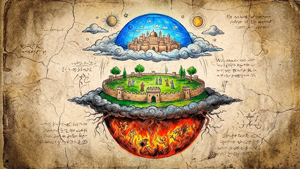
What the Bible Really Says About the Earth
Where did the theory of a flat earth originate? What reality is hidden in this conception? Let's visit the Scriptures with a new approach.
 There’s a REVOLUTION Happening in the Scientific Community There’s a REVOLUTION Happening in the Scientific Community
The scientific community is about to change FOREVER . . . Today, Dr. Nathaniel Jeanson speaks on a revolution beginning to take place that will turn the scientific community upside down.
I Was an IRGC Soldier. Then I Found Christianity…
 Mohamad Faridi once served inside Iran’s Islamic Revolutionary Guard Corps — the IRGC. What he tells Erin Molan about the ideology, the training and the way recruits are taught to think about death left her stunned. This is not a conversation about military hardware or geopolitics from a distance. It is a first-hand account from someone who grew up inside the Islamic Republic of Iran, entered the Revolutionary Guard system and eventually walked away from the worldview he had been taught. Mohamad Faridi once served inside Iran’s Islamic Revolutionary Guard Corps — the IRGC. What he tells Erin Molan about the ideology, the training and the way recruits are taught to think about death left her stunned. This is not a conversation about military hardware or geopolitics from a distance. It is a first-hand account from someone who grew up inside the Islamic Republic of Iran, entered the Revolutionary Guard system and eventually walked away from the worldview he had been taught.
Globalism for Dummies: Who's Really In Control ?
Lara Logan explains the 3 pillars of the Globalist System and what they aim for.
The Kingdom Hedge | Curry Blake 2026 Sermon
A journey of faith, empowerment, and spiritual growth.
 Can a True Prophet Become False? | Rick Renner and Joseph Z Can a True Prophet Become False? | Rick Renner and Joseph Z
Confused about false prophets? Don’t miss a chance to learn where they come from, what their goal is, and how they lead believers off track. Joseph Z and his wife join the Renner family for an eye opening conversation on what the false prophets of today do.

Benny HINN Welcomed the 'KUNDALINI' spirit | Andrew Strom
The spiritual influence that has ruined the charismatic and pentecoastal movement, and how big names fell for it. You are simply not going to believe what has been uncovered here. Staggering to see.
 This apostolic, deliverance, manifestation-focused charismatic movement is EVIL This apostolic, deliverance, manifestation-focused charismatic movement is EVIL
Even mature Christians can be deceived. Kathryn Krick is only the tip of the iceberg. Behind the viral deliverance clips and strange “manifestations” is a much larger movement that has been spreading through the church. In this video, we examine its teachings, origins, and practices, and test them against Scripture.
 Sisera: The General of Baal and Prophetic Shadow of the Antichrist | Joel Richardson Sisera: The General of Baal and Prophetic Shadow of the Antichrist | Joel Richardson
Because the people of God gave away to evil, they were oppressed by an evil neighbor who regularly sent his troops to plunder the country and take slaves. But what happened to this iron armed troop when Deborah and Barak moved in the Word of the Lord with a small army of peasants with forks and spades ?
The Kundalini Spirit is DEMONIC — Yoga Isn't Christian! | Angela Scafidi
 If you're chasing a spiritual awakening right now through Breathwork, Yoga, Chakra activation, Energy healing, etc., this video is for you. Before you continue, I want to challenge you (seriously... I know you're busy, I know there are more "entertaining videos" to watch, I know you're thinking "oh look another whack job on the internet")... But please... Give this stranger on the internet 56 minutes of your time... and maybe... just maybe... I can change your mind on some things. Not through persuasion. Not through a "aha gotcha" moment... But with a perspective you may not have ever heard before from someone who was a certified teacher of yoga, strived to achieve reiki certification, read tarot, read moon charts, activated chakras, all of the things... If you're chasing a spiritual awakening right now through Breathwork, Yoga, Chakra activation, Energy healing, etc., this video is for you. Before you continue, I want to challenge you (seriously... I know you're busy, I know there are more "entertaining videos" to watch, I know you're thinking "oh look another whack job on the internet")... But please... Give this stranger on the internet 56 minutes of your time... and maybe... just maybe... I can change your mind on some things. Not through persuasion. Not through a "aha gotcha" moment... But with a perspective you may not have ever heard before from someone who was a certified teacher of yoga, strived to achieve reiki certification, read tarot, read moon charts, activated chakras, all of the things...
Gold Dust-Manna-Angel Feathers-Gems-Rainbows-Gold Glory cloud-Third Heaven
 Satan is decribed in the Bible as the former glorious cherub who fell in his pride. Yasmeen Suri, author of the book “Beautiful Deception”, speaks from her own experience on the miraculous signs such as manifestations of gold dust, gold glory clouds, gems, angel feathers, gold teeth, rainbows, manna and so on within the Christian churches and in some Jewish cults. Are these manifestations really from God ? What does the Bible say ? Satan is decribed in the Bible as the former glorious cherub who fell in his pride. Yasmeen Suri, author of the book “Beautiful Deception”, speaks from her own experience on the miraculous signs such as manifestations of gold dust, gold glory clouds, gems, angel feathers, gold teeth, rainbows, manna and so on within the Christian churches and in some Jewish cults. Are these manifestations really from God ? What does the Bible say ?
• Indian Born Yasmeen Suri Recalls Her Experiences With the Kundalini and Her Conversion
• Every Christian Should Watch That Part !
When you must walk ALONE with God | Yasmeen Suri
 Those who keep watch with God often find themselves alone because of their calling. This reality is omnipresent in the Bible, from Abel to Jesus and his true disciples. The distinction and separation of values is the very essence of holiness. But the path can seem difficult and lonely, and we sometimes struggle with the temptation to give up. In those moments, persevere and continue to warn others of what is to come, says Yasmeen. If you don't, they will die, but if you do a reward awaits you. Those who keep watch with God often find themselves alone because of their calling. This reality is omnipresent in the Bible, from Abel to Jesus and his true disciples. The distinction and separation of values is the very essence of holiness. But the path can seem difficult and lonely, and we sometimes struggle with the temptation to give up. In those moments, persevere and continue to warn others of what is to come, says Yasmeen. If you don't, they will die, but if you do a reward awaits you.
 Why You Might Not Be Going To Heaven | Pastor Mark Driscoll Why You Might Not Be Going To Heaven | Pastor Mark Driscoll
Why can't all religions lead to Heaven ? Most people assume they’re going to heaven, but Jesus gave serious warnings that challenge that confidence. This sermon reveals what the Bible says about salvation and the one decision that determines where you’ll spend eternity.
• This Is Serious – Most People Are Going to Hell “Forever” and Don’t Know It
What Is So Special About Christianity That Muslims Leave Islam ? | Fariza Gulomikova
 Why would someone risk losing their family, community, reputation, and even their safety to follow Jesus Christ? As an ex-Muslim Christian, Fariza shares her personal testimony of why she left Islam, how she encountered Jesus, and why she believes Christianity is true. This video isn't about changing religions; it's about meeting the living Christ who transforms lives. In this video, she explain why so many Muslims around the world are coming to faith in Jesus, what draws them to Christianity, and why they remain Christians despite the tremendous cost. She also discusses why Christianity is more than a belief system—it's a relationship with God. Why would someone risk losing their family, community, reputation, and even their safety to follow Jesus Christ? As an ex-Muslim Christian, Fariza shares her personal testimony of why she left Islam, how she encountered Jesus, and why she believes Christianity is true. This video isn't about changing religions; it's about meeting the living Christ who transforms lives. In this video, she explain why so many Muslims around the world are coming to faith in Jesus, what draws them to Christianity, and why they remain Christians despite the tremendous cost. She also discusses why Christianity is more than a belief system—it's a relationship with God.
GOD Calls YOU Beloved 🌸 Yahweh, Arise My Love | 40 Min Hebrew Soaking Music
 Hours of peaceful Hebrew & Messianic soaking worship. Gentle piano, soft strings, and voices lifting up the holy names of God: Adonai, Yeshua, El Shaddai, Yahweh Rapha, El Elyon, and many more. If your heart is heavy or your mind will not settle, let these songs play over you — in the morning before the house wakes, in the evening as you wind down, or softly through the night while you sleep. Hours of peaceful Hebrew & Messianic soaking worship. Gentle piano, soft strings, and voices lifting up the holy names of God: Adonai, Yeshua, El Shaddai, Yahweh Rapha, El Elyon, and many more. If your heart is heavy or your mind will not settle, let these songs play over you — in the morning before the house wakes, in the evening as you wind down, or softly through the night while you sleep.
 Those Who Wait Upon the Lord — Elihana Elia, Worship From Israel Those Who Wait Upon the Lord — Elihana Elia, Worship From Israel
• Dry Bones (Ezekiel 37) - Hadassah and Elihana Elia
• Illustrated Catechism for Dummies — The Most Common Cults
Return to Summary
July 2026
What Are You Hiding in Your Backpack ?
We can put on a good show for men, but we should not even try this with God.
The daily Bible reading plan recently evoked the story of Jehu. Although his name is less well-known than others, Jehu was a great king. He allowed God to use him to cleanse the land of the encroaching idols of Baal and Astarte, idols that the wicked Queen Jezebel had brought from her Phoenician cities of Tyre and Sidon, which became coastal cities in modern-day Lebanon, and established in the land of Israel while she killed the prophets of Yahweh. The prophet Elijah had to learn from God how to outrun horses, and command fire from heaven, to save his life while confronting the evil ruling couple Ahab and Jezebel. Jehu came at the end of their rule and he "drained the swamp" of his time. He is often cited as the biblical model for President Trump. God himself praised Jehu at the end of his life, only regretting that he had not resolved the problem of the two golden calves erected in Bethel and Dan. The preservation of the golden calves illustrates the ambiguity of Jehu's reign: he was God's instrument to punish the house of Ahab, but he refused to abandon the political compromises that distanced the people from pure monotheism. The word henotheism (from the Greek heîs theós, "one god"), describes a religious practice that consists of devoting exclusive or predominant worship to a single deity, while acknowledging the existence or possibility of the existence of other gods. This is the situation predominant in monotheistic countries today.
“You cannot serve God and Mammon”. This famous proverb, rooted in Matthew 6:24, highlights the impossibility of balancing two ultimate—and conflicting—loyalties. "Mammon" refers to wealth, material gain, or greed. The core message is that your highest devotion can only have one master.
Why did Jesus insist so much that his disciples sell all their possessions to follow him? Have you ever wondered, as I have, if this requirement was justified? Were his disciples supposed to wander the streets as beggars? That's probably not what Jesus meant. Jesus said we should sell everything we own. There's this story in Mark 10 where a rich young man asks Jesus how to obtain eternal life. After listing his good deeds, Jesus tests him by asking him to sell all his possessions and distribute the money to the poor, and then follow him. Unable to part with his wealth, the young man goes away saddened. The problem is ownership, not material goods. So, was Jesus the first communist? Perhaps, but certainly not in the sense that we understand communism, which is in reality a form of parasitism exercised by one class on another. No, what Jesus proposes is to free us from our worries by entrusting us to divine management of our resources so that we can devote ourselves to what he calls us to do. It is a contextual requirement. What you own owns you and serves your purposes. What God owns serves his plans… (click to read more)
Read more
Paragraphs:
1. What are you hiding in your backpack?
2. Who subjected the world to planned obsolescence? (updated 07.17)
3. Is God concerned with what we ate yesterday?
4. What does revealing mean?
5. Ruth set an example for us
6. God simply wants us sincere and available for Him
7. Love will supercede everything
• Various Videos Selected this Month are Linked Here
What are you hiding in your backpack?
This column may seem incoherent or disjointed, and I will take excuse from the heatwave we are experiencing ! I'm currently sorting through my things because I have to organize another move. Five years ago, some idiot kid, I guess, set fire to a moped in the underground garage where I'd stored my belongings. Several cars burned, and the dense black smoke seeped into all my boxes. I should have learned my lesson then. But instead, I cleaned everything up for weeks and carefully repacked it all. I'm finishing that job now because another move is looming. Why does anyone hold on to everything they've ever owned? I have my 1974, JVC-9470LS cassette recorder on display in the basement. It's a console like they don't make anymore with real buttons, sliders, VU meters with needles and old style radio tuner. It feels fantastic. The lights come on, but the amplifier is out. I should dump it, but a photo of my oldest son, who was two at the time, listening to “I will be happy in the God of my Salvation” with the big headphones, reminds me of those early years. First as single, listening ad nauseum to the Moody Blues, Elton John, Cat Stevens, Jim Croce, Simon & Garfunkel, Chi Coltrane—“You Were My Friend”, O Sullivan—yea: “Alone Again, Naturally” and many others. And later a complete switch to Christian music, as I was being drawn into family life at the same time. Son used it for his first performances as a disc jockey, another music style and another orientation. Even though it hasn't been working for a long time, it brings back many precious memories and I find it hard to part with it. Music plays such an important role in our lives, for better or for worse, to praise God and enter into a victorious attitude, for appeasement, creativity and revelation, but also to nourish melancholy. Music conveys states of mind and opens the door to spirits. We must be careful.
I found my first enlarger, bought second hand for the equivalent of 50 bucks of those years around the same time. I gave away the professional enlarger that replaced it, but I remain more attached to this one, perhaps because it reminds me of my passion and my poverty of yesteryear? Or perhaps because of the portraits of dear departed that I printed with it… These photos were offered to God as a sacrifice by fire, a long time ago, for the sake of a marriage. God knows everything and remains the ultimate goal of our obedience. He redeems our mistakes and rejoices in our successes. They say that fledglings cling to the first thing they see when they hatch, and I have never been able to forget them. You know that biblical proverb about the sow that was washed and then returned to her mire? My children have dogs, and it seems that every time they shampoo them, the first thing they want to do when they go outside is roll in some poop. "You can't change human nature," as the poet said. Religion, and sometimes morality, push us to extremes, and we struggle to distinguish the base from the precious, especially when it comes to our pre-Christian past and our relationships. It is easy to wear two faces, simply to keep up appearances and avoid sparking conflict. Only Jesus could heal one sick woman and raise another from the dead within the same hour without arousing jealousy—or so we dare to assume. But I'm not suggesting we shouldn't impose discipline on ourselves and ignore our natural attractions. All of this will undoubtedly be easier to manage and more authentic in the new reality. The camera was offred to a friend pastor, but I purchased one of the same model many years later, just to remember. My transparency scanners are part of this move. They're bulky and expensive, and now obsolete. They work perfectly well though, as long as an old computer running Mac OS 9 is available. But will parts & service be still available when they fail ? I doubt it. The stamp collection inherited from dad at a time when stamps no longer interest anyone, the outdated and musty-smelling furniture collected by mom and cluttering up the cellar. And I won't even mention the countless family videos, the photos, transparencies and digital files stored on hard drives, the studio photography equipment, the mat cutting and framing tools, and everything else that served me in a past life, before I was caught in more urgent matters. So I don't own much financially, but I drag a great deal in terms of identity and emotions. So much time and energy has been invested in acquiring and learning about computers and software, and before that, enlargers and chemical processes, that I push back the idea of seeing this know-how fall in oblivion, even though in practice I hardly use these resources anymore since they became obsolete almost overnight with the advent of digital technology. There is this story that Jesus told about a man who thought he had gathered enough things and knowledge to face the future with serenity. He had no idea that God would suddenly tear him away from what he thought, constituted his security.
Perhaps due to a lack of long-term vision, I'm also doing my best to keep my 22-year-old car running. I've always bought used cars and have to get my hands dirty, otherwise owning one would be too expensive. Environmental activists now have a say in the automotive industry, and despite its integrated processor unit and numerous emissions-reducing devices, this 22-year-old car doesn't meet the actual standards. So I have to pay extra taxes for a car that seldom takes the road. Newer cars are nice, but way too expensive. Their sophisticated, fuel-efficiency-focused design also sets them for failure. These performance requirements mean more fragile engines, built to spare fuel but not to last. Electronics are prone to send you back to the garage and cars become prohibitively expensive to maintain after a certain point—a lifespan usually set by manufacturers. My previous car was a simpler-designed Toyota van that also lasted 20 years. The engine was still running perfectly after more than 300,000 km, but the salt on our roads had taken its toll. I had spent so much time wandering and camping in the wilderness with it, that it broke my heart to part with it. I'm not saying technology is a bad thing. But when reliability has to be sacrificed for sophistication to meet rules dictated by a global standard, one has to wonder if the goal isn't simply to destroy individual transportation by making it excessively regulated and expensive. What you may save on gas, you lose by changing cars more often. Manufacturing a car requires a lot of energy, if that matters at all. The trend is towards leasing, but it isn't cheap in the long run especially if you don't drive much. So why not build simpler cars with a longer lifespan? But of course, no one should know that climatic upheavals and disasters are actually a direct consequence of the wickedness of men and the angels (Second Chronicles 7:13-14).
Who subjected the world to planned obsolescence?
Ad to this, the fact that we are aging, loosing our beauty, our edge, our strength and our health, replaced by younger, brighter and sharper contenders, and you sum up one of the main characteristics of the world : Obsolescence. Two months ago in my chronics, I was bragging about how I healed myself of Lyme disease with the help of God. Not two weeks had passed when I was bitten by what I think were ticks. A large red patch that refuses to disappear is there, to remind me that the devils never tire. As Pastor Curry Blake often reminds us, if the devil knows he can easily stop you by affecting your health or that of your loved ones, he will not hesitate to abuse of this means. Friends complain about recurring cancer after God healed them, which is more serious and sad. What has the Bible to say about this condition? Is it something that God created originally to humble us? Isolated demons live in a state of constant distress, and the short parable Jesus tells us in the Gospel of Luke (11:24) explains that they need to inhabit a body. They take advantage of a moment of weakness and emptiness to return to the place they have chosen as their dwelling. Jesus himself suffered these attacks from the devil, as Luke suggests (4:13). He always remained vigilant and resisted. I just went to the doctor who prescribed antibiotics, but I know I must pray and find the strength to overcome this vulnerable state. In John 16:33, Jesus says: “I have told you these things, so that in me you may have peace. In this world you will have trouble. But take heart! I have overcome the world.” In Romans 8:18, Paul says: “I consider that our present sufferings are not worth comparing with the glory that will be revealed in us. For the creation waits in eager expectation for the children of God to be revealed. For the creation was subjected to frustration, not by its own choice, but by the will of the one who subjected it, in hope that the creation itself will be liberated from its bondage to decay and brought into the freedom and glory of the children of God.” This is reassuring because at least the Bible acknowledges this problem. If we understand it properly, we have been doomed to obsolescence because we served a false god within a flawed paradigm. But Jesus offers us his peace and the pledge of his victory right now, even before all this ends, when he will come back and restore all things. Have you ever wondered what our world would be like if all the resources wasted on wars and conflict resolution, on post-disaster reconstruction, on losses due to climate upheaval, political corruption, divorce, disease, aging, and so on, could be used to improve our lives on Earth and express our creativity?
We are all someone's poor, and I probably have a simple and humble approach to life and resources, even if this poverty is all relative compared to the millions of people who are refugees or affected by wars and natural disasters. My sons belong to another generation, one where it was easier to obtain certain things with the help of parents or if you were ready to take small jobs. The current generation, on the other hand, seems very free in this respect. Parents provide and young people change their phones every two years; new drivers lease new cars; they change boyfriends and girlfriends in this hook up culture, get tattoos of the day's design to look like reptiles not even thinking of what they will feel about it tomorrow, adopt new ways of thinking… It's all about peer pressure. They are frantic in all their ways as if the world ended tomorrow. Not to say that many young people of the current generation aren't wonderful. But for me, having a friend in life was difficult and precious; you had to think about it, look forward to it, take steps. And every time I lost one because I wasn't particularly bright, quite the contrary, or for another reason, it was traumatic. Their memory remained deeply ingrained in me. Living according to God's Word requires adjustments, and when we just arrive from the outside world with our luggages full of problems, it isn't obvious and involves excesses, shortcomings and failures. Psalm 119:9 says: “How can a young person stay on the path of purity? By living according to your word.” Living according to God's word takes practice, and the counsel of more seasoned travellers, which is not obvious to obtain for a lonesome soul. Our failures send us back to the place where we missed. Sometimes we ask ourselves: have we already begun our lives, or are we still in a rehearsal phase, or trapped in a bad joke like in the movie "Groundhog Day"? A few years ago… ouch, 18 already, I had to leave everything behind for a journey to the other side of the world, in order to reconnect with my past, find people, collect stories, notes, photos and documents, asking God for full understanding of what remained deep within my soul as an inconsolable sorrow. I went through a healing process that had been waiting for years and that took months, learning that we cannot simply cover the painful events with a slab of concrete and forget them. In any case, that didn't work for me, and what I had buried at the age of 23, because I didn't know how to face it, I had to unearth 30 years later to confront. A sad story, but one that God has magnificently transformed, too personal to interest anyone else, but writing it allowed me to reconcile with my past, with my loves, and, above all, to bring the deep questioning that was burried deep down in me, in the healing light of God and receive his answers, before turning that page definitely. For, ultimately, these ties that bind us to our past often prevent us from believing in a God of love. They prevent us from living in faith in the present. I like the wisdom of this phrase from the late author Christian Bobin: "We are made of this, we are made only of those we love and nothing else." The sorrow of the world brings death, says the Apostle Paul, and we must not let it hold us back. But we can take Jesus' hand and ask him to accompany us to that cave where we were forced to abandon a wounded love or a passion, and to let it die—a reference to the film "The English Patient"—and he will. He will even go before us. What I have experienced, others, different or more mature, know how to set aside in order to better dedicate themselves to the path that lies before them, for God can care for our past in many different ways. Jesus also said, “No one who puts a hand to the plow and looks back is fit for service in the kingdom of God.” This also reminds us of Lot’s wife, who, for looking back, was turned into a pillar of salt, according to the Scriptures. What matters, I believe, is not dragging these invisible anchors of sadness. They would prevent us from fully experiencing what God has in store for us, and we will have to confront them sooner or later. Many lives hide a broken mirror that reflects only a sad image, and God wishes to fix that mirror in his own way, to give it a place of honor in the mosaic of our lives.
Is God concerned with what we ate yesterday?
But what does Jesus think of all this? Is he concerned with considerations resulting from our mortality? Jesus doesn't hide the seriousness of our calling and the dangers it entails: "The hour is coming when anyone who kills you will think they are offering a service to God." "You will be hated by everyone because of me, but not a hair of your head will perish, and by your perseverance you will gain your souls." We must face the facts: the golden age of a largely Christianized world is behind us, and the devil wants his revenge. I am currently meditating on two aspects of Jesus' teaching. In Matthew 6:26, Jesus says, “Look at the birds of the air; they do not sow or reap or store away in barns, and yet your heavenly Father feeds them. Are you not much more valuable than they?” He invites us not to worry about tomorrow, not to hoard treasures, and not to gather things that will one day end in ashes. “Do not store up for yourselves treasures on earth, where moths and vermin destroy, and where thieves break in and steal. But store up for yourselves treasures in heaven, where moths and vermin do not destroy, and where thieves do not break in and steal. For where your treasure is, there your heart will be also” (Matthew 6:19). Thus, Jesus is not against the idea of accumulating treasures. But he wants us to do so with things that will last.
So the whole question is this: What does Jesus mean by “treasures in Heaven” ? Will all the photographs I have taken during my life be available in Heaven, or even on earth at Jesus' return? Or am I just luring myself in thinking that what my feelings produced while capturing instants that passed before my eyes will last, while all of this belongs in the curse of obsolescence that came upon the world? God—or Peter—says that everything will have to be tested through fire. What part of my feelings is doomed to vanish instantly in smoke, and is there a small part in them that has an eternal value? Does love redeem what is passing and make it become eternal? Although I do think so, I have to admit having no sure answer to that. What do Scriptures say? Scriptures report in much detail some anecdotal life events, while it ignores completely the details of important events. For instance, when this lady disrupts the lunch that a Pharisee organised for Jesus, by coming in, washing Jesus' feet with tears, wiping them with her hair and then pouring a bottle of perfumes over his head, or perhaps it was two different stories, the host is disgusted, but Jesus is keen to mention to everyone that what she did will be written in the Gospels and published everywhere, so that it will be remembered. He also said, to those who followed him: “Are not a pair of sparrows sold for a penny? Yet not one of them will fall to the ground apart from your Father’s will. And even the very hairs of your head are all numbered. So don’t be afraid; you are worth more than a flock of sparrows.” Matthew 10:29-31.
Is this figurative language, or does God truly keep boxes in Heaven, where each little bit of us, even our hair—and a lot are missing from my head—and where all our good memories, are preserved? Or is it stored as information in the very memory of our glorious spiritual identity, ready to be revealed as the “Revealer” comes ? Does this apply only to the steps we have taken in obedience to Jesus ? Jesus also said, “I am the true vine, and my Father is the gardener. He cuts off every branch in me that does not bear fruit, while every branch that does bear fruit he prunes so that it will be even more fruitful.” John 15:1-3.
“Then Simeon blessed them and said to Mary, his mother: “This child is destined to cause the falling and rising of many in Israel, and to be a sign that will be spoken against, so that the thoughts of many hearts will be revealed. And a sword will pierce your own soul too.” Luke 2:34-35
What does revealing mean?
So God cuts off branches that stem from our old nature to favour the branches that are grafted into Jesus and are able to transmit His life. He invites us to merge with his flow in order to be revitalized. Jesus is so much more than religion. Paul Reminded the Athenians that it is in him that we have life, movement and being, and that we are his race. A few nights ago, I had a dream. I was lost in thought when I suddenly remembered that my loved ones were waiting for me at the airport. I rushed over and arrived just in time to hand them their plane tickets to Australia at the gate. Why Australia? I have no idea, perhaps it's a memory of our last family vacation there over 20 years ago. I had to let them go and return home to get my things. But I got distracted in other things on the way home. Doctors have words for this condition. When I woke up from that dream, I thought about Jesus' words concerning those who bustle about, preoccupied with their trivial pursuits, and who will not be ready for the wedding feast he is preparing. God sometimes gives us dreams to reveal where we are. We must undoubtedly be concerned about escaping the impending obsolescence that affects the world of those who choose to ignore Jesus the King. For what we await is the revealing of the Sons of God and of the Kingdom. The word "reveal," in the biblical context, comes from two Greek words: "apo," which means to separate, as in the term "apochromatic," which designates a lens of quality that allows for the precise separation of colors, and "kalupto," which means to hide, cover, or prevent the knowledge of something. In Luke 23:30, Jesus says, "Then they will begin to say to the mountains, 'Fall on us!' and to the hills, 'Cover (kalupto) us!'" Together, these two words form the word "Apocalupto," which means to unveil, to manifest separation. This is the meaning of the title of the Book of John: the Apocalypse.
A wedding feast is about two people revealing as one. When you really meet someone appointed by God, something beautiful happens: You die! When the components of a glue are mixed together, those sticky unstable liquids loose their freedom and become solid, and you can build something useful that lasts. Or said with my photographer's background, when you dip the image imprinted by light in the developer—the revelator, in French—, a beautiful miracle happens in the darkroom. The Bible says that everything on earth will be revealed at the coming of our Lord Jesus. We can meet him right now and Jesus will reveal and cover our sins. But as He comes back, our glory, or shame, will be exposed in plain sight for all to see. Meeting another human being appointed by God can also reveal what is imprinted in us. Eve revealed what was in Adam, and Adam revealed what was in Eve. I guess this was a predominently beautiful and awesome discovery. But then the snake sneaked in and revealed something that was dormant in Eve and Adam: disappointment with God, or perhaps with themselves. Judas was chosen by Jesus as one of his apostles. He had no doubt some qualities. But when he knew that the Master was going to be taken from them, he flipped. He accepted the priests proposal with relief, and sold Jesus for 30 pieces of silver—the down-payment for a ranch for his old days. He thought this would be OK, since Jesus had set his mind on dying anyway. This also brings to mind the story of Gehazi, Elisha's servant, who inherited leprosy from the Syrian Naaman by accepting his gifts. What will we decide when a selfless offer is made to contribute to our education or our projects by giving us access to Qatari funds – just a few million, enough to offer us “freedom of thought” while providing for our needs without having to depend on God's daily bounty?
Ruth set an example for us
How have we chosen to get out of our inherited poverty? Do we hold onto old things as a security, or are we ready to step out of the boat? We know the story of Ruth, who decided to follow her mother in law after the death of her husband. “Look,” said Naomi, “your sister-in-law is going back to her people and her gods. Go back with her.” But Ruth replied, “Don’t urge me to leave you or to turn back from you. Where you go I will go, and where you stay I will stay. Your people will be my people and your God my God. Where you die I will die, and there I will be buried. May the Lord deal with me, be it ever so severely, if even death separates you and me.” When Naomi realized that Ruth was determined to go with her, she stopped urging her”. Ruth 1:16-18. Ruth choose to let go of the little certainty she had, by love for her mother in law and we can assume, by love for Naomi's people the Jews and for their God. God rewarded this Moabite woman who found a good man in Israel and became an ancestor of Jesus the Messiah.
Naomi is a figure of Christ, and Ruth, of his disciples. Naomi means graceful, pleasant, delicious. Naomi had to leave her home land to a foreign country where she lost her husband and their two sons. Christ left the peace and glory of Heaven to drink a bitter cup, filled with the consequences of our sins. The name Ruth comes from a root word that means comrade, companion, intimate friend. Shortly before his death, Jesus said to his disciples: “You, who are with me from the beginning, what will you do now, will you leave me and go away like these?” For what Jesus had just told his followers wasn't easy to understand for any Jew, and in fact for anybody. Here is the problem: “Whoever eats my flesh and drinks my blood remains in me, and I in them. Just as the living Father sent me and I live because of the Father, so the one who feeds on me will live because of me.”Jesus leads his disciples into a new dimension. “But to all who did receive him, to those who believed in his name, he gave the right to become children of God.” Paul affirms that there is no longer Jew or Greek, slave or free, male or female, Black or White. Not only that, but on the Mount of Transfiguration, the Father declares that Moses, who represents the Law, and Elijah, who gathers the prophets, will step aside to make way for the Son of his love. But this prospect was too radical for many of his disciples, who separated from him from that day forward. “We loved your teachings, Rabbi, and your words made you seem like a great prophet. But now you’re going too far. We are certainly not ready to abandon our tradition, our heritage and our deeply rooted and long-established identity as Jews, Catholics, Muslims, Hindus, Homosexuals, Blacks, Swiss, Americans, to merge with you and your word in the depths of our souls and spirits, and become something that has never existed until this day.” Most of his true disciples, however, agreed to relinquish their certainties and followed their master toward his destiny, offering their lives for his cause, for they had glimpsed the glory of the Kingdom of which Jesus is king. But Judas withdrew. He wanted to save his life. Yet he was the first to die, and in a way as gruesome as absurd.
God simply wants us to be humble, sincere, free, and available to him
So why is Jesus asking that what let go of what we own, give the proceeds to the poor in order to transfer these funds in Heaven, and then follow him? My understanding of this requirement is that God wants us to be released into a position where he can lead us out of the parent's house, being freed from this world's hold on us, into a place where we are available so he can open new opportunities in order to reveal more of the Son's image in us. This can come in many unexpected ways. God loves to surprise us probably more than we love to be surprised. God also uses the illustration of a wedding, in Genesis, where it is written: “That is why a man leaves his father and mother and is united to his wife, and they become one flesh.” Paul says that this mystery is relevant to the relation of Christ and his disciples.
“Rejoice in the Lord always. I will say it again: Rejoice! Let your gentleness be evident to all. The Lord is near. Do not be anxious about anything, but in every situation, by prayer and petition, with thanksgiving, present your requests to God. And the peace of God, which transcends all understanding, will guard your hearts and your minds in Christ Jesus”. Philippians 4:4-7
How can we achieve this? How can we create the ideal circumstances, surround ourselves with the right people, and commit to the right projects? How can we meet our loved one at the right time? In reality, it's not up to us. God works behind the scenes, and that's what makes it so beautiful! It is Him who brought Eve to Adam. It is God who led Ruth into Boaz' field. It is the Father who sent us Jesus and who opened our spiritual eyes so that we could recognize in him the One that was Sent—the Messiah who represents our hope and the future of the world. It is Him who organizes the next wedding, with us able to merge into the reality of God. All we have to do is make ourselves available, follow Jesus and obey the prompts of the Spirit. Jesus knew that some would accept his challenge and others wouldn't. And he doesn't mind letting them go. He's sad for them, of course, but Jesus spoke at length about the need to be sincere and not to resemble hypocrites who put on a certain facade while deep down, they are something else entirely. A little leaven leavens the whole lump, he says. He doesn't want this in his community of believers. And we have already spoken at length about those who think they can deceive others under the guise of an outward identity—Catholic, Jewish, Islamic, or whatever you like—but who, deep down, want to dispossess God and keep the vineyard for themselves (Matthew 21:38)—who remain the enemies of Christ and his coming. Their attitude toward Israel is revealing. Jesus will leave them neither root nor branch, warns Scripture in Malachi 4:1. So why not reconsider the options we might have chosen, while it's still possible?
Love will supersede everything
So, of course, what is true for chicks when they hatch naturally is also true for humans when they are born again. John, the disciple “whom Jesus loved,” includes this beautiful description at the beginning of his Gospel: “The true light that gives light to everyone was coming into the world. He was in the world, and though the world was made through him, the world did not recognize him. He came to that which was his own, but his own did not receive him. Yet to all who did receive him, to those who believed in his name, he gave the right to become children of God — children born not of natural descent, nor of human decision or a husband’s will, but born of God. The Word became flesh and made his dwelling among us. We have seen his glory, the glory of the one and only Son, who came from the Father, full of grace and truth.”
Approximatively 20 years after his dramatic encounter with Jesus glorified on the road to Damascus, the Apostle Paul, a former Pharisee, doctor of the law and persecutor of Christ and his followers, wrote in 1 Corinthians 12-13, what can be understood as a description of the bride of Christ which needs to prepare itself so as to be without flaws or blemishes for the wedding day. He says that the community of the believers is like a body. A body can function harmoniously only if all parts of it recognize each other. Each part of the body has a unique role to play and deserves to be honored. This means that we were not all made alike and that our differences are not random, but meant for the particular task we are supposed to achieve in the body, in expressing love and kindness, exercising spiritual gifts, building each other's confidence and strength, bringing healing and comfort and the list goes on. This comes in stark contrast with the context of the church of Corinth. Paul writes to a church immersed in a city associated with trade, but also with corruption and immorality. These believers are struggling to properly apply spiritual gifts and to resist the ungodly practices of the surrounding culture. Paul's letter gives instructions for real-life concerns such as marriage and spirituality. He also deals with the importance of unity and gives one of the Bible's more well-known descriptions of love, in chapter 13.
“…But God has put the body together, giving greater honor to the parts that lacked it, so that there should be no division in the body, but that its parts should have equal concern for each other. If one part suffers, every part suffers with it; if one part is honored, every part rejoices with it”. …
“Now eagerly desire the greater gifts. And yet I will show you the most excellent way”.
“If I speak in the tongues of men or of angels, but do not have love, I am only a resounding gong or a clanging cymbal. If I have the gift of prophecy and can fathom all mysteries and all knowledge, and if I have a faith that can move mountains, but do not have love, I am nothing. If I give all I possess to the poor and give over my body to hardship that I may boast, but do not have love, I gain nothing. Love is patient, love is kind. It does not envy, it does not boast, it is not proud. It does not dishonor others, it is not self-seeking, it is not easily angered, it keeps no record of wrongs. Love does not delight in evil but rejoices with the truth. It always protects, always trusts, always hopes, always perseveres. Love never fails. But where there are prophecies, they will cease; where there are tongues, they will be stilled; where there is knowledge, it will pass away. For we know in part and we prophesy in part, but when completeness comes, what is in part disappears. When I was a child, I talked like a child, I thought like a child, I reasoned like a child. When I became a man, I put the ways of childhood behind me. For now we see only a reflection as in a mirror; then we shall see face to face. Now I know in part; then I shall know fully, even as I am fully known. And now these three remain: faith, hope and love. But the greatest of these is love”.
Links and Messages
• You are a Walking Cathedral
• After 2,000 Interviews… I Stopped Chasing This
• True Christians Are of an Unusual Kind
• Get Your Butt Off Of The Couch
• Construction Site Debate: Faith, Hell, and Forgiveness!
• God's Message: Your Journey Is Too Great, Get Up!
“Blessed are those who mourn, for they will be comforted. Blessed are the meek, for they will inherit the earth. Blessed are those who hunger and thirst for righteousness, for they will be filled”. Matthew 5:4-6
• Nothing Can Separate Me — Elihana Elia
• Dwell With Us — Musical
• Sorrow Makes You Stronger — Allen Nolan
• 28 mins of wisdom from Proverbs — Cait Taylor
The Only Kingdom that Cannot be Shaken | Joel Richardson
 Daniel 2:44: The prophet Daniel interprets a dream, stating that God will set up an everlasting kingdom that will never be destroyed, which will "crush all these kingdoms into nothingness." Revelation 11:15: Describes the end of the current age, declaring that the "kingdoms of this world have become the kingdoms of our Lord and of his Christ". Daniel 2:44: The prophet Daniel interprets a dream, stating that God will set up an everlasting kingdom that will never be destroyed, which will "crush all these kingdoms into nothingness." Revelation 11:15: Describes the end of the current age, declaring that the "kingdoms of this world have become the kingdoms of our Lord and of his Christ".
The Real Reason America is Falling... | Troy Brewer
 The battle for America won't be won in Washington. It'll be won in our homes. As we celebrate 250 years of freedom, Captain John Arroyo brings a bold, biblical message that cuts through the noise and exposes where the real war is being fought. The enemy has always known that if he can destroy the family, he can weaken a nation. That's why the battle isn't just over politics, policies, or elections—it's over fathers, mothers, children, and the God-ordained foundation of the home. The battle for America won't be won in Washington. It'll be won in our homes. As we celebrate 250 years of freedom, Captain John Arroyo brings a bold, biblical message that cuts through the noise and exposes where the real war is being fought. The enemy has always known that if he can destroy the family, he can weaken a nation. That's why the battle isn't just over politics, policies, or elections—it's over fathers, mothers, children, and the God-ordained foundation of the home.
 A Prophetic Vision Coming In 2026. The Church Must Hear... | Sid Roth A Prophetic Vision Coming In 2026. The Church Must Hear... | Sid Roth
How this lady came to know the Holy Spirit in a new way and entered the reality of the Book of Acts… in the Jerusalem of the North: Amsterdam. Dr. Arleen Westerhof shares a vision for 2026 that the church needs to hear.
You May Have Been Taught the End Times WRONG. Here’s the Truth... (ft. John Bevere) | Live Free
 Are we actually living in the last days? And what if most Christians have misunderstood the end times entirely? In this special episode of LIVE FREE, Pastor Josh Howerton sits down with John Bevere to unpack the Second Coming of Christ, the rapture, and the rise of global deception. From shocking biblical chronologies to the possibility of a "powerful deception," indiscriminately sweeping up all who hate God, Jews and Christians in a kind of "the enemy of my enemy is my friend" frenzy, this conversation connects Scripture to what’s happening in the world right now. But this isn’t about fear or speculation, it’s about urgency. Because if Jesus is returning sooner than we think, it changes everything about how we live today. Are we actually living in the last days? And what if most Christians have misunderstood the end times entirely? In this special episode of LIVE FREE, Pastor Josh Howerton sits down with John Bevere to unpack the Second Coming of Christ, the rapture, and the rise of global deception. From shocking biblical chronologies to the possibility of a "powerful deception," indiscriminately sweeping up all who hate God, Jews and Christians in a kind of "the enemy of my enemy is my friend" frenzy, this conversation connects Scripture to what’s happening in the world right now. But this isn’t about fear or speculation, it’s about urgency. Because if Jesus is returning sooner than we think, it changes everything about how we live today.
 The Secrets of Slaying Your Giants | Jonathan Cahn The Secrets of Slaying Your Giants | Jonathan Cahn
Giants aren’t just obstacles. They come after your purpose, they drain your strength, and try to take away God’s blessings in your life. Jonathan Cahn reveals keys to overcome these giants in your life. Learn to fight like David.
The Most Extraordinary Story I've Heard... (Rabbi Eli Schlanger) | Erin Molan
 Nikki Goldstein was lying in an ICU, in a medically induced coma, when a rabbi walked into her hospital room. Moments later, he blew the shofar and prayed over her bedside. Twenty-four hours later, doctors say the infection that was expected to take her life began to retreat. Years later, that same rabbi — Rabbi Eli Schlanger — was murdered in the Bondi Beach terror attack before he could complete the book he had begun writing with Nikki Goldstein. In one of the most moving interviews ever featured on The Erin Molan Show, Nikki shares the extraordinary story of survival, faith, friendship, tragedy, and why she was determined to ensure Rabbi Schlanger's message would live on. Nikki Goldstein was lying in an ICU, in a medically induced coma, when a rabbi walked into her hospital room. Moments later, he blew the shofar and prayed over her bedside. Twenty-four hours later, doctors say the infection that was expected to take her life began to retreat. Years later, that same rabbi — Rabbi Eli Schlanger — was murdered in the Bondi Beach terror attack before he could complete the book he had begun writing with Nikki Goldstein. In one of the most moving interviews ever featured on The Erin Molan Show, Nikki shares the extraordinary story of survival, faith, friendship, tragedy, and why she was determined to ensure Rabbi Schlanger's message would live on.
Why the Church Misunderstands the Rapture ft. Rick Renner | Rebecca Lamb
 Is the rapture actually biblical? Rick Renner joins Rebecca for one of the clearest conversations you'll hear on the end times, the tribulation, and what Scripture actually says about Christ's return. Rather than fueling fear or speculation, Rick points viewers back to the authority of God's Word and explains why biblical literacy has never been more important. From ancient prophecy to modern transhumanism, Islam, and the alarming rise of antisemitism, this conversation will equip you to guard your heart, grow in discernment, and faithfully live with eternity in view. Listen to this eye-opening, wide-ranging teaching! Is the rapture actually biblical? Rick Renner joins Rebecca for one of the clearest conversations you'll hear on the end times, the tribulation, and what Scripture actually says about Christ's return. Rather than fueling fear or speculation, Rick points viewers back to the authority of God's Word and explains why biblical literacy has never been more important. From ancient prophecy to modern transhumanism, Islam, and the alarming rise of antisemitism, this conversation will equip you to guard your heart, grow in discernment, and faithfully live with eternity in view. Listen to this eye-opening, wide-ranging teaching!
Surviving Suffering | Colossians 1:24–29 | Gary Hamrick
 Everyone is touched by suffering to some degree at some point in their lives. It is the natural result of living in a sin-filled world with pain and sorrow. Some even question the God's existence or goodness because they wonder how a good God could allow such pain and suffering in the world. Pastor Gary addresses these questions and offers encouragement in today’s message to those who are suffering. Everyone is touched by suffering to some degree at some point in their lives. It is the natural result of living in a sin-filled world with pain and sorrow. Some even question the God's existence or goodness because they wonder how a good God could allow such pain and suffering in the world. Pastor Gary addresses these questions and offers encouragement in today’s message to those who are suffering.
Warnings to the Church in a Crazy World | Colossians 2:1-23 | Gary Hamrick
 Our world is influenced by what Paul calls “the traditions of men” and “the basic principles of this world” that are often contrary to Scripture. The worldly influence threatens a person’s walk with Christ, and more broadly, the Church itself. What were the things of Paul’s day that he was warning the church at Colosse about, and how does this translate to what threatens the Church today? Pastor Gary mentions the cultural issues, but focuses primarily on the worldly philosophies and aberrant doctrines that have slipped into the Church. Our world is influenced by what Paul calls “the traditions of men” and “the basic principles of this world” that are often contrary to Scripture. The worldly influence threatens a person’s walk with Christ, and more broadly, the Church itself. What were the things of Paul’s day that he was warning the church at Colosse about, and how does this translate to what threatens the Church today? Pastor Gary mentions the cultural issues, but focuses primarily on the worldly philosophies and aberrant doctrines that have slipped into the Church.
"Born Again" Doesn't Mean What You Think | The Greek Word Jesus Actually Used
 What if the phrase 'born again' is only telling you half of what Jesus actually said? The Greek word Jesus used that night with Nicodemus carries two meanings at once, and English quietly dropped one of them. Once you see the half that got left out, everything about that conversation opens up in a completely different way. John 3 is one of the most quoted chapters in the Bible, but most people encounter it through a translation that had to choose one meaning and leave the other on the floor. The word is anothen, and it means both 'again' and 'from above' simultaneously. Nicodemus, one of the sharpest religious minds in all of Jerusalem, heard the first meaning and hit a wall. Jesus was pointing toward the second one the entire time. What if the phrase 'born again' is only telling you half of what Jesus actually said? The Greek word Jesus used that night with Nicodemus carries two meanings at once, and English quietly dropped one of them. Once you see the half that got left out, everything about that conversation opens up in a completely different way. John 3 is one of the most quoted chapters in the Bible, but most people encounter it through a translation that had to choose one meaning and leave the other on the floor. The word is anothen, and it means both 'again' and 'from above' simultaneously. Nicodemus, one of the sharpest religious minds in all of Jerusalem, heard the first meaning and hit a wall. Jesus was pointing toward the second one the entire time.
What Heaven Is Really Like | Randy Kay's Near-Death Experience
 Can near-death experiences be trusted? Former biotech CEO Randy Kay didn't think so—until he was medically declared dead for more than 30 minutes and came face to face with Jesus. Now, after interviewing more than 140 people who have had similar encounters, Randy joins Rebecca to explore what these experiences reveal about heaven, hell, spiritual warfare, and the hope of eternity. Whether you're grieving the loss of a loved one, wrestling with doubt, or simply curious about what happens after death, this conversation will leave you with a deeper revelation of God’s unconditional love, mercy, and grace. Can near-death experiences be trusted? Former biotech CEO Randy Kay didn't think so—until he was medically declared dead for more than 30 minutes and came face to face with Jesus. Now, after interviewing more than 140 people who have had similar encounters, Randy joins Rebecca to explore what these experiences reveal about heaven, hell, spiritual warfare, and the hope of eternity. Whether you're grieving the loss of a loved one, wrestling with doubt, or simply curious about what happens after death, this conversation will leave you with a deeper revelation of God’s unconditional love, mercy, and grace.
“Climate Change Is NOT An Existential Threat” | Steven Koonin — John Anderson
 Steven Koonin joins John Anderson for an in-depth conversation exploring the science, engineering and economics behind today's climate debate. Drawing on decades of experience in physics, energy research and public policy, Koonin argues that while climate change is real, many public discussions fail to capture the uncertainty, nuance and trade-offs contained within the scientific evidence. Together they examine what climate models can reliably predict and why careful analysis matters when shaping long-term policy. The conversation also explores Australia's energy future, the challenges of maintaining reliable electricity grids, the potential role of nuclear power, and the balance between affordability, energy security and environmental responsibility. Koonin reflects on scientific integrity, technological innovation and why societies benefit when evidence, rather than politics, remains at the centre of public debate. Steven Koonin joins John Anderson for an in-depth conversation exploring the science, engineering and economics behind today's climate debate. Drawing on decades of experience in physics, energy research and public policy, Koonin argues that while climate change is real, many public discussions fail to capture the uncertainty, nuance and trade-offs contained within the scientific evidence. Together they examine what climate models can reliably predict and why careful analysis matters when shaping long-term policy. The conversation also explores Australia's energy future, the challenges of maintaining reliable electricity grids, the potential role of nuclear power, and the balance between affordability, energy security and environmental responsibility. Koonin reflects on scientific integrity, technological innovation and why societies benefit when evidence, rather than politics, remains at the centre of public debate.
Return to Summary
June 2026
But, what is a “Christian” ?
I agree with you: the question is a subject of debate. According to common understanding, a Christian is a follower of Jesus Christ who bases their beliefs and way of life on the teachings of the Bible. The term comes from the Greek "christianos," meaning "follower of Christ" or "belonging to Christ." Jesus himself never used this word, nor the denominational terms derived from it, but he did use the term "disciple," also emphasizing the uniqueness of "his disciples" in contrast to the religious figures who opposed him, whom he often referred to as followers of the devil or the prince of this world. He stated that many would be called, but few would respond appropriately and be admitted. Due to learned helplessness and resistance to change, religious people would often be overtaken by secular individuals or even those of questionable reputation… (click to read more)
Read more
Paragraphs:
1. To whom did Jesus show his affection, and what did he promise them?
2. So who is Christ and how could we define his life and mission in two sentences?
3. The price Jesus paid to redeem us?
4. How cancer thrives
5. Can we outrun sickness?
6. Jesus used parables so as not to offend unnecessarily those who would not listen.
7. Jesus never prayed to the saints nor called upon the angels. Why should we?
8. Cancer cells are seeds, and so are words that convey healing
• Various Teachings on Healing are Linked Here
To whom did Jesus show his affection, and what did he promise them?
Jesus clearly bases his ministry on the Bible in its entirety. He does not reject the laws of the Old Testament and even affirms that whoever rejects the least of the commandments will be considered the least in the Kingdom of God. The Law and the Prophets constitute the foundation of the faith that he now brings to completion. But Jesus often says, “You have heard that it is written, ‘This or that,’ but I tell you…” and he invites his disciples to go further, to transcend mere obedience to a commandment and to be guided by love and sincere feelings. What Jesus offers is not a law with penalties, but a new heart turned toward love. Love is the cornerstone of his ministry: the love of the Father. A Father who, he affirms, IS love. And as the Father lays down his Only Son, the Son lays down his life for his sheep, and he asks his disciples to do the same. He promises those who obey his commandments, eternal life in a kingdom that he himself will rule. In the Great Commission (Matthew 28:19-20), Jesus commands his disciples to go and make disciples of all nations, baptizing them in the name of the Father, the Son and the Holy Spirit, and teaching them to obey his commandments.
“You did not choose me, but I chose you and appointed you so that you might go and bear fruit—fruit that will last—and so that whatever you ask in my name the Father will give you. This is my command : Love one another”. John 15:16-17.
“This is not a new commandment, but the one we have had from the beginning: that we love one another.” 2 John 1:5
So who is Christ and how could we define his life and mission in two sentences?
According to Jesus' own words, many will come in their own name and be welcomed, for they will be of the same nature as men. But the one sent by the Father will encounter opposition, for men do not know the Father and do not recognize the one he has sent. What is the mission of Christ, the Messiah? He is sent by the Father, who desires to expand his love and forgiveness throughout the world, to all the human kind, forgiving our sins and restoring his trust in us. When did we sin? As members of the human family, our sin began when we betrayed his trust by choosing to listen to another voice. We are all born adulterous towards the God who created us. This happened when Eve listened to the serpent and was deceived, and then the weak Adam yielded to his spellbound wife instead of protecting her. Both then fell into the same disobedience, which is obedience to sin. Obedience to sin ultimately leads to death, and sickness and failure are part of this destructive process.
The price Jesus paid to redeem us?
His perfect life was offered by God and taken by the devil in a bloody sacrifice to redeem our lives destroyed by sin and to cover our nakedness with his own glory. Was the devil aware of the implications of this transaction? If he had been, he would have done everything to avoid destroying Jesus' life. The consequences were not what he had anticipated, for now he is deprived of his victims, and we are delivered. Are we all automatically redeemed? We must make a choice: remain children of the devil and suffer his fate, or become children of God and live eternally.
How cancer thrives
Recently, I came across a medical information which I am unable to find again at the moment, where it was explained how cancerous cells thrive. For what I remember, cancerous cells appear in almost everyone as a small lump of cells, much smaller than the size of a needle head, and they usually stay at that size before being taken away by our immune defenses. But if they can stay and grow bigger, and are able to cling themselves to blood vessels, then they will grow explosively fast to an enormous size, and produce metastases, which are cancerous cells that will spread throughout other parts of the body. That process of clinging to blood vessels, which is favored by particular health conditions, foods or chemistry, was something new to my knowledge.
Doctors raise awareness and encourage regular screening, endoscopies and mammograms as medical prevention. This of course is entirely to their credit given the seriousness of these conditions. Even though we know theoretically that the illness has no legitimate right on these people's bodies, medicine remains the only recourse for most people. Patients and their doctors have enough to fight without having to be judged in any way.
Can we outrun sickness?
But as Christians, should we take this frantic race as the only approach to cancer and sickness in general? Is a cancer in ambush behind every daily habit, every food, and are our organs doomed in the long run ? Do we just have to learn to run faster than cancer with the shield of screening and the gun of chemotherapy in our hands? We know that some screening methods are not without danger, especially those that involve radioactivity, and that chemotherapy consists of taking poisons. I am over 70 years old and have never had a colonoscopy or prostate cancer screening. In fact, I am hardly the ideal patient for a doctor, since I never go to the doctor. But I listen to my body and spare it most of the substances known to be harmful. Perhaps my fragile health is essential to this awareness. These days, we have access to a wealth of valuable information, and God also gives us common sense. But above all, I strive to hold fast to the truth of God's Word. The Bible is my refuge in this hostile and polluted world. And if God promises in His Word to sustain me as long as I rely on Him, I will not call Him a liar by betraying that trust. Fear is a sin. As the Israelites and now the Israelis well understood, the only effective weapon against relentless enemies, is attack. This is also what I have had to learn to confront existential anxieties. I am not claiming that I will not fall ill and die one day, but it will not be a premature death caused by the lies of an enemy.
I talked extensively about how divine healing must be implemented in the May post, and I am not going to repeat myself. But there is another cancer which is essentially spiritual, and this is what I want to point out this month.
Jesus used parables so as not to unnecessarily offend those who were not ready to hear the truth.
You know how the Holy Spirit sometimes guides us toward understanding the spiritual world by showing us examples from the natural world. The Bible speaks a lot about seeds. Seeds are meant to bear fruit according to their kind. We are exposed to a multitude of different seeds, but they only thrive if they find the right soil, the right climate, and if they are watered. Last night, I listened to the testimony of an evangelical Christian who tried praying to the saints and Mary, and felt finally heard and comforted through this practice. This is not a new phenomenon but a pattern almost as old as the world, and which is revelatory of one very particular thing: disappointment with God.
Of course, we're not going to condemn those who find solace in whatever way they can. But we must be strong where others are weak. The biblical story begins by telling us how man fell victim to a deception. Invocation of deceased saints is a practice forbidden by the Bible because demons will take advantage of it. In Eden, the man and the woman had a special relationship with God. But this relationship was exclusive, required self-denial, and was based on absolute trust and fidelity. This friendship however didn't sit well with everyone, and the seductive spirit knew how to exploit certain needs, particularly the woman's specific need for revelation and understanding, to suggest an easy way out at a lesser cost. “This God who speaks to you, he's old fashion and his words are sometimes excessive. You must understand what he really means. I know him well, and I will be his spokesperson if you trust me.”
Jesus gives us his example of pure dedication, for instance when he speaks to Peter : “Put your sword back in its place,” Jesus said to him, “for all who draw the sword will die by the sword. Do you think I cannot call on my Father, and he will at once put at my disposal more than twelve legions of angels? But how then would the Scriptures be fulfilled that say it must happen in this way?” Matthew 26:52-53. And we could also mention this passage where Satan invites Jesus to provoke the intervention of the angels by jumping from the temple's top. Although the Son of God, Jesus does not allow himself to overstep the prerogatives that are reserved for the sons of men.
Jesus never prayed to the saints nor called upon the angels. Why should we?
Why would Jesus have asked his Father to send the cavalry when he could have called upon the angels himself? Why did he answer his mother, “What is there between you and me?” All these attempts to short-circuit our relationship with God our Father by invoking guardian spirits or angelic entities are maneuvers of God's enemy, and we must be aware of the scheme described in chapter three of the Book of Genesis, a scheme designed to make us fall by sowing doubt in our minds, by discrediting the Father and his Word. I believe that the departed ones in Heaven pray for us and send us their love in various ways. But they are not God, and if we want to be in communion with them, we must communicate with them through the Holy Spirit, not directly. If they were to speak to us, we shouldn't even listen to them but should instead repel the demonic spirits that usurp their identity, because listening to them would make us lose our minds. We must be very careful in this regard, because this forbidden practice has given rise to most demonic sects.
Surprised and saddened to hear these things from an evangelical Christian, I thought, "No, not again!" My own mother lost her spiritual life, a gift from God, to a dead tradition, and she became intolerant because of this forbidden practice. So I am very aware of the morbid consequences of this deviance, both for the person who practices these things and for their children. It seems that many Protestants who are not truly baptized in the Holy Spirit are falling into this trap lately, drawn by a form of mysticism, perhaps consumed by guilt and a need for spirituality that Protestantism can no longer provide. For if Catholicism is unacceptable, Protestantism remains intolerable, wrote André Gide. Weary of universalism and its proselytizing, I decided to simply ignore this issue, and those who promote retrograde ideas. "Each person will be responsible for every word," said Jesus. But I woke up in the middle of the night with the thought that I should address this subject in my next article, online in June, drawing a parallel between what I consider a straying from what is essential and a waste of resources, and the development of cancerous formations in the body. My mother acquired a religious identity in her childhood. Having received a tradition but little formal education in the Bible itself, she had built up a shell that made any discussion of her beliefs impossible. You can know when you talk with people, if they have been presented the Bible through the lens of their church, or if they have been led into it by the Holy Spirit. Sectarian Christians, and by definition any group that has drifted towards an identity of their own making, are islands of resistance to the Holy Spirit in the body of Christ.
True disciples, on the other hand, are works in progress, constantly evolving like any disciple worthy of the name. And the only way to progress is to rub oneself to what God says about everything—to read the Bible on a daily base. This is also where we find comfort in solitude. Solitude with God is inherent to the Christian life, and it can sometimes be difficult to bear when everyone around us seems to be swimming in happiness. But those who have been married and had children know that happiness is demanding and that celibacy has its charm. Paul said that a married person must be concerned about their wife or husband, but a single person has more opportunities to flourish as a being and in actions, in a way that pleases God. Some people know how to reconcile secular and spiritual aspects, but just like a family, church and religion can absorb us into sterile activism. The important thing is undoubtedly to know how to preserve, amidst all our activities, a special space dedicated to our true spouse, who is Christ.
“Do not love the world or anything in the world. If anyone loves the world, love for the Father is not in them. For everything in the world—the lust of the flesh, the lust of the eyes, and the pride of life—comes not from the Father but from the world. The world and all its desires pass away, but whoever does the will of God lives forever.” 1 John 2:15-17
We must remain vigilant. Satan knows our needs for spirituality, happiness, and fulfillment. He also knows our need for communion with God, and never fails to offer suggestions of all kinds. So let us remain clear-headed. Cults are like a cancer: they begin modestly, flatter you, appear legitimate and friendly at first, amass everything that can be useful to them, then their extravagance explodes and becomes boundless. They prey on those trapped within their grasp and end up leading people away from God and seizing control of half the world. In Ephesians 4:19-20, Paul exhorts believers to moderation and self-control, inviting them to put off the old self and put on the new man, who is in the image of Christ. A long road sometimes awaits us to abandon the false humility of religion and attain the humble and obedient nature of Christ. In my opinion, it can take a lifetime.
Cancer cells are seeds, and so are words of healing
We know that some foods like green tea and other antioxidants, and habits like regular fasting, kill cancer cells before they have a chance to grow. But that some other foods and habits feed them and allow them to make connections with our blood vessels, and then to draw life out of us. Are we doomed because of what we eat? Even if this is a well documented biological process, the fact is that the human race has survived for millennia. This proves that there is another law that controls and keeps death under submission. It is called “the law of the spirit of life”. We see that law at work right from the beginning, in the book of Genesis, when God speaks over the chaos, and the world organizes itself and produces life according to the word that has been sown. Last month, I mentioned the story of Paul, bitten by a viper while gathering firewood. The Spirit of Life within him instantly neutralized the venom. Life, faith, health, harmony, increase: all of these are intimately interwoven with the Word of God. Chaos, lies, sickness, death: yet another succession of events aroused by other words. Paul then experienced problems with his eyes, it seems, but nothing could prevent him from fulfilling his mission. I don't know if this is true, but I've heard that early Christians would put those who wanted to join their clandestine community to a test. Many false brothers tried to infiltrate these new communities to denounce them to the authorities who were persecuting them. So they would ask the supposed brother or sister to perform a healing miracle before their very eyes. If they passed the test, they were then welcomed into the community.
We are told that listening to the Word of God rewires our brain and transforms our mind. This is also what Paul affirms in Romans 12:2: “Do not conform to the pattern of this world, but be transformed by the renewing of your mind. Then you will be able to test and approve what God’s will is—his good, pleasing and perfect will.” In reality, if we look more closely, the entire Bible invites us to live not according to the world, nor according to the flesh and its feelings, nor according to the old law of sin and death, nor even according to natural and scientific principles, but according to the life-giving Spirit of the living God. “And the man (the new Adam) became a life-giving spirit” (1 Corinthians 15:45). — “A man filled with the life-giving Spirit of God.” This is how Christ is described, and this is what his disciples should reflect. In my opinion, this is the most compelling definition of the word “Christian.”
“Knowing is half the battle” … so now you know.
Links and Teachings
• A Reminder Regarding some Key Health Points
The One Thing That Separates Stuck Christians From Thriving Ones | John & Lisa Bevere
 In this episode, John and Lisa talk about the explosive revelation that led John into his divine destiny. They explain that faith isn't about getting things from God, but partnering with Him to destroy the enemy's works and advance His purposes for our lives. Watch now to discover how faith can transform you from stuck to flourishing today! In this episode, John and Lisa talk about the explosive revelation that led John into his divine destiny. They explain that faith isn't about getting things from God, but partnering with Him to destroy the enemy's works and advance His purposes for our lives. Watch now to discover how faith can transform you from stuck to flourishing today!
Matthew 7:23 — What “I never knew you” really mean in Greek
There is more to our relationship with God.  Jesus said it to people who prophesied in His name, cast out demons in His name, and performed mighty works in His name: "I never knew you." The Greek word He chose hides the most unsettling truth in the Sermon on the Mount. The English word "knew" hides what the Greek makes unmistakable. The word is ginōskō — not the word for knowing facts, but the word for the deepest, most intimate, covenant kind of knowing. The same word the Septuagint uses to translate the Hebrew yada. Yada is the word for the union between Adam and Eve. The word for God's election of Israel. The word for the knowing that precedes the womb in Jeremiah 1. And Jesus says it was never there. Jesus said it to people who prophesied in His name, cast out demons in His name, and performed mighty works in His name: "I never knew you." The Greek word He chose hides the most unsettling truth in the Sermon on the Mount. The English word "knew" hides what the Greek makes unmistakable. The word is ginōskō — not the word for knowing facts, but the word for the deepest, most intimate, covenant kind of knowing. The same word the Septuagint uses to translate the Hebrew yada. Yada is the word for the union between Adam and Eve. The word for God's election of Israel. The word for the knowing that precedes the womb in Jeremiah 1. And Jesus says it was never there.
I Lived in Chronic Pain for a Year—Then God Did the Impossible — Mandy Arriola | A Stronger Faith
 Mandy Arriola suffered with chronic leg pain for a year — then God healed her completely during prayer at a Bible study. What followed was a full awakening to the power of the Holy Spirit that transformed every part of her life. Mandy shares the moment God healed her legs completely during prayer, what it physically felt like when the Holy Spirit moved through her body, and why the healing was actually the least important thing that happened that day. What she received was an awakening — to the baptism of the Holy Spirit, to speaking in tongues, to hearing God's voice, to commanding sickness to leave in Jesus' name — a version of Christianity she didn't know existed and says she could never go back from. Mandy Arriola suffered with chronic leg pain for a year — then God healed her completely during prayer at a Bible study. What followed was a full awakening to the power of the Holy Spirit that transformed every part of her life. Mandy shares the moment God healed her legs completely during prayer, what it physically felt like when the Holy Spirit moved through her body, and why the healing was actually the least important thing that happened that day. What she received was an awakening — to the baptism of the Holy Spirit, to speaking in tongues, to hearing God's voice, to commanding sickness to leave in Jesus' name — a version of Christianity she didn't know existed and says she could never go back from.
Why Most Christians Struggle to See Healing | Art Thomas
Art Thomas shares how God supernaturally healed him and can do the same for you...

Entering The Secret Place | Jonathan Cahn Sermon
Jonathan Cahn reveals that the King of Kings is extending a personal invitation into His Secret Place. What is the invitation? Where is God’s Secret Place? Discover it along with other truths about this important reality.
A Biblical Process for Healing That Actually Works — 90% Success Rate | Beatty Carmichael
 What if there is a biblical process for healing that actually works — consistently? For years, Beatty Carmichael wrestled with the same questions so many Christians have: Why are so many believers sick? Why do our prayers for healing so often seem ineffective? That search led him into a Scripture-based discovery that is producing real, repeatable results — not because of a rare gift, but because it follows the spiritual mechanics God laid out for healing with a success rate approaching 90%. What if there is a biblical process for healing that actually works — consistently? For years, Beatty Carmichael wrestled with the same questions so many Christians have: Why are so many believers sick? Why do our prayers for healing so often seem ineffective? That search led him into a Scripture-based discovery that is producing real, repeatable results — not because of a rare gift, but because it follows the spiritual mechanics God laid out for healing with a success rate approaching 90%.
• Your Healing Prayer Isn't Working? Here's Why
• Unhealed? Pray This — This One Prayer Reveals What You Never Knew About Freedom
• Your Soul Ties Have a Legal Right to Destroy You — Here's What Nobody Is Telling You
From Head Knowledge to Heart Revelation - Dr. Larry Ollison
His Promise IS His Will | Curry Blake 2025 Sermon

Battling Cancer? This Will Boost Faith for Your Healing!
Are you in a battle with cancer ? Becky Dvorak shares a word from Jesus that eradicates cancer !
God, I can’t handle ANOTHER storm 🌪️
 Do you feel like every time you catch your breath, another storm hits? You're already exhausted, already overwhelmed, and then life throws something else at you. In today's episode, we're talking about what God says to do when our world starts shaking. Through Scripture, my personal testimony, and the lessons I'm learning in real time, we'll uncover where true stability is found when everything is falling apart. Do you feel like every time you catch your breath, another storm hits? You're already exhausted, already overwhelmed, and then life throws something else at you. In today's episode, we're talking about what God says to do when our world starts shaking. Through Scripture, my personal testimony, and the lessons I'm learning in real time, we'll uncover where true stability is found when everything is falling apart.

Elihana Elia (Live) “Nothing can Separate Me from Your Love
• Worship in Jerusalem
• Warrior Woman Support
• You Will Receive Power When the Holy Spirit Comes on You and You Will Be My Witnesses
• How to Deal with the Wounds in Your Life - & Turn Them Into Blessings | Jonathan Cahn
• What does “Many are called but few are chosen” in Matthew 22:14 mean ? (Read)
• The Serpent Was Everywhere — Then Came the Snake Crusher
Return to Summary
May 2026
Healing Is in His Name
For this month of May, I would like to discuss with you the often misunderstood yet extremely important topic of divine healing. However, I must inform my readers that this is an area in which I have few positive first-hand experiences, probably because I don't practice it often enough. After being miraculously healed myself through the faith of others, I have been interested in the subject for many years, out of necessity. One would have to live on another planet not to be regularly confronted with the need for healing. What I share is based primarily on what others teach on this subject, and I will mention some of their teachings along the way so that everyone can benefit. I also recount how I healed myself of a very debilitating Lyme disease by applying the divine spiritual principles I will discuss. Divine healing is very simple to implement, provided you start with the right foundations. Many people maintain a toxic relationship with the world, with their religion, and even with their own beliefs! It's a path fraught with obstacles that must be cleared. So, brace yourself as you might be shaken up a bit… (click to read more)
Read more
Paragraphs
1. Generalities
2. We must seek healing
3. Disease enters through a breach
4. They are malicious squatters
5. Life and health must be approached in the same way
6. The healing Jesus is different from the Jesus of tradition
7. Disease is an attack from an enemy
8. Disease contaminates us through our eyes and ears
9. We must change our tune
10. Fix the breaches
11. Obstacles to Healing:
12. Offense (testimony added on May 17)
13. The anointing and the "Toronto blessing" (completed June 2)
14. Liquid Love vs. Truth and Spirit
15. The Courts of Heaven (completed June 12)
16. The Queen of Heaven
17. Antisemitism
18. Pride deprives us of the children's bread
19. What are the biblical foundations of healing ?
20. Where does the name "Jesus" come from ?
21. Where does our right to healing stem from ?
22. In summary
23. How I was healed of chronic Lyme disease
• Various Teachings and Healing Testimonies are Linked Here
Our Context
We are living in the midst of a war. The stakes of the conflict are not so much oil reserves or communism, but above all, the control of populations—it is our very identity as human beings that is at stake. In this world, which has been hijacked by a common enemy, God remains, for the moment, a warlord. Physical health and healing do not come to us from little blue flowers floating on the water of a seashell and from the fumes of incense, but are inscribed within a reality of war from which there is no escape. Our struggle consists of recognizing and defending an identity. Are we sons and daughters of God and do we belong to Him? Or are we pawns that the devil moves without our knowledge on the grand chessboard? We belong to this world, to a family of human beings, to a country, a culture, an identity. Human beings do not initially consider themselves orphans. Having an identity allows us to live in society. But this identity is secondary, and until we rediscover our spiritual belonging, we will remain lost children, searching for our true parents and a lasting identity. It is precisely at the level of this belonging that the struggle waged by political movements, or by religion, culture, fashion, and all that follows, takes place. Humans are gregarious beings and are often not very discerning about the means of ensuring their social survival. Some rally to the colours of the rainbow, others to socialist camaraderie, and still others to Islamic brotherhood. Living in this world thus generates a constant conflict between forces and influences that are often opposed and that seek to capture our attention. Like what is happening in Iran, the entire world has been taken over by a government that is an enemy of God, an enemy of humanity, and this enemy is not simply communism or Islam. Jesus himself said it: the world is subject to the one he calls "the prince of this dark world." Paul says in Ephesians 6:12-13: "For our struggle is not against flesh and blood, but against the rulers, against the authorities, against the powers of this dark world and against the spiritual forces of evil in the heavenly realms. Therefore put on the full armor of God, so that when the day of evil comes, you may be able to stand your ground, and after you have done everything, to stand." While we cannot escape this reality, we can, however, gain a certain freedom by liberating ourselves spiritually.
Our healing is found with God, but we must recognize it !
“The foolish, through their sinful conduct and their iniquities, had brought themselves to ruin. Their souls loathed all food, and they drew near to the gates of death. In their distress they cried to the Lord, and he delivered them from their troubles; he sent out his word and healed them, he rescued them from the pit. Let them give thanks to the Lord for his unfailing love and his wonderful deeds for mankind!” Psalm 107:17-21
Jesus said this well-known phrase in Luke 19:10: “For the Son of Man came to seek and to save the lost.” This is, in fact, his mission. Elsewhere in the New Testament, in Luke 15, he speaks of a single sheep that had strayed far from its flock, and which the shepherd searched for tirelessly and with great difficulty until he found it. He then called all his neighbors and friends and invited them to rejoice with him, and by implication, with this brother or sister who was lost and whom God's love had reached, restoring their belonging to God's family. Jesus also said that this joy is contagious, to the point that it reaches the invisible heaven of angels, who also rejoice, since they worked hard for this rescue. To be found by Jesus, however, one must first admit that one is lost. Accepting the love of a sincere and reassuring father figure, it must be admitted, can be difficult for some. Strong, paternal men are no longer in vogue these days. Popular socialist anger readily labels them paedophiles or fascists. This shows how alien the devil is to love. He absolutely abhors God, the loving Father. Libertarian education does not prepare us for the realities of the working world, or simply for adulthood, and many are disappointed and discouraged. Not everyone has had the chance to grow up surrounded by attentive and caring parents, and even in the best of all possible worlds, emotional wounds are inevitable. Jesus was foretold by the prophet Isaiah in these words:
“Here is my servant whom I have chosen, my beloved in whom my soul delights. I will put my Spirit on him, and he will proclaim justice to the nations. He will not quarrel or cry out, nor will anyone hear his voice in the streets. A bruised reed he will not break, and a smoldering wick he will not quench, till he brings justice to victory. And in his name the nations will put their hope.” Matthew 12:18-21
Illness Enters Through a Breach
We are meant to be surrounded by the love of family and fellowship, and to grow in the joy of knowing God. Outside of this context, we suffer. Stress can stem from emotional deprivation, loneliness, relationship and communication difficulties, societal pressures and demands, and rejection—real, perceived, or imagined. Physical illness or mental disorder is generally the expression of stress that has become too heavy to bear and has eroded our trust in God and our sense of self. Something then slips into this crack and takes root. This may revolutionize your "Pasteurized" view of things, but illnesses and infirmities have a spiritual origin. We must consider them as a form of spiritual parasitism if we truly want to heal, and not simply alleviate symptoms that will shift to another part of the body. Pastor Curry Blake, whom I consider an authority on the subject, teaches that we must address illness as we would a person, dissociating it from the person affected.
Diseases are malicious squatters
We are told that the universe abhors emptiness. I don't know if this is true for everything, but Jesus himself warned us that if we are an empty, decorated, and attractive house, squatters will certainly want to move in (Matthew 12:45). The solution is not to leave the house empty, but to invite the Lord and his word into it. If the house is lit, filled with God, if our goals are aligned with his, wandering spirits will have no intention of approaching. And what applies to an individual also applies to a society, to a country.
A couple of years ago, I wrote an article entitled, “Don’t Adopt a Dragon.” Our resolve to recover depends on our approach to illness. A divided mind will get nowhere with God, James warns us (James 4). Not all pets are good companions for humans. Some people assign them a role and an identity that should be reserved for another human being. Many people suffer from loneliness, but an animal is not the counterpart God created for man and woman; that counterpart is actually other human beings, filled with God. Some surround themselves with unsavoury animals—dangerous partners. A cute little dragon can elicit sympathy. —“I live with ‘my’ illness, and it teaches me a lot.” “I have my drinking problem. It’s a demanding companion, but loneliness would be worse. At least at the café, I can see people.” “I go for regular check-ups to make sure everything is okay and that ‘my’ cancer hasn’t progressed, that my thyroiditis, cholesterol, and diabetes are still under control.” “My” doctor reassures me… If “our” illness becomes our identity—the one that allows us to find comfort from doctors or to manipulate those around us—then the healing process will get off to a bad start. Without much fanfare, the little dragon will grow and eventually devour us.
Our approach to illness should reflect our approach to life and to the world
One of the most important courses offered by Curry Blake is entitled "The Renewal of Your Mind." This idea is drawn from Romans 12:2: "Do not conform to the pattern of this world, but be transformed by the renewing of your mind. Then you will be able to test and approve what God’s will is—his good, pleasing and perfect will." Curry Blake emphasizes the need to discard harmful ideas, which he calls "sacred cows," when these ideas are passed down in the church. Another important aspect of his teaching concerns knowing one's enemy. The enemy is all the more formidable for remaining mysterious, but being revealed makes him vulnerable. The Bible says he prowls "like" a roaring lion, seeking someone to devour. The prey signals its vulnerability by fleeing from the roar. For in reality, even the least experienced Christian is capable of overcoming him. Similarly, we must remember that God is not “like” a roaring lion, but he is a lion outright. He blesses whomever he wills and tears apart and casts into hell whomever he chooses. God speaks, and it is done. And unlike what happens with his enemy, nothing can oppose his will. And the most amazing in this is that God has placed this power at the disposal of his children, for the good. “Death and life are in the power of the tongue, and he who exercises it shall eat it's fruit” (proverbs 18:21).
Forget the sanitized version of Jesus Christ, presented to us by tradition
Generally speaking, we are far too weak with illness and other spiritual problems. If we don't address these issues properly, our problems may fade and disappear temporarily, only to reappear with renewed force when we grow tired. Curry Blake says, he sometimes invites people with a casual attitude to accompany him to a paediatric oncology ward. Jesus became furious when his disciples returned, saying they had been unable to help an epileptic child, calling them an unbelieving and perverse generation. Jesus, moreover, was not swayed by this demonstration or by any demonic manifestation. One can imagine that he struck the right tone when he commanded the spirit to leave the child—the right tone, and above all, the right authority. In fact, people were saying of Jesus, “Who is this man who commands unclean spirits, and they obey him?” And the crowd listened to him “because he spoke as one who had authority, and not as their priests and teachers of the law.” Jesus said that some demons only come out through prayer and fasting. This isn't, as many have thought, about praying and fasting to twist God's arm so that a sick or tormented person will be delivered by God. Rather, it's about acquiring, through fasting and prayer, the necessary determination to remain in control when such a situation arises. What was so special about the first American settlers? The fact is that they came from countries where they were persecuted for their faith. You may have noticed that I don't share many French-language teachings. I'm the first to regret this, but generally speaking, the religious world is incredulous, pedantic, and complacent—I am probably the same. Jesus, on the other hand, had guts, if you'll allow me that expression used in the English-speaking world. Paul was a false calm. He was once called Saul—the one who demands. The seven sons of Sceva tried to imitate him, in Acts 19, for an exorcism that ended in a resounding drubbing for them. Paul was, by his own admission, unimpressive in person. But he knew how to demonstrate the authority of Jesus Christ when necessary. For instance when that viper bit his hand, he simply shook it off in the fire and thought no more of it. A Christian does not rely on his own authority, nor even on his own wisdom and resources. “For I will give you words that none of your adversaries will be able to refute, and wisdom that no one will be able to resist,” Jesus promised.
Illness results from an enemy's attack
Curry Blake insists that we do not have to grant sickness any legitimacy. Sickness is an enemy, and it must be addressed and treated as such. If we have given it rights, we must reclaim our freedom, sometimes by sawing off the branch on which it has built its nest—by changing our habits, confessing and forsaking our sins and those of our ancestors. Once delivered from sickness, we must make it clear to it that we are not the same person. The name on the door has changed, the person on whom sin held sway has died with Christ on the cross, and the new occupant of the place is called by the name of the Lord and is armed to face it.
Disease seeps in through our eyes and ears
We use the term "contagion" to express the idea that a condition spreads from one individual to another. During the Coronavirus crisis, we saw people die from simple bronchitis because of the panic generated by the media surrounding the epidemic. Cities or countries where panic gripped the population, like Milan in Italy, experienced a veritable hecatomb, while other places where lock-downs were not respected came out of it like it was only a mild cold. To live healthy lives, we must protect ourselves from the insinuations made by statisticians and pharmaceutical companies who bombard us with their advertising, making us believe that with age, travel, and overpopulation, illnesses and epidemics will be inevitable and that we must prepare for them. Certainly, we must prepare, but a healthy attitude is more effective than vaccines. Every word received provokes a reaction, and if we allow this perspective to take hold of us, fate will clear a field that disease can then colonize with even greater vigour. And that's a spiritual law we would do well to learn, as the world is about to face unprecedented epidemics.
We Need to Change Our Tune
Medical statistics tell us that a certain percentage of men and women will die from some form of cancer, or develop diabetes, lose their sight, or age with cognitive problems. While these figures are unfortunately true, we must not accept them for ourselves and our families. The epidemic spreads through contamination, but also, and above all, through the paralysing fear that this information transmits. Consider, for example, the structure of scorpions, which represent cancer: they have two powerful claws in which they hold their prey captive—this is the subjective aspect—while the injection of the fatal poison comes from their tail. And indeed, the Book of Revelation speaks of demonic scorpions swarming across the world. But we do not identify with that mass of the population who live in ignorance of God and who will allow themselves to be oppressed by demonic spirits. Those who walk with God must adopt a different refrain:
“He who dwells in the shelter of the Most High will rest in the shadow of the Almighty. I will say to the Lord, ‘My refuge and my fortress, my God, in whom I trust!’ For he will deliver you from the snare of the fowler and from the deadly pestilence. He will cover you with his feathers, and under his wings you will find refuge; his faithfulness will be your shield and rampart. You will not fear the terror of the night, nor the arrow that flies by day, nor the pestilence that stalks in darkness, nor the destruction that wastes at noonday. A thousand may fall at your side, ten thousand at your right hand, but it will not come near you. You will only observe with your eyes and see the recompense of the wicked. For you, O Lord, are my refuge! You have made the Most High your dwelling place. No harm will befall you, no plague will come near your tent.” For he will command his angels concerning you to guard you in all your ways; they will lift you up in their hands, so that you will not strike your foot against a stone. You will tread on the lion and the cobra; you will trample the great lion and the serpent. “Because he loves me,” says the Lord, “I will rescue him; I will protect him, for he acknowledges my name. He will call on me, and I will answer him; I will be with him in trouble, I will deliver him and honour him. With long life I will satisfy him and show him my salvation.” Psalm 91
When we live in God's presence, we don't fear bad news. Illness doesn't come near us because God protects us from it, and His Spirit enables us to overcome it. God's word is effective and powerful in protecting and healing us. This doesn't mean you shouldn't get check-ups from time to time if you feel the need, but preferably choose procedures that won't endanger your physical integrity. We don't have the right to discourage people from seeking medical care. It would be considered irresponsible and criminal if these people were to become seriously ill from having overlooked a problem, and perhaps even die. But we do have the right—for now—to hold personal convictions on this subject and to have them respected. Everyone must take responsibility for their own health by living and eating healthily and seeking God. God can, in fact, use medicine, and He does. All good science comes from him, and as Pastor Curry Blake says: doctors are there to keep us alive until we can understand how to heal by becoming mature in faith.
Repairers of Breaches
“Your people will rebuild the ancient ruins and raise up the age-old foundations. You will be called Repairer of Broken Walls, Restorer of Streets with Dwellings.” Isaiah 58:12
This is something even oncologists who don't particularly believe in God have noticed. They'll tell you that a weakness of character is relatively common among many of their patients. A form of fatalism, sadness, or defeatism. If you're sad or grieved, don't open the door to illness. If you show weakness to your adversary, he won't come to you to cuddle you, but will use it to harm you. The thief comes only to steal, kill, and destroy, Jesus warns. There are forty thieves in the fable of Ali Baba, and illnesses are among them. You know what a breach is. We say that a ship has struck a reef, and that the reef has opened a breach in the hull through which water rushed in, and the ship has sunk. Satan knows how to place reefs in our path. Feelings of rejection, humiliation, powerlessness, the pain of losing a child, not being married at thirty, divorce, or the premature loss of a spouse are all examples of deprivations that can be keenly felt over time. God knows this, and He invites us not to consider these things as deprivation, but as fasting. Fasting is voluntarily depriving ourselves of something legitimate and meant to nourish us, in order to replace it with more enriching nourishment found in God. “Doing the will of my Father is my food,” said Jesus. He also said that renouncing marriage was his preparation for the great wedding that would take place in the Kingdom of God. And Jesus promises to replace the things we have renounced, or those that locusts have devoured, both in this life and during the Millennium that will follow. He also promises to give us more than we could ever imagine.
There is greater joy in giving than in receiving. Jesus invites us to make friends with the unjust riches of this world—those we would renounce in favour of a consecrated life—so that we may be surrounded by friends in the world to come. You will understand that this is not about buying friendships, but about supporting, without seeking immediate personal gain, those in need, or those striving to raise the dough for the Kingdom of God. The Kingdom of God is not about eating and drinking, nor is it about gold and silver. Rather, the friends and those whom our witness and concrete help have assisted in taking a step toward Jesus, will be our crown of glory in eternal life.
“For the kingdom of God is not a matter of eating and drinking, but of righteousness, peace and joy in the Holy Spirit. Anyone who serves Christ in this way is pleasing to God and receives human approval.” Romans 14:17-18
“And I tell you, make friends for yourselves by means of unrighteous wealth, so that when you no longer have it, they may welcome you into the eternal dwellings.” Luke 16:9
“Is not this the kind of fasting I have chosen: to loose the chains of injustice and untie the cords of the yoke, to set the oppressed free and break every yoke? Is it not to share your food with the hungry and to provide the poor wanderer with shelter— when you see the naked, to clothe them, and not to turn away from your own flesh and blood?” Isaiah 58:6-7.
Obstacles to Healing
In principle, there is no insurmountable obstacle to healing in the name of Jesus, provided that the person bringing healing has the necessary faith to bring that healing to the sick person. However, there are many distractions and conflicting situations in which people become entangled, and I will mention a few of them.
— Offense
In several passages of the Gospels, such as Matthew 6:14 and Matthew 18, Jesus invites us not to be offended. Offense is not inevitable but a choice. Forgiveness is not natural, but it is an attitude we must learn to cultivate. We must forgive and heal wounds without delay. According to Jesus, it would be wrong to hold a grudge or harbour bitterness when God has wiped our slate clean. Some illnesses are directly linked to envy, bitterness, resentment, and anger. Forgiveness is healing. Resolving a compulsive anger problem can be difficult, and taking concrete steps to make amends, even if deep down you know you were right, helps to reprogram our feelings. A small gift will only diminish your pride, and you will feel much better for it.
The Bible states that a curse without cause will have no effect. But if we remain harsh, we allow the curse to land on a branch of our existence and take root. Evil spirits control us in this way, obsessing our thoughts with what has hurt us. And if we are not careful, our lives could soon resemble those trees teeming with crows or tropical bats, those that devour the fruit. Regularly raising our arms to heaven and praising God (which, incidentally, is the origin of the word "Jew"), blessing those who curse us, allows the warm wind of His love to drive away the birds.
In 2 Timothy 2:22-24, Paul says to a young servant of God: “Flee the evil desires of youth and pursue righteousness, faith, love and peace, along with those who call on the Lord out of a pure heart. Don’t have anything to do with foolish and stupid arguments, because you know they produce quarrels. And the Lord’s servant must not be quarrelsome but must be kind to everyone, able to teach, not resentful. Opponents must be gently instructed, in the hope that God will grant them repentance leading them to a knowledge of the truth, and that they will come to their senses and escape from the trap of the devil, who has taken them captive to do his will.”
This reminds me of a story that happened to me a long time ago when I was doing street evangelism with a team of young folks like myself. I was going off on my own, and I came across a guru who had two young girls under his control. But instead of bringing them the Gospel, I confronted him on his own turf. I didn't know the power he held. He was actually a sorcerer, and he cursed me. The following night, I had a terrifying nightmare: a demon with long, sharp, curved teeth bit my back and remained forever attached to me. You can't evangelize with your own strength and wisdom. In my case, my anger had served as a gateway for the curse to reach me. Jesus sent his disciples out two by two and told them to be as innocent as doves and as shrewd as snakes.
And don't forget to forgive yourself! If God has seen fit to bless us, why should we curse ourselves? God's commandment is to "love your neighbor as yourself." Some never forgive themselves for acting so foolishly on that fateful day of graduation. Or for believing a lie, or for accepting the friendship of someone who humiliated them. Or simply because of how their nose looks in the mirror, or their unattractive physique, their lack of character, or their complexion. Some pastors say that those who curse a part of their body end up getting sick in that very spot. But what does God's word say? David says in Psalm 139: "I praise you because I am fearfully and wonderfully made; your works are wonderful, I know that full well." Was David a superhuman? Probably not. In fact, he was described as a redhead with a childlike face when he faced Goliath. And Goliath cursed David, claiming he could crush him like a gnat. But David drew his self confidence from God's Word, which emphasizes our unique worth and divine nature. "Fearfully" implies being created with reverence and admiration, while "wonderfully" means being unique, distinguished, and complex. God sees you as a unique masterpiece, and as a mighty warrior when you walk in his purposes. Are you going to call Him a liar? “Oh, but that's not what I see when I look in the mirror. I see a nobody, or someone who looks like my mother, or my grandfather”. So what? If we have the ability to speak or write, that's enough to testify to Jesus. What we are is not what we will become. God's Word says that no one has seen what will be revealed at the coming of the Son of Man, when we will be transformed in an instant into something that will make even the greatest pale with envy. Start blessing yourself as David did. Too many people suffer from self-inflicted curses, and this usually ends in illness or even death. Be reasonable with yourself. Say something like, “Hello, blessed child. You may not yet be who you will be when the Lord fulfills His promise to you, but be patient. Have a wonderful day with your beloved Saviour, and may everyone you meet today be blessed as well.”
— The Anointing
When I first started out as a young Christian, there was a lot of teaching about the anointing, but mainly for discriminatory purposes. You had to have received a special anointing to “operate in the gifts of the Spirit,” especially to pray for the sick. We had some evangelists who were traveling the world to visit groups of Christians and who were laying their hands on them to communicate that “anointing”, which they sometimes identified with the anointing transmitted by Paul to Timothy through the laying on of his hands, but which with the hindsight of time turned out to be something quite different. You knew you were now gifted if you felt that tingling in your fingers or in my case, a feeling similar to having your arms electrified. This was demonic. Furthermore, it was pointless to pray for someone’s healing if you hadn’t received a specific revelation about that healing—what they called the “rhema.” And if you had not fasted and survived for at least fourty days, God wasn't going to grant you anything. I thought, “So much the better.” At the time, I had other priorities. And even though I had witnessed a small miracle under my hands within my own family, a neighbour with an incurable kidney disease died despite our prayers and the anointing with oil from the elders in our church, leaving behind three young children and a husband now alone to care for them… That was my first disappointment, and it was followed by many others. I knew that something within the churches was hindering the power of the Gospels, and that same thing disqualified me. Control, unbelief, misconception, false perception of God's holiness and omnipotence… I wished I was able to name the problem. Perhaps simply, lukewarmness in relation to a truth that is actually very simple.
Taking advantage of the lack of results seen in many churches, some people, primarily within a movement called the New Apostolic Reformation (not to be confused with TLR, the Last Reformation), teach that one must have received a special anointing. This anointing is sometimes referred as the “Toronto blessing”, a major charismatic Christian revival movement that began in January 1994 at the Toronto Airport Vineyard Church (now Catch the Fire Toronto). It was characterized by reported outpourings of the Holy Spirit, resulting in ecstatic worship, uncontrollable laughter, "holy laughter," crying, and physical manifestations like falling ("slain in the Spirit") or making animal sounds. But no sensible person should want this spirit after observing their "baptism of fire," an initiation rite during which everyone is seized by a kind of collective hysteria that forces them to behave like animals, and then to go to the graves of preachers of old to "absorb an anointing" and do other similar things. Many agree that this is a demonic spirit and some have linked it to the serpent spirit of the Kundalini, a “strange forbidden fire” (Leviticus 10) now active within the international Bethel Church movement after having affected the movement Word of Faith in the United States. Jesus speaks of the tares sown in his field by an enemy, saying that it will be very difficult to separate, within his church, the many counterfeits stirred up by the enemy, from the authentic manifestation of the Holy Spirit. The angels will sort them out at the end of time, he warns. Beatty Carmichael quotes his own experience, maybe not in the way I understand it, but he says that he exercised a “gift of healing” for 6 years, and then one day Jesus said to him that he was taking it from him, to give him the real thing, which was the authority of His Name. He continued to heal people, but on other bases. It is not required to have a relationship with God to heal people. Healers and shamans do it. But it is required to have a relationship with Jesus to be recognized as his own. Jesus is serious about this issue in the Gospels. Here is what he says:
“Not everyone who says to me, ‘Lord, Lord,’ will enter the kingdom of heaven, but the one who does the will of my Father who is in heaven. On that day many will say to me, ‘Lord, Lord, did we not prophesy in your name, and cast out demons in your name, and do many mighty works in your name?’ And then will I declare to them, ‘I never knew you; depart from me, you workers of lawlessness.’” Matthew 7:21-23
However, all this noise about anointings has no biblical basis, or it's just misconceptions stemming from interpretations of the old covenant—what Curry Blake calls, "sacred cows." In reality, there's only one condition for replicating the things Jesus did, and that's to receive Jesus into yourself—to receive his Holy Spirit and grow in the knowledge of his word while putting it into practice—acting on the word. "His anointing teaches us all things." And rather than waiting for some hypothetical additional revelation, Jesus invites us to act based on simple faith in the word we know and moved by the compassion his Spirit generates within us. "Whatever you ask in my name, I will do it," he promises. So, while my personal experience has been disastrous so far, perhaps due to my own reluctance, I know that others are seeing much more encouraging results, and this motivates me not to give up on this path.
“I have written these things to you concerning those who are trying to deceive you. As for you, the anointing you received from him remains in you, and you do not need anyone to teach you. But as his anointing teaches you about all things and as that anointing is real, not counterfeit—just as it has taught you, remain in him.” 1 John 2:26-27
— Liquid Love versus Truth and Spirit
One of my first experiences with God, around the age of ten, was my First Communion. Actually, it was a complete surprise! I hadn't felt anything during the ceremony at church, and I was disappointed. The presence of God that had been so highly praised to me hadn't been felt. But that night, I was visited by the devil himself. At first, I was very frightened by his appearance. But the "angel" reassured me and made me feel so good. I was now a fully-fledged Catholic, accepted, worthy and deserving. I only understood what had happened to me many years later, when I heard Christians from a completely different background speak of a baptism of "liquid love." Yes, the devil knows how to imitate God, even in this area. I then had to free myself from what I felt at the moment it manifested, like an electric straitjacket, and which was a spirit of control.
In the meantime, I had learned to recognize the true presence of God—the liberating presence of the Spirit of truth which manifests Himself, for example when He reveals the Bible to us.
— The Courts of Heaven (completed June 3, 12)
“In this way we will no longer be infants, tossed back and forth by the waves and blown here and there by all kinds of teachings, and by those who skilfully lead others into error. Instead, speaking the truth in love, we will grow to become in every respect the mature body of him who is the head, that is, Christ.” Ephesians 4:13-15
Christians have always been the target of attacks aimed at destabilizing them and weakening their doctrinal and spiritual positions. What should we do when we feel that something is not in accordance with the Word of God? Are we sure of ourselves, of our feelings? It is not necessary to have a deep knowledge of New Testament theology to feel things. We simply need to be filled with the Holy Spirit. “Be filled with the Spirit always.” “So we have the mind of Christ”. Are we called to judge? Paul says, “Who are you to judge someone else’s servant? To their own master, servants stand or fall. And they will stand, for the Lord is able to make them stand.” Romans 14:4. But this same Paul asks us to be wary of new doctrines. It is important not to judge brothers and sisters who think differently, as Paul urges us to do in Romans 14. But it is just as important to have convictions, he says later. “For everything that does not come from faith is sin”.
Some theories contain undeniable elements of truth, but become false if given undue importance. Popularized within the New Apostolic Reformation movement, rooted in prosperity theology, Robert Henderson's theory of "The Courts of Heaven" is an approach to prayer and spirituality that conceives of the spiritual world of Heaven as a tribunal where verdicts are rendered. According to Henderson, prayer is not merely a spiritual battle, but a legal procedure by which believers present petitions to God, as Judge, to obtain grace and refute the devil's legitimate accusations. It is then up to God to pronounce the verdict. This theory may seem useful, especially to those steeped in Old Testament concepts where appearing before priests, representing God, was necessary to establish an individual's innocence or healing. Job, too, was accused before God by Satan, and although he was acquitted, Satan obtained permission to subject him to the ordeal of fire. But in the New Covenant, since Jesus fulfilled the law and met its requirements, these practices, which involve appearing before a tribunal where Satan acts as prosecutor, have been abolished. It would be impossible today for Satan to obtain from God the right to subject a Christian, aware of the position they have obtained with Christ in the heavenly realms, to what he subjected Job to, who, we are told, was still offering guilt sacrifices for himself and his children. We must see ourselves as the three companions of Daniel who walked in the furnace with Jesus, and came out totally unhurt. This is not to say that Satan will not test Christians who are not firmly established in the position Christ has won for them, for he certainly will. I listened to some of Henderson's teachings years ago, and it only increased my confusion. But more learned pastors have studied his books in the light of the Bible and strongly warn against what they consider is a form of Gnosticism.
Another aspect of the theory of the courts of heaven concerns intercession for others. Robert Henderson speaks of how he obtained the release of his son, who was held captive by demonic spirits. Intercession is a very powerful form of prayer, and here again, Jesus established a precedent that works in our favor. He told Peter and the disciples, who had become aware of his divine position and on whom he relied to evangelize the world: “Truly I tell you, whatever you bind on earth will be bound in heaven, and whatever you loose on earth will be loosed in heaven. Again, I tell you that if two of you on earth agree about anything they ask for, it will be done for them by my Father in heaven. For where two or three gather in my name, there am I with them.” Matthew 18:18-20. This verse from the New Testament alone sets the record straight.
In reality, in light of the New Covenant, this theory is nothing but an unnecessary complication. This doctrine minimizes the work accomplished by Christ for us on the cross. It transforms God our Father into the figure of a judge from whom it is best to keep one's distance. Faith works by love, not by fear. By emphasizing the prosecutor's arguments and substituting a system of legal merits for the simplicity and strength of grace, this approach can hinder the faith necessary for getting hold of ones healing. And above all, it prevents us from applying the authority of Jesus over snakes and scorpions. See, we are like policemen. We do not enforce our own justice, but we are accredited to exercise God's authority. And if God has commanded us to do it, we should do it without further due.
“Therefore, there is now no condemnation for those who are in Christ Jesus, because through Christ Jesus the law of the Spirit who gives life has set you free from the law of sin and death. For what the law was powerless to do because it was weakened by the flesh, God did by sending his own Son in the likeness of sinful flesh to be a sin offering. And so he condemned sin in the flesh, in order that the righteous requirement of the law might be fully met in us, who do not live according to the flesh but according to the Spirit”. Romans 8:1-4
However …
This theory rushed into a void left by the abandonment of an elementary practice in Christianity and it contains a truth that should not be overlooked. We can call it "exposure," which consists of bringing things to light, which in turn brings about conviction and confession of sins and leads to repentance, deliverance and lasting change.
“No one, after lighting a lamp, covers it with a vessel or puts it under a bed. Instead, they place it on a lampstand, so that those who enter may see the light. For there is nothing hidden that will not be disclosed, and nothing concealed that will not be known and brought to light. Therefore, consider carefully how you listen. For to everyone who has, more will be given; but from the one who does not have, even what they think they have will be taken away.” Luke 8:16-18.
James, Jesus' brother, says :
"Is anyone among you sick? Let them call the elders of the church to pray over them and anoint them with oil in the name of the Lord. If the prayer is offered in faith, the sick person will get well, and the Lord will raise them up. If they have committed any sin, they will be forgiven" (James 5:14-15).
Jesus said that freedom comes from the revelation of truth: "You will know the truth, and the truth will set you free." What is the significance of oil and the anointing with oil? We need to seek its spiritual meaning behind the symbol. Oil represents the Spirit of God, and anointing symbolizes total exposure to the Spirit of God, present in other people—originally priests and prophets, and today any group of Spirit-filled disciples. The Holy Spirit is the one who reveals the truth to us, whether it concerns the origin of ancestral curses, a hidden sin, a grievance we hold or any other matter. Many evangelical churches have prioritized rituals and neglected the Holy Spirit. The elders, or mature Christians in the church, represent God or Jesus, but only if they are filled with the Spirit of Jesus; otherwise, they are merely cooks. Oil has no power in itself, and anointing with oil is comparable to what is done before putting a chicken in the oven: “Now go and roast well!”. And then we judge people because they are not healed. James' solution is the one Jesus instituted for his Church, and if Church members are open to revelation through what are called the gifts of the Holy Spirit, this solution should be effective and sufficient. But it must be applied correctly. And what if you are not part of a church of Spirit-filled Christians? In this case, invite the Spirit of Jesus in you ! Learn to deal with God in the secrecy of your prayer room. Seek Him with all your heart and He will make himself know to you. "Call upon me, and I will answer you. I will reveal to you great secrets that you do not know." Jeremiah 33:3.
It is not necessary to request a hearing before the tribunal of God—or Satan, in this case—and indeed, given our history, this is something I would strongly advise against. We simply need to accept the fact that we have moved from the old order to the new, and know that the enemy of our soul is a liar since all of his accusations have been nailed on the cross with Jesus, and strong of this certainty, we allow the Holy Spirit to illuminate what is hidden in the darkness of our oppression or behind our illness, and the light of Jesus will do the rest. It is not necessary to understand everything that has happened in our lives and in the generations from which we come to be delivered and healed. Walking with Jesus is walking in the light (John 12:35). Demons cannot remain in the light. I remember being delivered simply by listening to a sermon on the radio. The word brought a shadow to light, and as if moved by an invisible breath, the oppression vanished, even though I didn't know what it was or where it came from. The same thing happened to me twice while reading Christian books. Praying with fellow spiritual Christians can also help us in this way. Prophecy and words of knowledge, given by the Holy Spirit, are a powerful way to illuminate what holds us back, and I recount elsewhere how I was miraculously healed of a back injury through a word of knowledge that a preacher received from Jesus. Prayer in the tongues of the Spirit—that is, in a language that bypasses our intellect and limitations—is also very effective.
If we study Romans 8, we must recognize that the secret (if there is one) to a victorious life lies in living according to the Spirit. The opposite would be to live according to the flesh. We know that idolatry is a work of the flesh. Idolatry is any concept that deprives us, and God, of the intimate and privileged relationship to which He invites us. Who is our God? The Father, of course, but Jesus died so that we might receive the Holy Spirit. If we receive the Holy Spirit from God, then the Son and the Father come to dwell in us simultaneously, since they are one and indivisible. Thus, we can be certain that God dwells in us and among believers filled with the Holy Spirit, and we must not make the enemy's task easier by seeking spiritual authority outside the community of believers. “Those whose sins you forgive are forgiven; Those whom you do not forgive, they will not be forgiven.” These words of Jesus, in John 20:23, speak of the formidable authority he gave to his Church.
— The Queen of Heaven
I have known sick people who believed in the dogma of the Virgin Mary as mediator between God and humanity. I tried to pray for them, without success. Other, more experienced people prayed for them, again without success. They themselves continued to pray to the Virgin for healing, and some even made a pilgrimage to Lourdes. They only worsened and eventually died. In reality, this belief in a mediator placed between Jesus and us is unbiblical. The Virgin is not God, and we have placed her in a position that makes her an obstacle to receiving what Jesus has already accomplished for us. Instead of promoting our healing, this belief will keep us sick. This Virgin, whom we call the Madonna, Our Lady, or the Queen of Heaven, actually has nothing in common with the mother of Jesus, but behind this identity lies an ancestral deity from the pagan world. This is a seductive spirit, which again, takes hold of people's lives by deceiving them on an emotional level.
Moreover, Jesus explains this very clearly in his letter to the church in Thyatira, in Revelation 2, where he declares with an oath that those who worship the Queen of Heaven, and who are led to do so by the spirit of Jezebel, will suffer. Jezebel is the name given to a demonic spirit of Phoenician origin. The queen who bore this name introduced the worship of the Queen of Heaven into Israel during the reign of King Ahab. She had God's prophets killed, which clearly demonstrates that this belief is incompatible with the Judeo-Christian faith. The same thing happened later in the Catholic Christian church, with the same consequences. Not only does this spirit make people sick and keep them suffering, but it also brings with it a curse of death. And those who open the door to it will also suffer the pain of seeing their children die, Jesus warns us. Many cases of mental illness are linked to this cult practiced by parents. This is very serious! Satan appears in the Bible as an angel of light. Let us not allow a few apparitions and miracles, bestowed sparingly, to lead us astray from simple and effective faith in the Son of God, who welcomes us all without reproach. Similarly, suffering can also become an idol. Our suffering will be of no use to us in gaining any merit with God. The only suffering He receives is that which we endure to advance His kingdom. Illness is not part of His kingdom, but rather a suffering inflicted by Satan. Dolorism, in its many forms—and Islam is one of them—is a distorted way of thinking that would have us consider illness and the various sufferings we inflict upon ourselves as a way to grow and a means of acquiring merit with God. The only merit we can demonstrate in this regard is that of taking authority over illness and banishing this suffering in the name and through the precious blood of Jesus.
“For I know the plans I have for you,” declares the Lord, “plans to prosper you and not to harm you, plans to give you hope and a future.” Jeremiah 29:11.
— Antisemitism
This is undoubtedly Satan's best-kept secret. Antisemitism is one of the primary causes of curses, disease, regression, and death. Those who allow themselves to speak ill of the people of the God of the Bible—that is, the Jews and Israel, and by extension, Christians—will not prosper, but will see their race die out and be wiped from the earth. This is due to a spiritual principle that God established to make those who honour His name and serve His plan to restore a harmonious world based on His principles prosper, while weakening those who are His enemies. God thus seeks to open the eyes of all people so that they make the right choice. If you ask Muslims why they come to settle in the West, many will tell you that they love our freedom, our prosperity, and the security that our countries can offer them. Many, however, do not like Westerners. But coming themselves from cursed lands, they know how to recognize the fruits of blessing. But first, they must recognize its source. Christians, along with the Jewish people, inherit the prerogative of being a people favoured by God. To the extent that we honour God, God takes it upon himself to make us prosper while protecting us. Communism and Islam have never been able to bring prosperity to the countries that adopted these ideologies. These countries must live on a constant transfusion of resources and knowledge from countries blessed by God. They must reduce their people to near-slavery, or else they perish. The socialist model is not sustainable, and the countries that have so-called social policies and are cited as examples are all countries with strong market economies that allow them to provide healthcare, for example, and where taxes are proportional to social welfare. Islam, especially radical Islam, is utter desolation. This policy aims at destruction. How can a nation of seven million Jews resist four hundred million Muslims, now joined by the Western communist-woke alliance, a majority of whom desire the destruction of Jews and Christians? Fortunately, not all Muslims share this view, and there are still sensible people among liberals, just as there are fanatics who call themselves right-wing. Yet, it is difficult not to consider that God's people might be receiving unseen help. Let us open our eyes to what is happening! Even without being fundamentally anti-Semitic, denying the unique destiny of the people of the Bible will deprive us of certain blessings, and denigrating their identity will place us in the crosshairs of a curse. A word to the wise…
— Pride deprives us of the children's bread
An enigmatic encounter is recounted in the Gospels, in Matthew 15 and Mark 26. A Greek woman, of Syrophoenician origin, comes to beg Jesus to cast a demon out of her daughter. If you've been following along, you know that this is most likely the spirit of Jezebel. Jezebel is a proud and domineering spirit. Jesus seems to want to resist this woman's request, telling her that deliverance and healing are the children's bread—that is, the bread of the Jews—and that as a foreigner to the covenant, she is considered a dog and must now wait her turn. I know more than one woman who would have taken this very badly. But she humbles herself before him, saying, "Yes, Lord," she replied, "but even the dogs under the table eat the children's crumbs." Then he said to her, "Because of this answer, go; the demon has gone out of your daughter." This woman passed the test that many people—men and women—affected by a Jezebel spirit, a spirit prevalent in the contemporary generation, will not. The main lesson of this story, however, is that healing is the bread of all children and not a privilege reserved for a select few.
What are the biblical foundations of healing?
From the very first lines of the Book of Genesis, we learn that God distinguishes all the animals of the earth from humankind, to whom he entrusts a specific task and a responsibility with the accompanying authority. He concludes his work by affirming that all he has made is very good.
“Then God said, ‘Let us make mankind in our image, in our likeness, so that they may rule over the fish in the sea and the birds in the sky, over the livestock and all the wild animals, and over all the creatures that move along the ground.’ So God created mankind in his own image, in the image of God he created them; male and female he created them. God blessed them and said to them, ‘Be fruitful and multiply and fill the earth and subdue it. Rule over the fish in the sea and the birds in the sky and over every living creature that moves on the ground.’” Genesis 1:26-28
But further on, we learn that the man and woman abandoned their mission because of their submission to a pre-existing spirit, described as the serpent. They then lose their immunity and become mortal, now subject to the whims of a chaos orchestrated against them, but in reality against the reign of God that should have been exercised through them. God then promises to send his Son, the Messiah, to redeem humanity from its sin and restore it to its authority over the world. He further promises the woman that her offspring will crush the serpent's head.
“For God so loved the world that he gave his one and only Son, that whoever believes in him shall not perish but have eternal life. For God did not send his Son into the world to condemn the world, but to save the world through him.” John 3:16-17
Where does the name Jesus come from?
The name of the Son of God has been translated as Jesus. Jesus (Yeshu) is actually a nickname for Yeshua, which is itself a shortened form of Yehoshua. The name Yehoshua (יְהוֹשֻׁעַ), of Hebrew origin, means "Yahweh (God) is salvation" or "God saves." It is composed of "Yeho" (a form of YHWH, the divine name) and "shua" (salvation or help). It is also the Hebrew name of Joshua, the successor of Moses, which is closely related to the shortened form Yeshua, which gave rise to "Jesus." What does the name Yehoshua mean? "The Lord is salvation": It emphasizes the direct intervention of God. Its root comes from the verb yasha (deliverance). In Hebrew thought, the word to save is practically inseparable from the word to heal, and the word to heal from the word to deliver. God saves man by healing him from the consequences of sin, and he heals him by saving him from those same consequences.
Jesus became incarnate among us two thousand years ago. But he has existed since time immemorial, and the Gospel of John reveals that he was with the Father at the creation of our world, and that nothing was made without him. The Epistle to the Hebrews reveals that Jesus, the Messiah, was the rock that accompanied the Hebrews during their journey through the desert. From this rock flowed the water that quenched their thirst. His blood, shed for our sins, had been provided, although it was then represented by that of a lamb. In the desert, Moses raised a serpent on a pole, so that those who looked at it would be healed of snakebites. This pole foreshadowed Christ's victory over the serpent on the cross, a symbolism that should not, however, be confused with the Greek myth of the "rod of Aesculapius," which symbolizes medicine.
God revealed himself from the beginning as the one who saves and heals his people. In Exodus 15:26, God declares, “If you listen carefully to the voice of the Lord your God… I will not bring on you any of the diseases I brought on the Egyptians, for I am the Lord, who heals you.” And in Exodus 23:25, he promises this in exchange for his people’s faithfulness: “Then I will bless you with rich food and plenty of water, and I will keep you from disease. No woman in your land will miscarry or be barren. I will bring you to a ripe old age.”
Where does our right to healing stem from?
The Bible teaches that our right to healing was acquired by Christ when he paid the ransom for our captivity by suffering in our place. He endured lacerations, beatings, insults, and ultimately crucifixion, even though he deserved none of these punishments. He bore all these things because we deserved them, so that we could go free, delivered, and healed. By dying for us two thousand years ago, Jesus obtained healing and eternal life for all who desire them. Accepting salvation and healing honours Jesus and ensures that, as far as we are concerned, his death was not in vain. Chapter 53 of the book of Isaiah describes the Messiah's journey.
“He was despised and rejected by mankind, a man of suffering, and familiar with pain. Like one from whom people hide their faces he was despised, and we held him in low esteem. Surely he took up our pain and bore our suffering, yet we considered him punished by God, stricken by him, and afflicted. But he was pierced for our transgressions, he was crushed for our iniquities; the punishment that brought us peace was on him, and by his wounds we are healed.” Isaiah 53:3-5
In summary
Sickness and death have crept into God's creation, but they were not there in the beginning. The world separated itself from God, driven to do so by rebellious spirits: the fallen angels. As a consequence of this separation, we were demoted from the status of children to that of subjects, and we have had to experience sickness, death, and all forms of perversion. If God speaks of sickness as a threat to those who disobey Him, it is because He maintains control over all things. These things do not come from God, but take advantage of His absence in our lives and our ignorance to surprise us. And it is from all of this that Jesus came to save us, by teaching us, delivering us, and restoring us to our status as sons and daughters and to the presence of God.
How I could Heal Myself of Chronic Lyme Disease
You can learn more about this topic by consulting my page on Lyme disease, although this information is starting to get a bit old. About twelve years ago, people here in Switzerland started talking about Lyme disease, although borreliosis and other tick-borne illnesses have been around for much longer. At the same time, ticks proliferated in my region to such an extent that it became difficult to avoid bringing them home from a walk in the woods. Some even spoke of "deliberate spreading." But perhaps the decline in foxes and birds of prey had allowed the proliferation of rodents, which carry the tick nymphs. I noticed, far too late, the appearance of a significant erythema migrans (bullseye rash), which cleared up after a three-week course of antibiotics. But because of my love of photography in the forest, new ticks regularly appeared on my skin, leaving new rashes, and I quickly exhausted the recourse to antibiotics. Lyme disease is very difficult to identify once the characteristic marks on the skin have disappeared, and it then progresses in the form of symptoms. Like all carriers of this disease, I was affected with constant fatigue, suffering from headaches, muscle aches, pains in the joints and in the roots of the teeth, difficulty concentrating, temporary vision loss that could occur while I was driving, and above all, this sensation of being pierced inside and out by tiny needles—the spirochaetes of Lyme disease are shaped like corkscrew spirals and as they twist, they are constantly drilling their way through the tissues. When they pierce a nerve, it feels as if you've been pricked by a needle. So I used natural products, like a preparation I made from the roots of Japanese knotweed, which contains a powerful resveratrol, or Uncaria tomentosa, cat's claw. When the symptoms became unbearable, a few drops of a protocol based on chlorine dioxide, a very controversial substance but effective when used sparingly, allowed me to regain some peace for a time. Or colloidal silver alternately, and essential oils. I also used a micro-current generator, like the "zapper" marketed by Dr. Hulda Clark, an effective treatment but one that tends to release heavy metals like mercury, contained in our tissues and teeth, and put them back into blood flow, posing a particular risk to the kidneys. A doctor performed chelation therapy to remove the mercury from my numerous dental amalgams and supplemented this treatment with autohemotherapy. Thanks to these precautions, I had managed to cope with the illness, more or less, for several years. But the downward spiral was endless, and it would ultimately lead to chronic Lyme disease.
I had begun listening to Curry Blake's teachings. My initial interest stemmed from a desire to find a way to heal my partner, who suffered from Parkinson's disease, and later, to save one of my children. In the meantime, this Lyme disease struck. In my prayer life, the Holy Spirit convinced me that I needed to clarify the situation with my partner, as we were not married. We did so by admitting our wrongdoing before the church we belonged to, and we then preserved our friendship until her death. I have to mention this because this decision was crucial to my recovery. In Psalm 24 we can read : “Who may ascend the mountain of the Lord? Who may stand in his holy place? The one who has clean hands and a pure heart, who does not lift up their soul to falsehood, and does not swear deceitfully. They will receive blessing from the Lord, and righteousness from the God of their salvation.” And also in Proverbs 28:13: “Whoever conceals their sins does not prosper, but the one who confesses and renounces them finds mercy.” If God shows you something to correct in relation to the illness affecting you, do it without delay. If you ignore a father's warnings, your demands are a form of extortion. My friend was unable to heal despite all the prayers offered for her, but she lived for several years with relative independence, with my support and an assistance. Lyme disease, however, consumed all my strength and became unbearable. So, one day I decided that things had gone on long enough. I had long known the virtues of speaking in tongues, for one's own spiritual well-being and for praying for others. Curry Blake spoke of it as a means of attaining a spiritual position of dominion. Not over men, but over the spirits of the invisible world.
James 5:16 says this: “Therefore confess your sins to each other and pray for each other so that you may be healed. The prayer of a righteous person is powerful and effective.” The word “powerful,” which here translates the Greek word Energeo, meaning energetic or energizing, is the same word used when Jesus performs miracles, or when the work of the Holy Spirit is discussed, in 1 Corinthians 12. When James speaks of effective prayer, he is referring to powerful, even supernatural, prayer. Jesus said, “From the days of John the Baptist until now, the kingdom of heaven has been subjected to violence, and violent men plunder it.” Then he added, “To what shall I compare this generation? They are like children sitting in the marketplaces and saying to one another, ‘We played the flute for you, and you did not dance; we sang a dirge, and you did not mourn.’” My friend had grown up Catholic, and although she converted, she had retained too passive an approach to spiritual realities. When Jesus speaks of the violent, he is speaking of spiritual “violence”: It is not about physical violence, but about passionate zeal, unwavering faith, and a firm will to follow the Gospel despite obstacles. Obtaining healing sometimes requires doing violence to oneself, to one’s passivity.
Curry Blake often quotes Lester Sumrall, one of the extraordinary pastors who inspired him, along with John G. Lake and Smith Wigglesworth. Sumrall said, "When you speak and pray in tongues, there's one rule to follow: do it loudly and do it for a long time." The church is perhaps not the ideal place to engage in this practice, but we can do it in a small group of believers and, most importantly, privately, in the privacy of our own room, in the woods, and even while driving if we feel comfortable. Praying in tongues produces results in the form of dreams, breakthroughs or deliverance, spiritual clarity, or prophetic insight. The Apostle Paul claimed that he practiced this more than anyone else. Prayer in the Spirit allows us to address issues and situations that we don't fully understand, but that the Spirit knows. So I practiced this powerful speaking in tongues for about an hour a day, sometimes addressing God in a form of supplication, sometimes the illness in a form of declaration. After the second day of this spiritual struggle, I had a dream.
God speaks to us through dreams. And if, like me, you're not good at hearing his voice, this gives us hope! In this dream, I was cycling along a forest path, but a small carnivorous mammal started chasing me, trying to bite my foot. The creature wasn't a species known in our forests, but vaguely resembled a raccoon dog, if that mattered. I tried to pedal faster to outrun it, and when I couldn't, I stopped running away and decided to face it. Having stopped, I looked at it straight in the eyes and with all the authority I had gained during my spiritual warfare sessions in speaking in tongues, I commanded this creature to stop chasing me. The animal sat down in astonishment, then wisely sped off in the opposite direction. I woke up at that moment, sensing that something had happened. And indeed, the symptoms disappeared immediately, and I was able to begin regaining my strength. Not only that, but I could now venture into the forest without fear of ticks. They still sometimes end up on my trousers, but they no longer bite me and seem to be deterred from doing so. I can only thank God for having thus delivered me from this illness and the threat of contracting it again. When God says that he will remove disease from us, it is not an aphorism. If we obey him and if we take responsibility for the dominion he has asked us to exercise over all living things on earth, God will indeed protect us from everything that can harm us.
Links
We learn best when we can put things into practice right away
John G Lake Ministries
Pastor Curry Blake shares his extensive experience in divine healing. Blake's approach is rooted in restoring the specific healing methodology of early 20th-century evangelist John G. Lake. His focus is strongly on the "authority of the believer", teaching that Christians already possess the power to lay hands on the sick and command diseases to leave. His ministry trains everyday believers to become "Divine Healing Technicians" to enforce the victory of Christ over illness. His teachings are simple and practical, based on the Bible, and supported by numerous testimonies of healing. "Freely you have received, freely give!" could be his motto.
Here are some random teachings, but many more are available by clicking on the image above.
• HIV Gone, Cancer Cleared, Colitis Healed - Healing NOW with Curry Blake - April 29, 2026
• Healing Isn't What You Think | Get Ready | Curry Blake
• Secret Keys of Divine Healing | 2025 Curry Blake Sermon
• We Walk By Faith and Not By Sight | Curry Blake 2025 Sermon
• What You Think About, You Become | Curry Blake 2025 Sermon
• Dominion, Kingdom And The New Creation | Curry Blake Sermon 2024
• Healing vs. Salvation | Charis Bible College | Curry Blake 2024 Sermon
• He Sent His Word - Healing NOW | Curry Blake 2024
• CONSISTENT MIRACLES | Curry Blake | Faith Church Naples
• The Promise, The Power and The Proof in Tongues and Acts | Curry Blake 2025 Sermon
• The Biggest Lie — The Theology of “If It May Be God's Will” — A Smith Wigglesworth's Message
• What Jesus is Doing For us in The Courts of Heaven
• A Response to “The Courts of Heaven”
Mel Bond Ministries
 Pastor Mel Bond has Native American roots. He has a long experience in divine healing and he often teaches on how a sanctified imagination can see the person healed, and praying with a child's heart brings results to prayer. This, and also the way he sees into the spirit world, is a particular and very interesting approach to healing and ministry. Visit his YT page by clicking on the image. Pastor Mel Bond has Native American roots. He has a long experience in divine healing and he often teaches on how a sanctified imagination can see the person healed, and praying with a child's heart brings results to prayer. This, and also the way he sees into the spirit world, is a particular and very interesting approach to healing and ministry. Visit his YT page by clicking on the image.
• Miracles in Nicaragua, with Mel Bond 2016
• How To Receive A Miracle — Mel Bond 2017
• How to Discern Spirits | Mel Bond on Sid Roth's
• "Pray With Your Whole Heart" — Sermon by Pastor Mel Bond
 Why 95% of Christians are NOT Healed Why 95% of Christians are NOT Healed
Henry Wright discovered a BIG reason why 95% of Christians are NOT healed. Hearing or reading a certain Truth about Jesus, the Messiah, heals any disease.
• Long Version — The Spiritual Cause of Breast Cancer and other diseases
Dr Henry Wright Teaches on the Spiritual Root Causes of Diseases
 Dr. Henry Wright (Be in Health Ministries) was the founder of Be in Health and the author of Exposing the Spiritual Roots of Disease. His approach combined theological pastoring with counseling and a strong emphasis on addressing the spiritual, emotional, and psychological causes of physical illness (such as unhealed emotional wounds, unforgiveness, or self-hatred). From high blood pressure to cancer, every illness has a cause. Do we need to know the exact causes to heal? No. But if we want to stay healthy, we should pay attention to what, in our thoughts and behaviors is harming us. Because if we persist in bitterness, resentment, or a lack of love, we risk suffering. Late Dr. Henry Wright provided targeted teachings on specific diseases and their possible causes. Dr. Henry Wright (Be in Health Ministries) was the founder of Be in Health and the author of Exposing the Spiritual Roots of Disease. His approach combined theological pastoring with counseling and a strong emphasis on addressing the spiritual, emotional, and psychological causes of physical illness (such as unhealed emotional wounds, unforgiveness, or self-hatred). From high blood pressure to cancer, every illness has a cause. Do we need to know the exact causes to heal? No. But if we want to stay healthy, we should pay attention to what, in our thoughts and behaviors is harming us. Because if we persist in bitterness, resentment, or a lack of love, we risk suffering. Late Dr. Henry Wright provided targeted teachings on specific diseases and their possible causes.
• Only Five Per Cent Healed ? …Does The Church Believe Right ? — Henry Wright
• Does Praying for Healing Work? Does Prayer Work? — Praying and Healing
• Dealing with Strife Before it Destroys You
Experiencing Healing Today — Vlad Savchuk
 There is a difference between suffering and sickness. In your suffering, you pray to get through and endure it, but when you are sick you pray a prayer of faith where you engage and receive healing from Jesus. As Christians, we are to embrace the cup of suffering, but sickness is something we should have faith against. If you humble yourself and accept what the Word of God says, you will have the faith that will lead you to your miracle. Small faith talks to God about the problem, but large faith talks to the problem about God. We have to be more committed to experiencing healing in our body than to be focused on the means of how it is going to take place. There is a difference between suffering and sickness. In your suffering, you pray to get through and endure it, but when you are sick you pray a prayer of faith where you engage and receive healing from Jesus. As Christians, we are to embrace the cup of suffering, but sickness is something we should have faith against. If you humble yourself and accept what the Word of God says, you will have the faith that will lead you to your miracle. Small faith talks to God about the problem, but large faith talks to the problem about God. We have to be more committed to experiencing healing in our body than to be focused on the means of how it is going to take place.
Healing Journeys with Andrew Wommack
Wh at if the breakthrough you have been praying for is closer than you think—and someone else's story could unlock your faith? In Healing Journeys, Andrew Wommack shares powerful testimonies of ordinary people who were once exactly where you are—battling pain, fighting for health, and losing hope. But their stories didn't end there. You'll witness how God's Word restored their bodies and renewed their spirits—and discover how the same truth can work for you. at if the breakthrough you have been praying for is closer than you think—and someone else's story could unlock your faith? In Healing Journeys, Andrew Wommack shares powerful testimonies of ordinary people who were once exactly where you are—battling pain, fighting for health, and losing hope. But their stories didn't end there. You'll witness how God's Word restored their bodies and renewed their spirits—and discover how the same truth can work for you.
• Picture It, Then Believe — Andrew Wommack Teaching
• Why Jesus Spoke To The Mountain Instead of Praying About It - Andrew Wommack - April 25, 2026
• Healing Journeys Episode 6 — Hope Beyond Diagnosis
• Through Christ’s Finished Work You're Healed - Healing NOW with Andrew Wommack - January 2026
• God teaches You to heal Your own Deep Wounds - Andrew Wommack
 God Still Heals Today | Cindy Teagarden God Still Heals Today | Cindy Teagarden
Turn to Jesus Christ! Jesus still performs miracles today, and he does it through you. Cindy Teagarden shares extraordinary stories of bedridden people who were instantly healed.
Why Am I Still Sick? - Healing NOW with Neresa Jones — 2025
 In this powerful testimony, Neresa shares the keys to her healing and yours. She affirms that it all comes down to identity. The identity you embrace can either hinder or help your healing. A Christian committed to the concepts of the Moses covenant, her health deteriorated. But when she fully understood the nature of the New Covenant—God wants you well more than you want to be well—and the power of the new identity we are given to reach it, the situation reversed to the point that she had never been healthier. In this powerful testimony, Neresa shares the keys to her healing and yours. She affirms that it all comes down to identity. The identity you embrace can either hinder or help your healing. A Christian committed to the concepts of the Moses covenant, her health deteriorated. But when she fully understood the nature of the New Covenant—God wants you well more than you want to be well—and the power of the new identity we are given to reach it, the situation reversed to the point that she had never been healthier.
• My Journey from Slaves to Sons
• You’ve Been Reading This Story Wrong (It Unlocks Healing)
Healed from Lyme Disease After 4 Years | Sophie’s Testimony
 In 2021, Sophie started to experience inexplainable symptoms that progressed quickly to constant pain, brain fog, blood clots, and mini-strokes, which left her nearly bedridden. She was part of Circuit Riders at the time, loved to run, and lived an active life. Sophie felt hopeless in this unknown. After several years, she was eventually diagnosed with Lyme disease and several other complications. Each day was a battle to do things that had once been routine. Suffering with chronic illness had Sophie in place where she stopped dreaming — it also made it hard to keep showing up with faith to believe for healing. During and after the prayer, she felt the Holy Spirit all over her, like her body was being washed clean of disease. In 2021, Sophie started to experience inexplainable symptoms that progressed quickly to constant pain, brain fog, blood clots, and mini-strokes, which left her nearly bedridden. She was part of Circuit Riders at the time, loved to run, and lived an active life. Sophie felt hopeless in this unknown. After several years, she was eventually diagnosed with Lyme disease and several other complications. Each day was a battle to do things that had once been routine. Suffering with chronic illness had Sophie in place where she stopped dreaming — it also made it hard to keep showing up with faith to believe for healing. During and after the prayer, she felt the Holy Spirit all over her, like her body was being washed clean of disease.
God Heals
 Kathleen Young was not exactly a new Christian but rather a seasoned warrior. Diagnosed with incurable cancer, she was given 11 months to live. After completing the treatment, her test results stunned doctors. But when the cancer returned even more aggressively, she developed a proven strategy, including her supernatural Purging Prayer, to activate faith and release miracles into your life. Kathleen Young was not exactly a new Christian but rather a seasoned warrior. Diagnosed with incurable cancer, she was given 11 months to live. After completing the treatment, her test results stunned doctors. But when the cancer returned even more aggressively, she developed a proven strategy, including her supernatural Purging Prayer, to activate faith and release miracles into your life.
• God's Healing Strategies - What God Taught Me When Fighting for My Life!
 Tried Everything & Still NOT Healed? Try This! — Becky Dvorak on Speaking in Tongues Tried Everything & Still NOT Healed? Try This! — Becky Dvorak on Speaking in Tongues
Along with her husband, David, they have been full-time missionaries since 1994, in Guatemala, Central America, founders of Healing and Miracles International, and Vida Ilimitada, and have founded Life Tender Mercy Homes in Guatemala for children that are abandoned, orphaned, and/or born with the HIV virus. It is here, at Life Tender Mercy Homes in Guatemala where the Holy Spirit taught her how to heal the sick, raise the dead, and set the captives free. And from here He began to call her to the Nations.
• Spiritual Hindrances Blocking Your Healing | Becky Dvorak | Something More
• Battling Cancer ? — This Will Boost Your Faith for Healing
• Why You are Not Healed — The Secret from Jesus
• You Must Choose to Live
• What Actually Happens When You Pray in Tongues

For the Anxious Christian facing Fear of Death, Health Anxiety, Panic
Anxiety is a real suffering for many people. Cait Taylor, out of her own experiences, encourages us to draw security and peace from God's word and promises.
• How to FORGIVE (when you don’t really want to)

Join Elihana Elia as She Declares Scriptures for Healing
Various lessons for the road
• The Elephant Rope
• Induced Helplessness
• This is Why Words Matter More Than You Think
• The Meaning of the Word Metanoia
• How Christ got Into My Family – Reinhard Bonnke
• We Walk on Two Legs: Pray and Speak
• Simple Obedience
• Let’s Talk About Virus Panic
• Did Jesus Inherit a Fallen Nature as We Humans ?
• How Do You Use Your Imagination to Hear God ?
• Speaking in Tongues can be a Mighty Way to Reach Healing — For The Born Again
• Accessing the Promises — The Unexpected Link Between the Covenant of Circumcision and Speaking in Tongues
• Expect Your Miracle
Our Daily Habits Contribute to Our Health !
Consult my Health Page and Links
Return to Summary
April 2026
• Links suggested this month
1. Are we with them, or against them?
What are the most common pitfalls that Christians, Jews—and all people of goodwill—encounter on their journey and that they must at all costs know how to recognize and avoid?
Last month, in our March 14th addition on the America page, we slipped in the idea that God does not take sides with the opinions of men, citing this passage from Joshua 5:13 in which Joshua finds himself facing the leader of the army of the Lord's angels. If you have children, you know how they manage to drag you into their arguments. "He started it!" "No way, he took my toy without asking and now he won't give it back." "Do you want to play with it?" "No, but it's mine!" And the little one, out of arguments, starts crying crocodile tears to try and win you, hoping their older brother will get a smack. God has revealed himself as the Father, and I think that with his eight billion children, he demonstrates extraordinary patience and is sometimes to be pitied…
In reality, God doesn't necessarily side with the little darling who needs defending. He protects the weak and the stranger, the widow, and the orphan, but he also surrounds with his grace those who apply his principles and walk according to his wisdom. In other words, if we want to prosper with God, we cannot include him in our plans, but we must join his endeavour, considering the rules he himself has defined. On the other hand, God asks us to stand up for our brothers and sisters without necessarily taking their opinions into account. We are incapable of judging well, and we must avoid the fate of Cain, who claimed not to know where his brother Abel was, even though he had just unalived him in a field behind the house. "Am I my brother's keeper?" … (Click to read more)
Read more
Questions addressed this month:
1. Are we with them, or against them?
2. Is everything written in the New Testament symbolic, and has it already been fulfilled?
3. The spirit of Esau
4. Are present-day Jews not Jews, and is Israel not Israel?
5. How Christians got rid of a poor relation
6. Can a war ever be justified?
7. What is the "Jewish question"?
8. Esther, a biblical heroine who remains incredibly relevant today
9. The spirit of Haman, today
10. What does "Adoption" mean?
11. The hope of Christians is not Heaven, but the return of the Messiah as King !
12. To whom is the Messiah returning?
13. The parable of the talents?
14. On what basis will Jesus judge the inhabitants of the earth?
15. Jerusalem will become the center of the world
16. Jerusalem, you are built like a city whose parts are joined together
17. In conclusion
Are we for them? Against them? Against the Israelis and for the Palestinians? For ourselves, for our own peace and happiness and against those who come to disturb us by stirring up wars? Or are we for God, who deeply loves Israel, for the covenant he made with Abraham, and for the hope he placed in this nation—a hope that also concerns us, he who loves the Palestinians so much—those who will turn to him? Things are not as simple as they seem. We must not forget that God observes, beyond our narrow perspective, those who, even among our enemies, may be won over to his cause. I am thinking of that man who was the son of one of the founders of Hamas. As a teenager, he was sent to Israel to plan attacks. But he was discovered. Arrested and treated kindly, he learned, like many Arabs, that everything he had been told about Jews was false—Palestinian children are subjected to formidable indoctrination. He agreed to provide information about planned attacks and was thus able to save many lives. The Apostle Paul is perhaps the most famous of these misinformed people who later became great assets in the fight for the liberation of the world. God wants to win our enemies over to his eternal plan for the world. But he also knows that among our allies there are false brothers.
“Whoever is not with me is against me, and whoever does not gather with me scatters”. Matthew 12:30
2. Is everything that is written in the New Testament symbolic, and has already been fulfilled?
Paul wrote, “Now concerning the coming of our Lord Jesus Christ and our being gathered together to him, we ask you, brothers and sisters, not to be easily shaken in mind or alarmed, either by a spirit or a spoken word or a letter, as though from us, to the effect that the day of Christ has already come” (2 Thessalonians 2:1-2). Today we see a resurgence of a heresy called preterism (from the Latin for “past”), which suggests that all the prophecies concerning Christ have been fulfilled in ways we have not been able to discern, and that there is, in fact, nothing more to look forward to. How does this belief manifest itself?
The radio and television remain off because of the misery of the pervasive anti-Israel propaganda. There was, however, one local Christian radio station, to which my radio is tuned. I absent-mindedly pressed the button the other morning as I was getting in the car, perhaps hoping to hear the familiar voice of a friend. I must have heard something else. For after the news about the ongoing war and the usual predictions about the oil supply driving up prices, the anchor made a comment. Attacking Trump, he said he didn't understand how Christians could support Israel in its war effort. He regurgitated the usual rhetoric, talking about dispensationalism and suggesting that the current Israel is not Israel—the kind of talk one expects from Tucker Carlson and those who exploit this loophole, but not from Christians who are grounded in the Bible. In fact, and please pay attention to what you are about to read: You can determine whether people are caught up in the manipulation exerted by the "Prince of this world" on public opinion, or whether they are more or less free to think what they want, by the attitude they show toward Trump. Trump is not mannered when he confronts his opponents. He sometimes uses a belittering language, but his intentions are good. He is in power to save his country and not to sell it to some foreign interests like others before him. Trump is a maverick. He is the first president to escape the control of the elites—we pray for his integrity and that he may be preserved. The political world is extremely complex, and heads of state are generally not elected, but installed. These men are dangerous. Sometimes because of what they will do, but above all because of what they will be unable to prevent. But now it has happened that a "Jehu" has escaped the control of the establishment, and this is probably a sign that God is "in on it." Jehu is a nonconformist. The first thing Trump said was: “We will drain the swamp”, force the crocs out of their hidings. Jezebel used all her seductive tricks to try to trap Jehu, but Jehu had her thrown out of a window. At a time when presidents and prime ministers are becoming bootlickers of the elites, Trump remains uncontrollable, and that is what makes him valuable. And Benjamin Netanyahu, his Israeli ally, is sometimes viewed metaphorically as the Barak of the Bible. Barak is a figure in the Book of Judges who, alongside the prophetess Deborah, led the Israelites to victory against Jabin, king of Canaan. He is viewed as a warrior and a leader who delivered his people.
So, what are these two warriors, working hand in hand, about to bring to the world? What kind of breakthrough will they make, and will it be painless? Sometimes the existence of a hornet's nest is only revealed when you're trimming your hedge. These hornets will quickly make you regret discovering them. But should we have let the nest grow and create other colonies throughout the neighborhood? We regularly receive notices from our local council urging us to report any presence of these new, invasive hornets as soon as possible, as their aggressiveness poses a real danger to the population and they are also destroyers of biodiversity. So, obviously, when two fearless fellows start throwing stones at the mother colony, the neighbors should expect retaliation, and that doesn't sit well with everyone and especially to those who only care about their short-term peace of mind. A fracture opened up within the right wing over this war, and Trump had to weigh the pros and cons of this decision, taking into account the upcoming midterm elections and the impact it would have on his Republican party, and on the possibility of a third mandate. He knew perfectly well that this decision would not be beneficial to him, but he made it anyway. What did he know that others chose to ignore? I'm sorry to disappoint you if you're one of them, but Jesus hates "the Swiss." Not the Swiss themselves, but the neutral, the indecisive, those who weigh the pros and cons, the opportunists who change their minds not out of wisdom, but out of self-interest. If we wait until the end of the battle to decide who we support, it will be too late, and we will be left behind. Every word we speak is written in heaven. And if it testifies in favor of Jesus, our names will be in the Lamb's book of life. Jesus clearly states that “our word must be yes, yes, no, no; anything beyond that, comes from the Evil One”. The devil loves what stirs feelings and sounds good, but Jesus loves the truth. Those who change their tune depending on who pays them, like those journalists whom everyone listens to but whose names have become an insult to their profession, are not motivated by Christian convictions but by the devil, Jesus warns us. And unfortunately, many Christians and their pastors have allowed themselves to be drawn into this cesspool of subjective truth.
3. The spirit of Esau
Coming back to our Jewish friends, we mustn't be naive. Like everyone else, the Jewish people have produced both the best and the worst. We know some of the Jewish heroes, but some men of Jewish origin were responsible for the massacre of millions of people—sometimes Christians—motivated among other things by communist internationalism and the fight against Tsarist anti-Semitism. What happened? What allowed Satan to enter Judas's heart and drive him to betray Jesus? What event led Cain to want to kill his brother Abel? Why was Esau so enraged after his brother Jacob that Jacob was forced to flee from him? What made Trotsky turn to atheism and Freemasonry after his wife's death and why did he support the "Red Terror"? Disappointment makes us doubt even God, and if we're not careful, it can destroy us. Many Christians abandon their faith after losing a child or because their prayers went unanswered during traumatic events such as divorce or illness. Peter was distraught and disappointed after his argument with Jesus and his inability to prevent his crucifixion. He was dejected, refusing to acknowledge the truth of a higher plan beyond his own desires and ambitions. Yet he did not betray Jesus but only chose to ignore him. Offense arises when pride takes over. Offense is one of Satan's most insidious traps. Esau's bitterness toward Jacob, when he was denied the blessing of preeminence, and Ishmael's vengeful spirit toward Isaac, continue to haunt the world.
“For what will it profit a man if he gains the whole world, and yet loses or forfeits himself? For whoever is ashamed of me and of my words, the Son of Man will be ashamed of him when he comes in his glory and in the glory of the Father and of the holy angels”. Luke 9:25-26
This is why Jesus insists so much on forgiveness, on not seeking to offend, nor being offended oneself, and on not harboring resentment. Offense is a formidable trap set by Satan. And it's a very difficult position to maintain in the face of God's justice. For we are our brothers keepers.
Had God rejected the Jews in order to now pursue his evangelizing efforts through Christians—certain Christians, the pure ones, those who attend on Saturday? I heard him say that Christians who support Israel, particularly Baptists and Evangelicals, are misguided, and he added that this heresy can be traced back to certain footnotes in the Scofield Bible. This sparked my interest in this theologian's view, and here is what I found: “C.I. Scofield’s (1843–1921) view of Israel, popularized by his standard Bible in the early 20th century, is centered on dispensationalism. He clearly distinguishes the ekklesia from Israel (Greek ekklesia: governing assembly), asserting that God has an earthly and eternal prophetic plan for the Jewish people, separate from his heavenly plan for the Church, and that this plan includes the return of the Jewish people to their ancestral land. Contrary to the theology of supersessionism, Scofield teaches that the promises made to Israel in the Old Testament were not transferred to the Church, and will be literally fulfilled for the Jewish nation.” Nothing to get worked up about. Maybe I missed something, but it seems to me that this is what the Bible teaches from beginning to end. Scofield's vision has, moreover, proven true, since this return materialized in 1948. So why do some Christians persist in wanting to see things differently? Why would they want to deprive the Jews and Israel of the hope that belongs to them?
The Sabbath ?
When Esau realized he had disappointed his parents by marrying Hittite women, he went to take another wife from the family of his uncle Ishmael, hoping to please them, unwittingly entering into another ungodly alliance. The same will be true for us if we seek to please God by submitting to religion.
Regarding the Sabbath on Saturday, which among Christians seems to be the preserve of a few enlightened groups, perhaps we should remember what Jesus said: “God made the Sabbath for man, not man for the Sabbath.” Yes, the popes replaced the lunar calendar with the Gregorian calendar. And yes, there are many passages in the Bible where God asks his people to respect his Sabbaths and festivals, to circumcise males and to share tithes and offerings. But there are also passages in which God explains to us what the Sabbaths and feasts are and what they are meant to represent. In the New Covenant, the Sabbath represents much more than simply observing rest on a specific day of the week, and tithes and offerings are what we keep for ourselves from everything God allows us to manage, so that there may be food in the house of God, which is us; for we are the house of God, individually and as a church. As representatives of Christ, we are also priests, each in our own way and as a body. This is not a law, but a principle that circulates life and resources, bringing blessing.
“To him who loves us and has freed us from our sins by his blood, and has made us to be a kingdom and priests to his God and Father, to him be glory and power for ever and ever! Amen.” Revelation 1:5-6.
But many prefer the old regime, and that is what feeds religion. However, the Bible teaches that if we are under the regime of the law, and we respect 99% of it, the 1% that we missed will disqualify us. So if there is a better understanding I will take it. Last month, we discussed the significance of circumcision in relation to spiritual warfare—speaking in tongues, that powerful spiritual weapon which we access by stripping away reason and feelings. In Hebrews 4, Paul reminds us that there is the rest of faith, and that the original Sabbath began on the seventh day and has never ended. There hasn't been an eighth day yet. Man is born into the world for the Sabbath, but he left that rest because of sin. We are now condemned to relive the 6 days. If you have seen this film: “Groundhog Day”, you will understand what I mean. Jesus made it possible for us to re-enter the seventh day, the day of rest, which is manifested through faith in the Spirit of life, not through religious deeds. Jesus called those who judged him for allowing a sick woman to join her people in the Sabbath rest by healing her on the Sabbath day, “heartless hypocrites”.
“For if Joshua had given rest to the Israelites, God would not have spoken later about another day. So then, a Sabbath rest remains for the people of God. For anyone who has entered God’s rest also rests from their works, just as God did from his. Let us therefore be diligent to enter that rest, lest anyone fall according to the same example of disobedience.” Hebrews 4:8-10.
Jesus created a place of rest for humanity and if we do not enter it, neither will we enter his kingdom, he warns us. “Unless your righteousness surpasses that of the Pharisees and the teachers of the law, you will certainly not enter the kingdom of God.” And we should also consider what the “Lord’s Day” is and what means the fact of wanting to change history. The “Day of the Lord” is not Sunday, nor is it Saturday. The day of the Lord is coming upon the world, regardless of our respective claims and beliefs, and no one will be able to ignore it.
In Romans 14:5, Paul summarizes this issue once again, bringing it, as with the question of food choices, back to convictions: “One day is more important to one person than another, but all days are alike. Each one should be fully convinced within himself.” “But whoever has doubts about what they eat is condemned, because their eating is not from faith; and everything that does not come from faith is sin.” This is the law of the Spirit of life. But let us not misunderstand ! The Bible also teaches that we must respect and honor the convictions of our brothers and sisters, insofar as they do not transgress the order established by God, and even if what they think sometimes lead them astray from essential matters. There is nothing wrong with wanting to express one's joy in life under God's gaze in a personal way. But some seek their pleasure and their identity in transgression. Expressed in one form or another, the Sabbath is a sign that we are attentive to God and to one another. Some choose to observe it on a specific day of the week, while others strive to make it a principle of their lives. God's things are established for the common good, and we will find ourselves well, both personally and communally, if we respect them.
But I am digressing.
4. Are present-day Jews not Jews, and is Israel not Israel?
I don't consider myself a denominational Christian. Yet insofar I understand it, I agree with the vision expressed by Scofield. And what I heard from this friend who of course remains a friend, about God's rejection of the Jews and Israel, upset me so much it gave me a headache. I kept hoping I'd misunderstood him, as I sometimes do when I play devil's advocate to provoke a reaction. And by the way, please bear with my English which is far from perfect. Yet, and I shudder at the implications, everything leads me to believe that this brother and I are not at all on the same page regarding our hope. You think you're in agreement with the people around you. But then a crisis arises, and you realize how much your hope is your own. You might then feel very alone. Jesus warned us about this. To which school of thought does the position of the so-called Adventist churches, which include Jehovah's Witnesses and Seventh-day Adventists, belong? To the Catholic position expressed by a Church Father named Saint Augustine. The early Church, politicized since Constantine, rather than affirming the primacy of Scripture, surrounded itself with a multitude of thinkers to arrive at a highly sophisticated interpretation of the Gospels, far removed from the original vision. "God created mankind upright, but they have gone in search of many schemes," the Bible states. Emperor Constantine had concluded that God had rejected the Jews and that he was now focusing on the Christian church, that of Rome, through which he would be able to prepare the world for the return of Christ. He would then have substituted Christians for Jews, and Rome for Jerusalem. To use an analogy, it's as if we were to consider Judaism as the launcher, and Christianity as the capsule that now continues its journey without worrying about what propelled it. Can we truly separate Judaism and Christianity into two distinct entities? Elon Musk might tell you that the capsule must be reconnected to the launch vehicle at some point to ensure a safe landing on Earth. Unless, of course, you're embarking on a one-way trip to some black hole in outer space.
5. How Christians got rid of a poor relation
So the replacement theology was born, also called supersessionism, to which many Christians adhere, particularly Adventists, as I have just learned and to my surprise. Yet Adventists are very critical of Catholics. Is it precisely this theological orientation that fuels the rhetoric of Tucker Carlson, Candace Owens, and other Christians who claim to be affiliated with Catholicism, and who are notorious anti-Semites? I had, moreover, overheard Candace Owens' remarks some time ago on this very station. I thought there would then be an analysis of her cryptic statements. But no, everything seemed right. And I also hear elsewhere Tucker Carlson saying that if Israel belongs to the Jews, it should be easy to determine, through genetic testing, who has the right to live in Israel. To want to reduce Judaism to a genetic lineage shows that one has understood nothing. It would be like saying that only descendants of the kings of England have the right to live in the United States, and that people of Italian-Swiss origin have no place there. To the sons of Jacob, also known as Israel, were added a multitude of people who adopted the God and customs of Israel over the centuries, such as Jethro, Moses' father-in-law. Some are even cited in the lineage of Jesus, for example, Ruth the Moabite, or Rahab the prostitute of Jericho—you would think that God should hide it. Jesus himself would not pass this test since he only possessed half a genome, that of Miriam, his mother. Would God then be excluded from Israel? In Acts 2, Peter gave a speech that deeply touched the hearts of the Jews who heard him, in which he said: "The promise ( made to Abraham, and through David, through the prophet Joel ) is for you and your children, and for those living in distant lands—all whom the Lord our God will bring to himself." What Peter, whom Catholics consider their first pope, is saying is that God unites all peoples with the people of Israel by extending the gift of the Holy Spirit. By receiving the gift of the Holy Spirit, the Gentiles also become heirs to the promises made long ago to Abraham. Yet, Catholics will try to appropriate these blessings, claiming they deserve them and are for their exclusive use. But what we observe is that blessings die as soon as they are severed from their roots and give way to things that are far less interesting. Jesus said: “I am the vine; you are the branches. If you remain in me and I in you, you will bear much fruit; apart from me you can do nothing”. John 15:5. Paul uses the analogy of the graft. The graft produces a new variety, very different from the original root. But if the graft dies, the root can survive by producing vigorous new shoots, but their fruit will be wild. Was Judaism grafted onto paganism? Or was paganism grafted onto Judaism? Did we merely take a cutting from a branch that resembled what we were looking for? Or are we, pagans, transformed by the Spirit of the Messiah and truly grafted onto the root of Isaiah – onto Jesus and all his prophetic heritage, as he himself invites us to be? These are metaphors using gardener's language extrapolated from Romans 11:24, but the fruits, the seeds, the nature of the sap that produces life, the appearance and resilience of the tree, will be very different depending on the situation. No! But here is what the Bible says about the reintegration of Israel, and Paul expresses it so well in Romans 11:
“And you, who were like a wild olive branch, have been grafted in among the remaining branches, and now you share in the sap flowing from the root of the cultivated olive tree. Do not, however, boast against the broken branches. And if you are tempted by such pride, remember that it is not you who support the root, but the root that supports you. Perhaps you will say, ‘Branches were broken off so that I might be grafted in.’ Very well, they were broken off because of their unbelief, but you stand because of your faith. So do not be arrogant, but be on your guard! For if God did not spare the natural branches, he will not spare you either.”
“For if their exclusion led to the reconciliation of the world, what will be the effect of their reintegration? Nothing less than a resurrection from the dead!”
Our Gospel remains a pale substitute, and what Paul glimpses is the power that will spring forth from the authentic Gospel, sustained by its roots. Messianic Jews are the harbingers of a spiritual awakening that will bring a life of resurrection to a world that will greatly need it.
6. Can a war ever be justified?
Taking a stand for Israel is unpopular and can earn you very unpleasant reactions, reactions that some consider justified. Of course, no war is desirable and none should be encouraged. There are things to criticize on both sides. And others are busy fanning the flames, without us needing to fuel this conflict. Let's remember how the Iraqis set fire to Kuwaiti oil wells in the recent past. This "scorched earth" policy was intended to hinder the US-led coalition, causing a major environmental disaster and fires that lasted until November 1991. Some speak of the risk of another Chernobyl. There is no such thing as a good war, and we know that, according to biblical prophecies, we are inevitably heading for the war of wars. Waging war may be a necessity, but it is never a good way to resolve a conflict on the long term. However, wanting to provoke a war is one thing. But defending oneself when one is continually attacked, and now cornered by the threat of a nuclear attack, uttered by a raving neighbor, is quite another. It would be disingenuous to continue claiming that Israel provoked all these wars. People are going crazy. Some would run you over for not yielding the right of way at a roundabout. Others receive death threats for daring to advocate for wolf control in favor of farmers. So, when it comes to opposing people for whom m*rder is a religion, and su*cide b*mbing an ideal… What have we done to deserve their constant cursing? I'll quote an atheist thinker for once: Jean-Paul Sartre explains that it's not the Jew who needs changing, but the anti-Semite's perspective that creates the "question." There would be nothing wrong with not openly taking sides with Israel if one didn't know what was at stake. But to join the tidal wave of antisemitism simply because everyone else is doing it and it's fashionable, demonstrates a lack of discernment and courage, and it's all the more appalling when it comes from Christians.
People should reflect on what motivates them to join all the so-called revolutionary movements that are currently in vogue. "What is has already been, and what will be has already been, and God brings back the past," says the Ecclesiastes, 3:15. People are suffering and hoping for a change in the whole world organization. This hope is legitimate. But just as many Iranians willingly place themselves under the yoke of their tyrants, without understanding where it is leading them, an entire generation, the so-called "woke," is allowing itself to be captivated by a destructive spirit that will leave them with neither hope nor life.
7. What is the "Jewish question"?
“The earth and its fullness are the Lord’s. The whole world is his, and all who live in it. He founded the earth upon the seas and established it upon the waters.” Psalm 24:1-2. One thing is undeniable: there are indeed these two camps divided on the Jewish question, a question that, moreover, has many ramifications. It belongs to a global issue, and we could cite this phrase attributed to Crocodile Dundee, speaking of the wisdom of the Aboriginal people: “A quarreling over whose land is it is like two fleas quarreling over whose dog is.” God expresses it very clearly in the Old Testament: the earth belongs to him, and he entrusts its management to those who know how to respect his requirements and be accountable to him. Are we truly certain that we ourselves have fulfilled all our duties toward our landlord ? The rebellion has taken away a third of the angels, and we must not forget that. Jesus' teachings tell us that God will take matters into his own hands. He invites us to get on good terms with him now, because the book of Revelation reveals how the dog will rid itself of all the vermin, welcoming again only the respectful guests.
After the Palestinian issue, we're now parroting Netanyahu's shortcomings or Trump's villainy. Politics is a dark world where anything goes, as long as you don't get caught, as a certain Jeffrey once said. As Tucker wants us to think, it's common knowledge: the Jews are plotting against the world, and they have their allies. Has it become a stigma to want to take a stand for the survival of the people and the nation that gave us Abraham, Israel, Jesus, and his apostles? Ah, but of course: these Jews aren't the real Jews. And they're not as pure as the driven snow. As if the Swiss had to be as pure as the driven snow to have the right to exist. I could understand that these Jews don't appreciate being talked about. They're tired of being in the spotlight. All they want is for us to forget about them for a while, to talk about liberal Israel, Tel Aviv, artists, their culture, their openness, and their extraordinary tech market. I never wanted to see Africa because of the documentaries I saw in my childhood about the Maasai and other Giriama people being treated like freaks. These religious processions of Christians who come to appropriate the holy sites in Jerusalem give me the same impression. Israelis must also feel alone amidst the crowds of tourists whom they pride themselves on protecting at their own risk. Even when they are united and maintain a positive and resilient spirit, living under constant scrutiny and criticism, while sacrificing themselves to save their country, can be deeply affecting. When Jews pray for peace in Jerusalem, they have a different background on the issue than we do.
The religious question is a sensitive one, and I approach it as a Christian. I can see in them brothers, highly educated, very respectful of their tradition, whom God is perhaps inviting to take a detour through Isaiah 53 to find the missing pieces needed to complete their journey toward their Messiah and their spiritual promised land. They are on the defensive, and with good reason. They are sometimes criticized for their anti-messianic sentiment. But it shouldn't be forgotten that, without even opening their mouths, Christians are an offense to them. Centuries of persecution, the Inquisition and torture inflicted upon them by Catholics, Luther's anti-Semitic stances, which later fueled Nazism, the betrayal they suffered by being among us while we remained silent, and now the continuous denigration of their identity and the prohibition imposed on them by the United Nations against defending themselves, while they are attacked on all fronts—on their own territory, at their borders, and throughout the world, by terrorist attacks, burned synagogues, mass murders during their peaceful celebrations, and the missiles and rockets now raining down on their small territory. And all Christians know how to do is ask them to disarm and stop the genocide. There is no genocide, except the one targeting them. The Israelis are arguably the most respectful army. A large number of Palestinians who died during the war sacrificed themselves for the terrorist fight, often coerced by Hamas. They must be pushed back from the borders because they are determined to annihilate Israel and will never accept peace. Their religion not only rejects Judaism and Christianity by asserting that only Muslims are pure—the same old refrain—, but it also consists of putting to death those who refuse to submit to political Islam. And they mean it. Every civilian death among them—women, children, the elderly—is a tragedy, but the sad truth is that these people have reaped what they sowed by attacking Israel. If God did not personally watch over the integrity of Israel, the country would not have been reborn in 1948, and the world could wait a long time for its savior. I don't know if you're familiar with the story of Winkelried. Legend has it that Arnold von Winkelried, from Unterwalden, hurled himself against the enemy pikes, breaching the iron wall of the Austrian knights. Some say one of my ancestors pushed him… In any case, his heroic act allowed the Swiss army to enter the fray and win the war against the oppressor. Trump isn't the savior, but the maverick sent by God to create a historic breach. Events will now unfold, and it won't be pretty. But one can only hope that with the help of God, the end will be worth the means.
8. Esther, a biblical heroine who remains incredibly relevant today
Esther from the Bible is being discussed much again during this period of historical change. Esther, meaning "star" in Persian, originally Hadassah, meaning "myrtle" in Hebrew, was a Jewish orphan who grew up under the protection of her relative Mordecai, after they had been deported as a people to Susa, the capital of the Persian Empire. Around this time, the King of Persia grew tired of the disparagement he suffered from his wife. Vashti was undoubtedly weary of being portrayed as a conquest. He decided to change wife and organized a Miss Persia pageant. Esther was discovered by the chief eunuch, who presented her to the king. He was very much taken with her, and he married her.
His relative, Mordecai, was a Mossad agent. Just kidding. But he apparently had eyes and ears, and since he was a regular in the public square, he had heard of a plot against the king. Being a good man, he informed the commander of Ahasuerus's guard, thwarting an assassination attempt and protecting his ward in the process. It was through this kind of alliances and services that a certain trust was built between these two peoples, whom war had pitted against each other. But an evil spirit haunted Persia, and another plot was brewing. A wicked man, a minister named Haman, who came to power soon after, took a dislike to Mordecai because he refused to bow down to him. He then devised a vengeful plan to have all the Jews of Persia killed. He presented the king with a plan for recovery, informing him of the amount of wealth it would bring to his treasury. Ahasuerus showed weakness by accepting the deal without further investigation. What he didn't know was that Mordecai and Esther were part of the deal. Mordecai had to speak sternly to Esther to convince her to fulfill her duty to her people by taking the risk of going to speak to the king. He uttered the now-famous words:
“For if you remain silent at this time, relief and deliverance for the Jews will arise from another place, but you and your father’s family will perish. And who knows but that you have come to your royal position for such a time as this?” (Esther 4:14).
When, after fasting for three days, sustained by the prayers of her people, the queen informed the king of her impending burial during a banquet she had prepared for him, to which she had invited Haman—who suspected nothing—the king was deeply shocked. Realizing he had been tricked by Haman, his anger was intense, and the diabolical plan Haman had devised to exact personal revenge backfired. Esther's diplomacy bore fruit, and King Ahasuerus had the wicked man hanged and his house destroyed. He also allowed the Jews in his kingdom to rid themselves of all those who had threatened them. Thus, on the very day they were supposed to die, God delivered the Jews from their enemies. The Jews then lived respected and loved by those among the Persian people who were loyal to them. This event is commemorated by Jews during the festival of Purim, celebrated on the 14th of the Hebrew month of Adar, in February-March.
9. The spirit of Haman, today
The Jewish people have been expelled from their territory several times throughout history. In 70 CE, Titus razed the Temple and the city. In 135 CE, Emperor Hadrian allied himself with the Assyrians to destroy what remained of Jerusalem and all the country's infrastructure, renaming the land Syria Palestine (Palestine, or land of the Philistines), and forbidding Jews from returning. They then lived scattered throughout the world. Hardworking, cultured, and blessed with talents that allowed them to flourish, they were a source of wealth for a rapidly developing Western world. Envied for these same reasons and persecuted, they suffered the conquests of Islam, and more recently, Nazism and its horrific Holocaust. Hitler rose up as a new Haman, and we allowed him to set Europe ablaze to satisfy his thirst for revenge, a revenge fueled by the Grand Mufti of Jerusalem. Hitler died miserably, like a rat, it is said, and the Jews then inherited their ancestral land. But Haman is an inevitable consequence of our world. He is a sprawling octopus, the octopus of antisemitism stoked by Satan. Once scattered among the nations, Jews lacked the means to defend themselves without participating in the important decisions of the countries in which they lived. Today, even though many are still in the diaspora, Israelis have reclaimed a homeland, territories, and a national identity that they must now defend against the global Haman. In Israel, everyone has a son, daughter, husband, father, or relative or friend on the front lines at some point. Seven million Israeli Jews must confront the threat posed by the 28 countries that do not recognize their existence, and for whom their disappearance would be a victory and an encouragement in their conquest of the world. We Christians owe a great deal to the Jews and their struggle, because this Haman swore to destroy not only the Jews, but also the Christians, in order to thwart the return of our one and only Lord by maintaining his hold on the world for as long as possible.
10. What does "Adoption" mean?
For a long time, I thought that friendship between Christians and Jews should be innate. We share the same biblical foundation and descend from a common ancestor: Noah. By reading the Bible, I can project myself into their world, and they have become my family. Beyond blood ties, we are also brothers by adoption, in their Messiah, Yeshua. Many Jews have refused to acknowledge him, but this is also true of most of us, and we have no right to judge them. It is true that their God subjected them to a kind of humiliation by allowing us, descendants of barbarians who had no part in their history, to recognize Jesus as their Messiah before they had the good sense to do so. But have we truly known him for who he is? Yeshua remains the Messiah of the Jews, and of those who become Jews through him. Not a single letter of the Law and the biblical prophecies concerning Israel will pass away until everything is fulfilled, Jesus tells us. Those who believe in the Jewish Messiah become children of Abraham through faith, we are also told. “Every disciple will be like his teacher.” The fully trained Jew is like Yeshua, and Yeshua is the future of the Jewish people. Why is this idea so revolting to Jews today? The politicized church of the West has appropriated their messiah, depriving Jews of their prerogatives. Not that one can appropriate God—for we mustn't fall into that trap—but we have constructed an image of the one we believe to be our Jesus, and this image is so far removed from reality that Jesus himself wouldn't recognize himself if he happened to enter one of our churches. This is also why Jews see no connection between their Jewish faith and what they perceive as our Christianity of "upstarts who only wait for Heaven."
God recognized only one person as his legitimate son: Jesus. All others become his children through adoption, through Jesus. To be adopted into a family, God's family in this case, one does not need to bring one's inheritance but must demonstrate certain qualities, particularly of heart, devotion, and faithfulness.
But what was the hope of the Jews in the time of Jesus?
The hope of the Jews was beautifully expressed by Zechariah, then a priest of God, in the hymn he sang at the birth of his son John, a birth that preceded by a few months that of his cousin, Jesus. This hymn goes further and is prophetic, for it announces the path to this liberation, which necessarily involves repentance.
“Zechariah, his father, was filled with the Holy Spirit, and he prophesied, saying: ‘Blessed be the Lord, the God of Israel, for he has visited and redeemed his people, and has raised up a horn of salvation for us in the house of his servant David, as he spoke by the mouth of his holy prophets of old, to deliver us from our enemies and from the hand of all who hate us. He has shown mercy to our ancestors and remembered his holy covenant, the oath he swore to our father Abraham, to grant us, being delivered from the hand of our enemies, that we might serve him without fear, walking before him in holiness and righteousness all our days. And you, child, will be called prophet of the Most High; For you will go before the Lord to prepare his ways, to give his people knowledge of salvation through the forgiveness of their sins, because of the tender mercy of our God, by which the rising sun will visit us from on high, to shine on those who sit in darkness and in the shadow of death, to guide our feet into the way of peace.” (Luke 1:67-79)
A wonderfully worded promise. Yet Jesus presented himself before the priests and said to them:
“Have you never read in the Scriptures: ‘The stone the builders rejected has become the cornerstone; the Lord has done this, and it is marvelous in our eyes’? Therefore I tell you that the kingdom of God will be taken away from you and given to a people who will produce its fruits. But whoever falls on that stone will break their neck, and if it falls on anyone, it will crush them.” Matthew 21:42-44
Jesus reminds them of Psalm 118:22, and also this passage from the Book of Isaiah, chapter 8:12-14. He goes as far as questioning their belonging to Abraham.
“Do not call conspiracy everything this people calls conspiracy; do not fear what they fear, and do not be terrified. It is the Lord Almighty whom you must honor as holy; it is him you must fear and dread. He will be a sanctuary, but also a stone of stumbling and a rock of offense to both houses of Israel, a snare and a trap for the inhabitants of Jerusalem.”
“Therefore produce fruit worthy of repentance, and do not presume to say to yourselves, 'We have Abraham as our father!' For I tell you that out of these stones God is able to raise up children to Abraham”. Matthew 3:8-9
Instead of leading the people to unite in order to set themselves free from Roman rule, Jesus begins by judging his own household. He provokes contradiction and division. This was prophesied in their scriptures, but the guardians of the tradition fail to understand and rather take offense, and now they really want to put Jesus to death. Later, Jesus will say to his disciples:
“Behold, I am sending you out as sheep in the midst of wolves. Therefore be as shrewd as serpents and as innocent as doves. Be on your guard against men, for they will hand you over to the local councils and flog you in their synagogues. For my sake you will be brought before governors and kings as a testimony to them and to the Gentiles.” Matthew 10:16-18.
“I have told you these things so that you will not fall away. For you will be put out of the synagogues; indeed, the time is coming when those who kill you will think they are offering a service to God. They will do this because they have never known me or my Father.” John 16:1-4
The Christianity from the pagan world will show the same eagerness to violently suppress any impulse of repentance that might question the stances of a politicized clergy. Yet, if the coming of John the Baptist, whose mission was that of Elijah—the Spirit of Elijah seeking to reconcile fathers with their children, but also striving to restore a sense of responsibility among fathers toward all their children, thus re-establishing a deeper sense of community among the peoples of the earth—it is because God is showing that a change of mind and attitude remains a prerequisite for the restoration of lasting harmony and peace. The Mahdi's reign must be established by sowing offense, chaos, and destruction, whereas the Messiah's reign answers the calls of those who love and pursue peace.
• The Warning About the White Horse
“Blessed are the peacemakers, for they shall be called children of God!” Matthew 5:9.
“How beautiful upon the mountains are the feet of him who brings good news, who proclaims peace, who brings glad tidings of good things, who proclaims salvation, who says to Zion, ‘Your God reigns!’” Isaiah 52:7.
11. The hope of Christians is not heaven, but the return of the Messiah as King !
Jesus is coming back. But how is he coming back, where, and in what form? Let us ask ourselves this question, we who are so formidable that we have managed to take the place of the Jewish people in God's heart. We who are the new Jerusalem! We to whom the savior of humanity now belongs. He is coming back! Should we rent him a royal suite in Rome to welcome him like a head of state? Or a large, fully air-conditioned villa with a swimming pool in Salt Lake City? Should we build him a new temple in Jerusalem? Or reserve him a room at the Ecumenical Forum of Churches in Geneva, an international and diplomatic city? The question is silly, but it's meant to make us reflect on what his return means for us personally. Let us ask ourselves: for whom is Jesus coming back? We know that he is coming to take charge of the world. But from where, and how will he do it? Some think he has already done so, through the apostles, the popes, and the clergy—meager results! Others, having adopted the theology of the New Apostolic Reformation, strive to assume Christ's role in the various fields of arts and culture. Whoever is not against us is for us, said Jesus… If he returns in person, will he settle in one of Trump's skyscrapers in New York? … I'm going to have to disappoint you. In reality, Jesus isn't returning for the Christian world. Christians are supposed to be with him at this point in history, at least those who have proven their devotion by preparing for martyrdom. As for the others, they will be among the people over whom the Messiah comes to rule. But then, for whom is he returning? For his church? There is no longer a church after Revelation chapter 4. The ekklesia, which means governing assembly, corresponded to a form of decentralized spiritual government through which Jesus maintained a form of presence through his Holy Spirit. This government then faded away to make room for the Antichrist. Now, only those among this assembly who are his bride remain, and she has gone to meet him before his return. However, a few giddy virgins remained on the platform.
12. To whom is the Messiah returning?
Jesus is actually returning to his Jewish brothers, the Israelis! But how could he possibly return when war is raging in that part of the world? Do you remember that dad, getting into trouble with his mischievous kids? We were what you'd call a large family, and our father didn't pay much attention to our childish squabbles. He taught us to fend for ourselves, leaving our little disputes to Mom. But when things went too far—which didn't happen often, and you'll understand—, we had to expect a reaction from him, and we dreaded it. He would warn us by shouting something at us, then he would leave the house. At that point, we started to fear for our butts. We would watch him through the window as he walked to a willow grove and carefully cut some supple branches, which he would strip with a practiced hand, gathering them together in his palm. At this point, no one was squabbling anymore, but we were running around frantically trying to find a bit of newspaper, which we slipped into our underwear. The younger ones were already crying. Sometimes the effect was so strong that he didn't even need to spank us. But if we dared to be insolent, our buttocks would remember… As I understand these events, Jesus' return will take place during a terrible war, which he will bring to an end. He could have come sooner, in a time of peace and renewal, but you know how it is between us and God: we wait until we've exhausted all our possibilities, and when we're at the end of our rope, out of hope, we perhaps remember that there is a God! God, help us! …
Let us remember what Jesus said, in Matthew 23:37-39, shortly before he was crucified:
“Ah, Jerusalem, Jerusalem! You who kill the prophets and stone those sent to you! How often I have longed to gather your people to myself, as a hen gathers her chicks under her wings, but you were not willing! Now your house will be left desolate and deserted. For I tell you, you will not see me again until you say, ‘Blessed is he who comes in the name of the Lord!’” “Baruch Atah Adonai, Eloheinu Melech Ha'olam”.
We have asserted that Rome has replaced Jerusalem, not only in global religious leadership but also by appropriating the prophetic biblical perspective that accompanies this reign. The Christian world has long believed that the Antichrist might be of European origin. Faced with the current Islamic conquest, it is now clear that Europe and the rest of the world are satellites, while Israel remains the geopolitical epicenter of the world. It is there that the enemy's efforts will be concentrated, for if Israel should fall, the rest of the world will fall as well. The Antichrist will most likely come from Israel's ancestral enemies, namely the current Muslim world, while demonstrating sufficient diplomacy to gain the trust of the Israelis in order to better betray them. In reality, Jesus' compatriots will have lost all hope at that point. The false messiah whom they adopted, a man possessed by Satan himself, after infiltrating their ranks, will have showed his true face and gripped them by the throat. But even if Israel is unaware of it, a God watches over it and his name is Yehoshua. In Psalm 81:13-14, God says: “Oh, that my people would listen to me, that Israel would walk in my ways! In an instant I would confound their enemies, I would turn my hand against their adversaries; those who hate the Lord would cringe before him, and the prosperity of Israel would last forever.” They will then see the sign of the Son of Man appear in the sky and remember his promise. And in a surge of wisdom, "they will call upon the one they have pierced." Then the Messiah, who has been waiting for this day for over two thousand years, will say, “It's about time!” And since he is not resentful, he will immediately appear with his armies of angels and his saints, and subdue the enemies of Israel.
“When the Most High God divided the lands among mankind, he set the boundaries of the nations; he placed each people under the authority of a heavenly being, but he reserved the people of Israel for himself; he took the descendants of Jacob under his protection”. Deuteronomy 32:8-9.
Jesus therefore does not return for Christians, but he returns as the liberator, as his Hebrew name Yehoshua (יְהוֹשֻׁעַ) indicates, with his army made up of Jews and believers who truly knew him, towards the Jewish people and more specifically, towards Israel and besieged Jerusalem, to liberate it in the sight of the whole world and make it his capital. Will there then be a Jewish Jerusalem and, on the other side of the wall, a Christian Jerusalem? It is also good to remember this remarkable passage from Galatians 3:
“So the law was a guardian until Christ came, so that we might be justified by faith. But since faith has come, we are no longer under a guardian. For through faith in Christ Jesus you are all sons and daughters of God. For all of you who were baptized into Christ have clothed yourselves with Christ. There is neither Jew nor Gentile, neither slave nor free, nor is there male and female. In Christ Jesus you are all one. If you belong to him, then you are Abraham’s seed, and heirs of the inheritance God promised to Abraham”.
13. The parable of the talents?
“It’s about time!” you might say. And it's true, this moment will have been a very long time coming. But the question we should ask ourselves is this: where will I be when Jesus returns? Will I be among the survivors of the apocalyptic cataclysms, or will I be among the dead, or, if we have followed Jesus' teachings correctly, will I be among the glorified angels and saints who accompany him? Because, as Matthew 25 tells us: The first thing Jesus will do after he has married his own—that is, after he has communicated his divine status and authority to those who have taken part in his wedding feast, so that they may reign with him on earth—is to make them give an account of what they have done with their talents. Some will have made their efforts bear much fruit, others less so, and still others will have shared the benefits with those on the front lines to support their work for the kingdom. Jesus will show his gratitude by allocating to each a share of government corresponding to their contribution.
“So do not be afraid of them, for there is nothing concealed that will not be disclosed, or hidden that will not be made known. What I tell you in the dark, speak in the daylight; what is whispered in your ear, proclaim from the roofs. Do not be afraid of those who kill the body but cannot kill the soul. Rather, be afraid of the One who can destroy both soul and body in hell”. Matthew 10:26-29.
Not all of us have the gift and courage to speak in public or to go out and evangelize the world. But if we have welcomed the Holy Spirit within us to be worthy spiritual descendants of Abraham, he will not leave us idle. And if we do not allow ourselves to be distracted, we will soon see some fruits of our commitment. There is, however, one category of people whom Jesus does not appreciate at all. These are the ones who, knowing what he expected of them, refused to commit themselves but hid. Jesus warns that they will go with the cowards, "where there will be weeping and bitter regret." So, in conclusion, Jesus returns with his followers, to have them share in His reign. …And that’s it for the holidays.
14. On what basis will Jesus judge the inhabitants of the earth?
Further on, it is written that Jesus will sit on his glorious throne to judge all the peoples of the earth. He will then separate the righteous from the unrighteous. Moses, prophet and judge of Israel, foretold this day when he said , “The Lord your God will raise up for you a prophet like me, one of your own people, one of your own kind; listen to him.” The fact that this statement concerned Jesus was confirmed on the Mount of Transfiguration, when Moses and Elijah appeared alongside Jesus and a voice came from heaven saying, “This is my beloved Son, in whom I am well pleased; listen to him!” But on what criteria of justice, on what notion of religion, what creed, what fruits will his selection be based? Will he separate the people of Saturday from those of Sunday, as our Adventist friends believe? Or the Hindus from the Buddhists? The Christians from the Muslims? The Shiite Muslims from the Sunnis? The Catholics from the Evangelicals? The baptized from the unbaptized? The Jews from the non-Jews? The Haredim from the Masorti? None of this is mentioned, but it is only written that he will place on one side those who have shown compassion for his brothers in their difficulties and who have loved and helped them in their needs, and that on the other side he will place those who have turned a blind eye to these same brothers and who have not opened their arms to help them in their afflictions. Clearly, Jesus does things differently than anyone else. Let us remember that Jesus' throne then will be in Jerusalem. When Jesus speaks of his brothers, the word adelphos is used, a word derived from a (bond) and delphus (womb). Of course, the Gospels tell us that Jesus had four half-brothers and at least two half-sisters, all children of Joseph and Mary. For he himself was not the son of Joseph, but the Son of God. Many passages in the Gospels show us that Jesus recognizes as his own all those who place their trust in him, regardless of their background or origins. But in the context of Matthew, the word brothers points to his Jewish brothers. Jesus will judge people according to their attitude toward the Jews. "Salvation is from the Jews," he tells the Samaritan woman. The story of Joseph is another omen. "But his brothers were unable to answer him, for they were afraid of him." Then Joseph said to them, “Come here to me!” They came to him. “I am Joseph,” he said, “your brother, whom you sold into Egypt. Now do not be distressed or angry with yourselves because you sold me into slavery. God sent me ahead of you to save your lives.” Joseph, sold by his brothers to be taken to Egypt, but who then welcomes them and saves them from famine, even though they are terrified when they realize the situation they have brought upon themselves, foreshadows Yeshua welcoming his brothers into his city of Jerusalem. Joseph forgives them and restores them to his affection. Jesus, sold to the priests to be crucified, returns to save his people, prey to the terrible armies that have conspired against Israël. These armies and nations will be judged according to how they have treated Israel. Those who participated in its dispersion will themselves be scattered and destroyed, and those who participated in the restoration and reconstruction of Israel will emerge stronger and more prosperous.
15. Jerusalem will then be the center of the world
One may not like Israel and the Jewish people for their culture, their customs, or even for the country and its climate. Although they have done an extraordinary job of rebuilding from a desert and fields of ruins, and Israelis continue to demonstrate exemplary determination despite the destructions, there are quieter places to spend a vacation especially now. But Israel, Jerusalem in particular, has always been the site of an extraordinary spiritual struggle. I am not Jewish and I have not yet visited Israel, but I imagine that this strength is conveyed to the visitor. For the very existence of Israel is a miracle. In Deuteronomy 11, God tells his people that the land they are about to inherit is not like Egypt, where simply plowing a furrow was enough to water the crops. Rather, God has his eyes upon them to care for them and provide the rain they need for bountiful harvests and to feed their livestock. However, “Be careful not to serve other gods, for then he would shut the heavens. And if you keep his commandments and cling to him, God will deliver you from all your enemies and he will shower you with blessings.” Those who have lived long enough testify to the extraordinary transformation of a near desert into a verdant place. But all this is nothing compared to what Israel will become under the Messiah’s reign. Israel will be the source of a healing that will then flow to the whole world and give life back to the entire earth and to the people who acknowledge Yeshua as their King and Lord.
The wall of Jerusalem represents a gateway. It is through an opening to this place steeped in history that the King of glory, descended from heaven, will make his entrance into a world to which he has come to restore its dignity.
‘The glory of this present house will be greater than the glory of the former house,’ says the Lord Almighty. ‘And in this place I will grant peace,’ declares the Lord Almighty.” Haggai 2:9.
“Who is this King of glory? The Lord strong and mighty, the Lord mighty in battle. Lift up your heads, you gates; lift them up, you ancient doors, that the King of glory may come in. Who is he, this King of glory? The Lord Almighty—he is the King of glory.” — “Who is this Melech HaKavod? Hashem strong and mighty, Hashem Gibbor Milchamah. Lift up your heads, O ye she’arim; even lift them up, ye Pitchei Olam; and Melech HaKavod shall come in. Who is this Melech HaKavod? Hashem Tzva’os, He is Melech HaKavod. Selah”. Psalm 24:8-10
16. Jerusalem, you are built like a city whose parts are joined together
The other reason to love Jerusalem is for what it represents on a human and relational level. We will never know who we are and who these others are until we have been placed by God in this spiritual structure. I won't elaborate too much, but the tribes of the Lord mentioned in this psalm are not a thing of the past. It's not simply the story of twelve brothers and their descendants today. It's about a world of which God is the Father, and to which we all belong. God designed this world so that we can function harmoniously within it while flourishing in what is unique to us. There is hope for mankind. If we want to see it, most of the energy we expend in our relationships is used to protect ourselves, clear up misunderstandings, and resolve disputes. Imagine a world where communication is instantaneous and complete, stemming from the knowledge of a God with whom everyone is in communion. In Luke 16:9, Jesus invites us to forge friendships in the trials of this life, so that we may find them again in the eternal dimension. Finding them again in a dimension where all fears and inhibitions have vanished will be an exhilarating experience. The twelve or thirteen tribes represent as many spiritual identities, present in every family of humankind on earth. Jerusalem is a divine architecture, that of the world to come. And those who have examined these human identities through what the Bible teaches about the tribes know that it is an absolutely marvelous architecture. They will be the building blocks of the New Jerusalem.
“A Song of Ascents. Of David. I rejoiced when they said to me, ‘Let us go to the house of the Lord!’ Our feet are standing within your gates, Jerusalem! Jerusalem, you are built like a city whose parts are joined together. To it the tribes go up, the tribes of the Lord, according to the law of Israel, to give thanks to the name of the Lord. For there the thrones for judgment are set up, the thrones of the house of David. Pray for the peace of Jerusalem: May those who love you be secure! May there be peace within your walls and security within your citadels! For the sake of my brothers and friends, I will say, ‘Peace be within you!’ For the sake of the house of the Lord our God, I will seek your well-being.” Psalm 122.
One thing is striking when reading the Bible. Abraham was nicknamed "the Friend of God." Moses spoke face to face with God. So yes, God is of a nature that should inspire respect, and if you read my March post you know how scared I was when he appeared to me. He is not our "buddy." But Jesus said to his close disciples, "I no longer call you servants, because a servant does not know his master's business. Instead, I have called you friends, for everything that I learned from my Father I have made known to you." And throughout the Gospels, he reminds us that the future he offers is 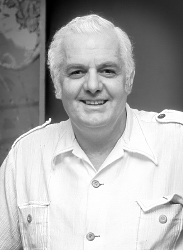 one centered on the friendship between God and humankind. He speaks of the "friends of the bridegroom," a situation whose details only those familiar with the Jewish wedding ceremony can fully understand. Contrary to what religion might suggest, God is not seeking to surround himself with a form of government. This already exists, even if it is invisible to our eyes. But he created a people for joy. I remember attending, in my youth, a seminar entitled "The Baptism of Joy" with the extraordinary New Zealand man of God Ken Wright. Nothing in common with the so called “baptism of fire” proposed by a certain church. Of all the seminars I've attended, it's probably the only one that truly impacted me. This joy is our inheritance and our strength. In Isaiah 65:18, God says, “But be glad and rejoice forever in what I will create; for I will create Jerusalem to be a delight and its people a joy. I will rejoice in Jerusalem and be glad in my people.” one centered on the friendship between God and humankind. He speaks of the "friends of the bridegroom," a situation whose details only those familiar with the Jewish wedding ceremony can fully understand. Contrary to what religion might suggest, God is not seeking to surround himself with a form of government. This already exists, even if it is invisible to our eyes. But he created a people for joy. I remember attending, in my youth, a seminar entitled "The Baptism of Joy" with the extraordinary New Zealand man of God Ken Wright. Nothing in common with the so called “baptism of fire” proposed by a certain church. Of all the seminars I've attended, it's probably the only one that truly impacted me. This joy is our inheritance and our strength. In Isaiah 65:18, God says, “But be glad and rejoice forever in what I will create; for I will create Jerusalem to be a delight and its people a joy. I will rejoice in Jerusalem and be glad in my people.”
The joy of the Lord is a sign of God's victory which he shares with us. During the reconstruction of the walls of Jerusalem after the exile, when they found and read the law of God, Nehemia came with these words: “Then Nehemiah the governor, Ezra the priest and teacher of the Law, and the Levites who were instructing the people said to them all, “This day is holy to the Lord your God. Do not mourn or weep.” For all the people had been weeping as they listened to the words of the Law. Nehemiah said, “Go and enjoy choice food and sweet drinks, and send some to those who have nothing prepared. This day is holy to our Lord. Do not grieve, for the joy of the Lord is your strength.” The Levites calmed all the people, saying, “Be still, for this is a holy day. Do not grieve.” Then all the people went away to eat and drink, to send portions of food and to celebrate with great joy, because they now understood the words that had been made known to them”. Nehemia 8:9-12.
17. In conclusion
The support we are prepared to provide to Israel takes all these elements into account. But the essential motivation remains the following : Have we recognized the person of the coming King, and are we ready to pledge allegiance to him and lay our crowns—our lives—at his feet? To belong to him, we must know who he is. I fear I must say that many Christians are unaware of who Jesus truly is, and this is evident in their pronouncements about the Jews. This lack of knowledge stems primarily from the fact that they have drawn their knowledge from the fictional works of novelists or partial narratives from a religious tradition, and not from the complete and unaltered biblical revelation. Pilate, however, knew who Jesus was, as evidenced by the inscription he had placed on his cross: Yeshua Ha-Notzri Melech Ha-Yehudim – "Jesus the Nazarene, King of the Jews". And he was also convicted: “I find no fault in this Man” (Luke 23:4). Satan knows who Jesus is: the spotless lamb. In fact, when judging those who have made a covenant with the God of Abraham, and all the more so Jesus, who is the God of Abraham according to his own words, the words we speak will judge us. So who is he to you? The respect we show him and the way we acknowledge his plan for the Jewish people, for Israel, and for the world, instead of simply criticizing everyone the world criticizes, says a lot about our relationship with God. Jesus is the cause of this burst of antisemitism, because Satan knows that Jesus is returning to establish his reign, and that with his help, the woman who is Israel in the broadest sense, will crush the head of the impostor—that ancient serpent who caused her fall in Eden—once and for all, and that the world will be set free. If we choose to be with him, we must let him love us now, so that our hearts beat in unison with his, so that he can heal the wounds that keep us captive to the past and to the world, and so that he can impart his Spirit to us and renew our mind. A spring cannot produce both fresh and bitter water. I invite you to listen to the powerful testimony of Amir, who grew up in Islam where the tyrant forced them to curse everything that represented the salvation of the world, and how he was able to expel this demonic influence and come to know Jesus. Jesus loves us so much that he wants to be one with us. He invites us to make this union with him our priority, for he warns us that he only takes with him the fervent, and perhaps those who are cold but whom he believes he can lead to conversion. He doesn't want to be burdened with the lukewarm, who, because they failed to know him, did not seize their opportunity.
When He comes to remove the lid that still keeps the realities of this world sealed, it will be like lifting a slab beneath which an anthill lives. Everything will be revealed, and the Bible says that people will run in all directions to hide in the crevices of the rocks. Our only regret then will be not having been more fervent in our support of Jesus and the whole constellation of relationships that he inspires and sustains through his Spirit.
“But you, brothers and sisters, are not in darkness so that the day of the Lord should surprise you like a thief. For you are all children of the light, children of the day. We do not belong to the night or to the darkness. So then, let us not be like others, who sleep, but let us be alert and self-controlled.” 1 Thessalonians 5:4-6
• What Does The Bible Say About Simon the Cyrenian ?
 “When the Son of Man comes in his glory, and all the angels with him, he will sit on his glorious throne. All the nations will be gathered before him, and he will separate the people one from another as a shepherd separates the sheep from the goats. He will put the sheep on his right and the goats on his left. “When the Son of Man comes in his glory, and all the angels with him, he will sit on his glorious throne. All the nations will be gathered before him, and he will separate the people one from another as a shepherd separates the sheep from the goats. He will put the sheep on his right and the goats on his left.
“Then the King will say to those on his right, ‘Come, you who are blessed by my Father; take your inheritance, the kingdom prepared for you since the creation of the world. For I was hungry and you gave me something to eat, I was thirsty and you gave me something to drink, I was a stranger and you invited me in, I needed clothes and you clothed me, I was sick and you looked after me, I was in prison and you came to visit me.’ “Then the righteous will answer him, ‘Lord, when did we see you hungry and feed you, or thirsty and give you something to drink? When did we see you a stranger and invite you in, or needing clothes and clothe you? When did we see you sick or in prison and go to visit you?’ “The King will reply, ‘Truly I tell you, whatever you did for one of the least of these brothers and sisters of mine, you did for me.’
“Then he will say to those on his left, ‘Depart from me, you who are cursed, into the eternal fire prepared for the devil and his angels. For I was hungry and you gave me nothing to eat, I was thirsty and you gave me nothing to drink, I was a stranger and you did not invite me in, I needed clothes and you did not clothe me, I was sick and in prison and you did not look after me.’
“And he will answer them, ‘Truly I tell you, whatever you did not do for one of the least of these brothers and sisters of mine, you did not do for me.’ And these will go away to eternal punishment, but the righteous to eternal life.” Excerpts from Matthew 25
Suggested Teachings and Links
Between Judaism & Christianity: A true Messianic Story on the Backdrop of Global Deception
 In this episode of the Covenant & Conflict Podcast, we sit down with Joshua Aaron to unpack one of the most complex and misunderstood topics in the Church today: the relationship between Judaism, Christianity, and the identity of Israel. Joshua shares his deeply personal story. He grew up between Orthodox Judaism and Christianity, encountered Yeshua as the Jewish Messiah, and now lives in the tension as a Messianic Jewish believer. From Holocaust family history to a miraculous reunion decades later, to raising children in Israel during war, this conversation is raw, emotional, and incredibly timely. In this episode of the Covenant & Conflict Podcast, we sit down with Joshua Aaron to unpack one of the most complex and misunderstood topics in the Church today: the relationship between Judaism, Christianity, and the identity of Israel. Joshua shares his deeply personal story. He grew up between Orthodox Judaism and Christianity, encountered Yeshua as the Jewish Messiah, and now lives in the tension as a Messianic Jewish believer. From Holocaust family history to a miraculous reunion decades later, to raising children in Israel during war, this conversation is raw, emotional, and incredibly timely.
 Jonathan Cahn and John Hagee: Amazing Prophecy on the War in Israel and End Times Jonathan Cahn and John Hagee: Amazing Prophecy on the War in Israel and End Times
Jonathan Cahn, and John Hagee join TBN's Praise to discuss with Erick Stakelbeck shocking prophecy that points to today's war in Israel and what it means for Christians as we grow closer to end times. What is at the root of this war and what is it supposed to thwart?
YESHUA: The Full Life Story of the Jewish Messiah — By the Voice of Zion
 Experience the most powerful, historically accurate film about the true Jewish Messiah. Who was the man behind the name Yeshua? In this cinematic journey, we strip away the myths and rediscover the Life of Yeshua through the lens of his Hebrew roots, the ancient prophecies of the House of David, and the land of Israel. From the silent miracle in the womb of Miriam to the earth-shaking resurrection in Jerusalem, this is the Full Movie experience of the promise that changed history forever. If you’ve ever felt there was more to the story of the Messiah than what you’ve been told, this film is for you. Experience the most powerful, historically accurate film about the true Jewish Messiah. Who was the man behind the name Yeshua? In this cinematic journey, we strip away the myths and rediscover the Life of Yeshua through the lens of his Hebrew roots, the ancient prophecies of the House of David, and the land of Israel. From the silent miracle in the womb of Miriam to the earth-shaking resurrection in Jerusalem, this is the Full Movie experience of the promise that changed history forever. If you’ve ever felt there was more to the story of the Messiah than what you’ve been told, this film is for you.
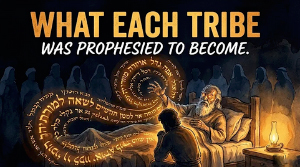 Every Tribe of Israel and What They Represent Every Tribe of Israel and What They Represent
Most people know there were twelve tribes. Almost nobody knows what each one represents — or what they're all pointing toward in Revelation.
 The Israel Truth Network is dedicated to exposing misinformation The Israel Truth Network is dedicated to exposing misinformation
“A lie can travel halfway around the world before the truth has a chance to put its pants on.” — Winston Churchill.
The Israel Truth Network is dedicated to exposing misinformation and delivering clear, fact-based insights that defend Israel’s story with honesty and strength.
God wants you to stop being lukewarm about Him — Cait Taylor
 This is your wake-up call to start growing spiritually. We’re talking about what it means to be a lukewarm Christian. We’ll dive into Jesus’ message to the church in Revelation, uncover how self-sufficiency slowly pulls us away from God, and what it really looks like to live a life fully surrendered to Him. In this episode, you’ll learn how to break out of spiritual complacency, build daily dependence on God, and step into the kind of faith that actually transforms your life - and the lives of the people around you. From practical habits, to understanding what Jesus promises when we return to Him. I hope it challenges you, encourages you, and helps you take your next step with God This is your wake-up call to start growing spiritually. We’re talking about what it means to be a lukewarm Christian. We’ll dive into Jesus’ message to the church in Revelation, uncover how self-sufficiency slowly pulls us away from God, and what it really looks like to live a life fully surrendered to Him. In this episode, you’ll learn how to break out of spiritual complacency, build daily dependence on God, and step into the kind of faith that actually transforms your life - and the lives of the people around you. From practical habits, to understanding what Jesus promises when we return to Him. I hope it challenges you, encourages you, and helps you take your next step with God
Most Christians Fall into This DEADLY Trap
 Having to care for someone on a daily basis with whom we disagree is a catalyst and a good indicator of our level of forgiveness. Are you constantly rehearsing past hurts? Have you lost hope because of what someone did to you? Offense is one of the most deceptive snares Satan uses to get believers out of the will of God. And the scary thing about offense is this: it often flies under the radar. Most Christians don't even know they are offended, and thus, are completely unaware of the havoc it's wreaking in their lives. Having to care for someone on a daily basis with whom we disagree is a catalyst and a good indicator of our level of forgiveness. Are you constantly rehearsing past hurts? Have you lost hope because of what someone did to you? Offense is one of the most deceptive snares Satan uses to get believers out of the will of God. And the scary thing about offense is this: it often flies under the radar. Most Christians don't even know they are offended, and thus, are completely unaware of the havoc it's wreaking in their lives.
 Choose This Day (who you will serve) - Elihana Elia Choose This Day (who you will serve) - Elihana Elia
This is a tribute to brothers and sisters, the saints and the martyrs, whose lives have been threatened or who are persecuted, often killed because they trust their Jesus. “If they persecuted me, they will persecute you also.”. “Seek His face while He can be found”.
A Precious Sister Needs Your Prayers and Support
 Elihana Elia is an Israeli-American Messianic singer, songwriter, and worship artist, known for her ministry in Israel and internationally. I only heard about her recently, following a plea for help and prayer after a cancer relapse, unfortunately. She and her family are living their faith in a particularly difficult context. This courage filled 30-year-old warrior woman is clearly battling against evil with all she has. And as we know, God can turn evil into good. This is an opportunity to show her the support of the global community of believers. Elihana Elia is an Israeli-American Messianic singer, songwriter, and worship artist, known for her ministry in Israel and internationally. I only heard about her recently, following a plea for help and prayer after a cancer relapse, unfortunately. She and her family are living their faith in a particularly difficult context. This courage filled 30-year-old warrior woman is clearly battling against evil with all she has. And as we know, God can turn evil into good. This is an opportunity to show her the support of the global community of believers.
• A Small Illustrated Catechism for Dummies
• This Video Will Change The Way You Think About Easter | Rick Renner
• The Truth About the Jews & Tucker Carlson | Jonathan Cahn
• Why Is Israel So Important? | An Interview With Yair Pinto & Mati Shoshani
• You’re Not Allowed to Say This… The REAL Reason This War Exists | Mosab Hassan Yousef
• A 2011 Prophetic Message – The Coming War in Israel, the Christian and Jewish Revival
• The 47 Rule Behind the Iran Breakthrough
• An F-35 pilot recalls and recounts a unique experience as an Israeli soldier (narrative created for spiritual reflection)
• Australian Journalist Zoe Booth's First Trip to Israel — What is unique About this Country
• What the Church Got Wrong About the Rapture
• Respectful silence — An ex-Muslim reveals the biggest lie that Christians believe
Shorts
• The striking testimony of Amir
• The Modern State of Israel and its Prophetic Significance
• The Mystery of Benjamin
• If Jesus Is God Why Doesn't He Know The Day and The Hour ?
• One Blood Sample Discovered Changed Everything
• The Dreaded Words
• Chosen For Such a Time as This – Musical by Elihana
• I Never Knew You
• Ex Muslim's Warning to Christians
• The Warning About the White Horse
• Missing : Joy
• Your Trials are a Training Ground
• Can I Pray for You ?
Return to Summary
March 2026
"The main obstacle to the discovery of the shape of the Earth, the continents, the oceans, was not ignorance, but the illusion of knowledge." — Daniel Boorstin, "The Discoverers"
Links suggested this month:
How I Study the Bible (A hands-on beginner guide by Cait Taylor)
 You can’t say God is silent when your Bible is closed. But if you’ve ever opened the Word and thought, “Where do I even start?” or felt like it was too confusing or overwhelming - this episode is for you. I’m walking you through my five-step Bible study routine, the exact tools and resources I use, and what completely transformed my relationship with God after six years of being a Christian who never actually read her Bible. Because within these pages is everything you’re searching for - peace, purpose, identity, and the power to overcome whatever comes against you. You can’t say God is silent when your Bible is closed. But if you’ve ever opened the Word and thought, “Where do I even start?” or felt like it was too confusing or overwhelming - this episode is for you. I’m walking you through my five-step Bible study routine, the exact tools and resources I use, and what completely transformed my relationship with God after six years of being a Christian who never actually read her Bible. Because within these pages is everything you’re searching for - peace, purpose, identity, and the power to overcome whatever comes against you.
 Feeling down? I read the Bible’s happiest book 💛 Feeling down? I read the Bible’s happiest book 💛
If you’re feeling down today, let’s read the happiest book of the Bible together. Research shows that regularly engaging with Scripture is associated with greater hope and well-being. So grab a blanket, get comfortable, and let the Word of God remind you where true joy comes from!
️
Wisdom in shorts:
• Where do I Even Start ?
• The DATING Rule That Changed My Life as a Christian
• God is Man's Natural Environment
• My Wife is My Helper
• Kid's Wisdom ?
• Fastest Growing Christian Church ?
• Three Forms of Prayer and Their Usage
• Three Signs That You are a Lukewarm Christian
• What happens When a Messed Up Person Brings her Woke Understanding Into the Bible ?
• Avoid Such People
• Old Man lost Everything but Still Sings to God
• A Small Prescription For Your Health
• This Will Change the Way You See Religion
• Former Atheist says Proofs of God are Everywhere
• God, Where Were You When it Happened ?
• Why Is There One Steering Wheel ?
• Five Things We Must Keep Away
• Why I Left Islam and Followed Jesus
• “Never Again" is NOW...
• I Had an Encounter with God and My Whole Life Changed !
• Why did Moses Not Enter the Promised Land ?
• I Saw Jesus in the Flesh (I Wasn’t Ready for This) | Ex-Muslim Testimony
The Thought of the Month:
Jesus Has Sent You an Invitation
I'm sometimes surprised by the lack of interest shown in the Bible. Some people are worth getting to know, but getting to know someone can take effort. God doesn't reveal himself at first glance. But for those who persevere, this relationship quickly becomes essential. People have preconceived notions, though. They tell you things like: "Oh, you know, I'm an agnostic: I've created my own religion based on my opinions." "And I'm Catholic. I don't need to read the Bible because my church and my tradition take care of that and they guide me." "I'm a non-practicing Protestant; I have a religious background that I find comforting, and I strive to live my life as best I can. But the Bible is difficult to understand. And that Old Testament… I'm wary of these evangelical sects and zealots in general. We shouldn't want to stir up divisions. Why make things more complicated than they need to be? Everything is fine, and as long as I'm on the same wavelength as the majority of my contemporaries…”.
You are invited to His Wedding !
Jesus told a parable. He said that a man had organized a grand wedding and invited his friends and acquaintances. It wasn't just any wedding, since the event was going to change the course of history. But the people made excuses, not understanding why this man was so keen on their presence, and preferring to mind their own business. So the man let all the passersby into the hall, and the hall was full. When they finally realized the importance of the event, those who had been invited wanted to enter. But they found the door of the hall locked, and no one could open it. This parable is a serious warning to those who have not shown Jesus the importance and honor that his status as the Son of God deserves.
My father, that entrepreneur
He seemed to have been born to lead. And my mum had an innate sense of family legacy. Under this reign, it was impossible for me to escape the overall plan drawn up for our family, with their blessing… ( Click to read more )
Read more
Not being cut out for the task, I had to do them the disservice of declining their offer to put me at the head of their company, so that I would have enough free time to indulge in my "idle pursuits" while waiting for a hypothetical boom. For I could find no more flattering words to describe my wanderings. My parents could have made theirs Jesus' motto: "He who is not with me is against me, and he who does not gather with me scatters." Dad knew only his business, and Mom harbored strong prejudices against Protestantism, which she equated with my abandonment of her Catholic tradition. Many adults struggle throughout their lives to justify not having been able to gain their parents' approval and blessing. I was able to show them my gratitude by caring for them in their old age, but my freedom came to me in another way. Verse 10 of Psalm 27 says, “Though my father and mother forsake me, the Lord will receive me.” Even this incredible kingdom that my parents have built is destined to disappear. But to all who trust in him, Jesus promises an everlasting life in a kingdom that will never end.
Why does God liken our relationship with Him to a romantic relationship?
“I slept but my heart was awake. Listen! My beloved is knocking: “Open to me, my sister, my darling, my dove, my flawless one. My head is drenched with dew, my hair with the dampness of the night.” Song of Songs 5:2
Like many people, I grew up in a devout Christian environment, attending church on Sundays, usually between 9:30 and 11:00. Once our parish duties were fulfilled, we quickly closed that parenthesis and returned to our daily lives which God wasn't part of. There was the religious world hidden behind the walls of rectories and convents, and then there were the normal life and ordinary people. What I heard in church, moreover, had no relevance to my everyday life. These rituals would in no way help me enter into my dreams. I had to find that wisdom elsewhere. Yet, I did have dreams, but above all, it was the dream of escaping the adult world, a world too complex, hierarchical, and authoritarian, in which I couldn't find my place. My religion was nature, living instinctively, sleeping under a starry sky, exploring wide open spaces and recounting my discoveries. And I would have been content with that if I hadn't met an angel who, practically overnight, shattered my serious lack of ambition. Someone said that there is a void within man, and that this void is shaped like God. I was a hollow hull, but hadn't considered it that way. The void I was trying to fill was more like Eve. So when she suddenly burst into my life, wonderfully beautiful, long-awaited, but terribly complex, like all women, I suddenly became aware of the cruel gaps that remained in my upbringing. Despite my twenty years of life, most of which had been spent sitting on school benches, I had remained a wild little animal. Now I was entrusted with an angel! A truly great, a formidable gift that I hadn't deserved. Yet I had asked for it. But where in the world could I find the resources and wisdom to appreciate her for who she truly was and to forge a deep relationship with her? I myself was lost, groping for my way. How could I possibly understand her, love her without expecting anything in return, and propel her into the life God had planned for us?
God's wisdom, simply for living and for loving!
We are often caught off guard by life's major challenges. Maturity isn't acquired in school, not even at university. In fact, we often see the opposite. Parental example is far more influential. I grew up with my parents as my role model. Despite their religious practice, they maintained a complex relationship, marked by polite smiles in public and outbursts of frustration at home. These things weren't discussed with children, so my education in matters of the heart came primarily from the films I watched on television or in theaters with classmates. Culture has taken over the responsibility of shaping our minds since the Bible was removed from the school curriculum. And we must acknowledge the abdication of parental responsibility in the face of the relentless flood of information inundating young people. I grew up long before social media, in an era when the music and film industries, primarily, were in charge of our education. A few truly disturbing films appeared at the time. A Clockwork Orange revolted me so much that it served as a kind of inoculation against that sort of film and against malice in general. Most of the films I watched were "decent," however. But they presented a very macho image of male-female relationships. We were just coming out of the "John Wayne" era, and it was the era of "Charles Bronson" as in "Once Upon a Time in the West," of "Clint Eastwood," "Steve McQueen," "Paul Newman," and other "Roger Moore" types. These films almost invariably revolved around the same theme: that of "the beautiful ingénue, the good brute, and the lecherous crook." To be a man, you had to assert your justice, know how to be ruthless, and above all, never reveal your feelings. I tried, until I realized with dismay the damage my knee-jerk reactions and lack of understanding had done to this beautiful, budding relationship—a relationship I had welcomed with immense joy just a few months earlier. Because of my immaturity, I lost it…
It was my second heartbreak, and I didn't know what to do. That's when I thought of God. The idea was suggested to me through a few radio programs, which I listened to with interest, where the Bible was presented in an iconoclastic light. I decided to give it a try, almost shamefully I must say, and it was a wonderful surprise! I had my first encounter with God while reading the Gospels. I didn't see God face to face, but I felt his reassuring hands resting on my shoulders as I was immersed in the reading, trying to find some comfort and answers to my many existential questions. This first experience awakened an awareness of God's presence. Often, I felt overwhelmed by his presence while reading the words of Jesus. I would shiver inside, and my eyes would fill with tears. But so much hardness remained in my heart, so many unhealed wounds and so much insecurity and rebellion. This first encounter with my Saviour summarized with a recognition of his existence.
An Encounter with Jesus that turns out to be a Confrontation
A few years followed, during which I still tried to intellectualize faith. I was convinced of God's existence, but I hesitated over his demands, his nature and holiness. I wanted a God who would help me rediscover the thread of my dreams, but my God was impersonal, somewhat in my image. Married in the meantime, I had my first child, and faced with responsibilities, the previously set goal now seemed quite compromised. Thinking back on my old dreams only brought me nostalgia and frustration. The existential void had been partially filled, but the water wasn't flowing. I constantly had to listen to spiritual music and messages, to be nourished by an infusion of life produced by others. I would stop at each prophet to try to find out what God thought of me and if he had any specific guidance to give me. One day, a bizarre idea crossed my mind. I sat facing the window, closed my eyes, and earnestly asked Jesus to reveal himself to me. And to my greatest fright, Jesus appeared to me in a spiritual vision. He wasn't as one might imagine him from religious paintings. He didn't resemble the massive lumberjack with a tender, deep gaze, depicted in Akiane Kamarik's paintings either. You know that the risen Jesus appeared to many people, but in different guises. The disciples on the road to Emmaus only recognized him when he shared bread with them. Mary Magdalene initially mistook him for the gardener at the cemetery, even though she knew him well. Thomas had to check his injuries. Peter recognized him when his net was filled with fish. Jesus said something that should make us think: He said, “Truly I tell you, whatever you did for one of the least of these brothers and sisters of mine, you did for me.” Which brothers and sisters is Jesus talking about? I am appalled when I hear Christians speak disparagingly of their Israeli or Jewish brothers and sisters. There is this trend in some Christian groups who proudly believe that Israel was rejected by God and that they are the new Israel. Some ignored and even rejected him, it is true, but Jesus never rejected his own. Yeshua, Yah and Adonai, are one, and he promised that for as long as there will be a dawn and a dusk, he continues to protect this nation, as he has done since the time of Abraham, and this even if he is not yet recognized under the identity of Yeshua. In Zacharia 13, “If someone asks, ‘What are these wounds on your body?’ they will answer, ‘The wounds I was given at the house of my friends.’” Joseph did not reject his brothers who had betrayed him, and neither did Jesus. I was no longer one of them at that point, but I was still too independant and self-assured and needed to be rid of certain ideas inherited from the New Age.
The Jesus who appeared to me was cosmic. He was gentle, peaceful, displaying the characteristics of a kind man, yet at the same time utterly formidable. The silhouette of Jesus, as one might imagine him, was there, with shoulder-length hair, a light, curly beard, a well defined mouth, legs, and arms. He was dressed in a white robe and wore a wide gold plate as a belt around his chest. He was, in fact, as he is described in the Book of Revelation. But his face was quite unusual. Immaterial, it was transparent, and there was no limit to what one could see within this face that seemed to encompass the entire universe. I didn't see eyes like ours, but at the center of this three-dimensional face was a kind of sun. A sun made up of many facets, like eyes or spotlights from which emanated rays of light that went exploring the world in every direction. As I examined this mystery, one of the rays stopped on me, and I was petrified. In a second, this light had penetrated the depths of my being—depths whose existence I hadn't known—and without Him having a word to say, I knew that nothing, absolutely nothing in my entire being, was hidden from Him. It was as if the designer were scanning the thing he had created to verify its integrity. Sensing that I was about to faint, I still had the strength to stammer out a phrase I had heard in my Bible classes: "Do not look on my sins, Lord, but cover them with your blood." His gaze then ceased to pierce me and gradually withdrew. I had survived an encounter with Jesus… This experience, which took place over 40 years ago and was unique in my life, was revelatory and gave me a new understanding of who Jesus truly is. Since that day, I have no longer been tempted to compromise with God. When I give in to something that doesn't glorify God, I don't wait for him to rub my nose in it, like some would with a kitten. I know that it will be impossible for me to justify myself to Him later. His word, the Bible, says that a two-edged sword comes out of His mouth. This sword is used to separate the flesh from the spirit, and it will judge the world and all that it contains. It will judge the biases of religion. This doesn't make demons happy, but the world of angels and men will one day be judged based on the words of the Bible, the very words to which everyone has access today.
Let us brace ourselves today to meet our God !
Even though this experience I had asked for, shook me, I consider myself fortunate to have understood these things in my lifetime and to have subsequently oriented my choices accordingly. Losing a love, if you gain God, means you are sure to find it again. But if we lose God, we lose everything, starting with our own soul. For many people, this realization will come too late. Once we have passed into the afterlife, the die is cast, to use that expression. The spirit is drawn to a place where it must wait. For some, this place is dreadful; for others, it is much more pleasant. Death concerns only our body, and the spirit continues its existence in that other realm. We will all face the day of judgment and that famous gaze of Jesus. All, except perhaps those whom he knew beforehand and whom he now considers his friends. Blessed, therefore, are those who sought to know Jesus as a friend and a father, and who implored his forgiveness and received the gift of his sacrifice. They will not have to face this judgment. Jesus said he will return to judge the living and the dead. Whether we are a disembodied spirit or a being firmly rooted in life at that time, it will be impossible for us to escape it. God shows himself meek to the meek, pure to the pure. But he is out of grasp for the haughty. That gaze will make us aware of everything we have done, said, thought, experienced, hoped for and avoided. The prophet Malachi foretold it this way:
“For behold, the day is coming, burning like a furnace. All the proud and all the wicked will be like stubble; the day that is coming will set them ablaze,” says the Lord of hosts. “Not a root or a branch will be left to them. But for you who fear my name, the sun of righteousness will rise with healing in its wings. You will go out and leap like calves released from the stall; you will trample the wicked underfoot, for they will be ashes under the soles of your feet on the day I am preparing,” says the Lord of hosts”. Malachi 4.
The Trial by Fire
In religions as everywhere else, there are things that are sterile and that the Spirit does not justify. In 1 Corinthians 3, Paul says:
“According to the grace of God given me, like a wise master builder I laid a foundation, and someone else is building on it. But each one must be careful how he builds on it, for no one can lay any other foundation than the one that has been laid, which is Jesus Christ. If anyone builds on this foundation with gold, silver, precious stones, wood, hay, or straw, each one’s work will become clear. The Day will disclose it, because it will be revealed by fire, and the fire will test what sort of work each one has done. If what anyone has built survives on the foundation, he will receive a reward. If what anyone has built is burned up, he will suffer loss; he himself will be saved, but only as one escaping through the flames. Do you not know that you are God’s temple and that God’s Spirit dwells in you? If anyone destroys God’s temple, God will destroy him; For the temple of God is holy, and that is what you are.” And again: “Little children, keep yourselves from idols!” 1 John 4:21
You don't ride astray a dead donkey
And what about our dreams in all of this? We had a donkey when we were kids. Our father gave it to us for Christmas. We had asked for a pony, but this retired donkey was the perfect companion for the old stable, given how little work and care we were willing to consecrate it. It was a friendly and noisy companion, but it wouldn't let me ride it and would throw me or bite me as soon as I tried to make it move. Only my brother could ride it, and it wouldn't obey anyone else. Why did Jesus choose an ass colt that had never been ridden to enter Jerusalem as king? It had been prophesied, but those who knew witnessed a miracle. The apostle Paul declared that he had become Christ's slave, that Christ was his life, and that for him, death would be gain. Although he had listened to religious voices and persecuted Christians when he was still Saul, Paul now knew only the voice of his master. He had become the most humble. We can still do all sorts of creative things if we want to, but we do so knowing full well that we carry within us someone very important whom the world needs. Jesus warned that no coward would be admitted into his Kingdom. What makes us strong is not our courage, but it's what we cannot lose. If we renounce our vain ambitions and even our own lives, we have little to lose by following Jesus.
Witnesses of Christ should wear a parachute!
The Bible doesn't hide from us that everything we build during our lives will be put to the test. If our lives are built on the word of Christ, they will be tested by fire, and we will emerge gloriously. People want an exciting life. Me too ! No religion made of laws and traditions can be exciting, and if someone tells you otherwise, be wary. The Bible warns us that religion is not life, but death. Religion exists to prove to us that we are dead in our sins and that our works will not change that, in order to push us to seek relationship with God and salvation through faith. Faith in God is very different from religion. I sometimes worry about religious Christians, especially those who think that the sacraments of the church are an assurance for eternal life. I haven't done any skydiving, but I have done a bit of paragliding, and I thoroughly enjoyed it. All over the world, Christians are persecuted and even killed for their religion. I feel for them. To be killed for one's religion is like being pushed out of the plane without having been able to put on a parachute. Jesus never asked his followers to die for their religion. But he taught them to be forgiven, so that, carried on the wings of the Spirit, they could then face any consequences with a smile. Death would then become, for them, an immediate promotion.
“I have been blameless before him and have kept myself from sin. The Lord has rewarded me according to my righteousness, according to my cleanness in his sight. “To the faithful you show yourself faithful, to the blameless you show yourself blameless, to the pure you show yourself pure, but to the devious you show yourself shrewd. You save the humble, but your eyes are on the haughty to bring them low. You, Lord, are my lamp; the Lord turns my darkness into light. With your help I can advance against a troop; with my God I can scale a wall. “As for God, his way is perfect: The Lord’s word is flawless; he shields all who take refuge in him. For who is God besides the Lord? And who is the Rock except our God? It is God who arms me with strength and keeps my way secure. He makes my feet like the feet of a deer; he causes me to stand on the heights. He trains my hands for battle; my arms can bend a bow of bronze. You make your saving help my shield; your help has made me great. You provide a broad path for my feet, so that my ankles do not give way.” 2 Samuel 22:24-37.
• He Shall Reign – Elihana Elia Musical
• How to know GOD face to face — with Bruce Allen
• Barabbas ! You are Free to Go
• Ex-Catholic Altar Boy, on Mary, the Saints, & the Gospel | Guest: Mike Gendron
• Doormat Christianity: How Moral Cowardice Is Undermining the West
• “Must Not Die Before End of Assignment”
• She Found Her True Home
Return to Summary
February 2026
• Video Teachings Suggested this Month
Imprinting, inheritance, or a rebirth?
“If you do wrong, sin is crouching at your door; its desire is for you, but you must rule over it!”
We began the year with some thoughts on the theme of imitation, mentioning for example, how people imitate the ideas of their peers to improve their daily lives or to gain an advantage in one field or another. We also reminded ourselves that God invites us to be his imitators, whether by drawing inspiration from his creation to discover the principles of our own engineering, or by modeling our relationships on his. For imitating others will only lead us to stagnate, while God makes his infinite creativity available to us. As Paul invites us in Ephesians 5: “Therefore be imitators of God, as beloved children.”
Imprinting, or inheritance?
We could continue our exploration of life's lessons by looking at other aspects in which imitation plays a significant role. And if you thought you knew everything about this subject, here's an opportunity to take stock. Because if we were to admit it, every one of our behaviors—whether psychological, relational, social, cognitive, intellectual, or even innate and instinctive—is acquired. No one can claim to be a "self-made man," because we all draw upon shared knowledge and the knowledge of the generations that came before us. Where does our zest for life come from, and perhaps that character trait we could do without? Psychologists speak of imprinting. The environment in which we grow up imparts to us a set of characteristics that together constitute our personality. But for God, things are a little more complex. Contrary to what atheistic science claims, man is born with a well-formed personality, a personality transmitted through our spiritual origins. We are born with a very personal identity. But also with a group identity, and the twelve sons of Israel are a demonstration of the diversity that exists in this area. For by being born of God, who is spirit and eternal, man is a pre-existing spiritual being who is incarnated during pregnancy and birth. He is disincarnated at the moment of the death of the body, but his existence continues. In Psalm 139, David affirms: “For you formed my inmost being; you knit me together in my mother’s womb. I praise you because I am fearfully and wonderfully made; your works are wonderful, I know that full well. My frame was not hidden from you when I was made in the secret place, when I was woven together in the depths of the earth. Your eyes saw my unformed body; all the days ordained for me were written in your book before one of them came to be.” Or again, in Jeremiah 1:5: “Before I formed you in the womb I knew you, before you were born I set you apart…” The supreme example of this pre-existence of the spirit is, of course, the virgin birth of Jesus. Jesus, who “being in the form of God, took the form of a man” (Philippians 2). The Bible, however, warns us against the doctrine of reincarnation. It states that “it is appointed for man to die once, and after that to face judgment” (Hebrews 9:27). I fear there may be no second chance for those who have not made the most of their lives, but this does not preclude God's mercy.
Perfect doesn't mean successful
If God is the author of our personality, why shouldn't we be perfect just as we are? Some believe they are and this makes them unbearable and even dangerous when they wield power. But most of us are well aware that our personality has two sides. God partly explains this by teaching us that blessings and curses are passed down through generations. This means that the innocent spirit that comes from heaven and incarnates, is affected by the circumstances of its birth and what it will have to face during its growth. Things would undoubtedly be easier if this duality didn't exist ! But this struggle, inscribed within our being and from which no one escapes, is also what we can transform into the driving force of our growth… ( Click to read more )
Read more
Our very being aspires to a certain balance and to freedom, and this freedom comes from knowledge. To free ourselves from the obstacles and to progress in our journey, we must row ! We are constantly reminded of this passage from Genesis 4:7, quoted in the title of this section: “If you do what is right, will you not be accepted? But if you do not do what is right, sin is crouching at your door. It desires to have you, but you must rule over it.” Sin is here personified, and this is clearly a reminder that we are under the influence of a spirit: the serpent, over which God commands us to have dominion. Because if we give in to the enemy, he will use our traumas to turn our lives into a battlefield.
Where can we find our models?
If God is the author of our existence, why should we seek our role models among men? Can we model our destiny on that of a guru or a prophet? All the prophets are dead. Human life is not easy, and even if faith gives us wings, flying is not in our nature. The Israelites could have stopped at the shores of the Red Sea and let the Egyptians drag them back to their forced labor. They would then have remained their slaves for generations. Moses led them further, but then they stopped before the formidable Mount Sinai and the demands of the Torah, failing to take that decisive step that would have led them to the Father. Still scarred by their betrayal of their father, Jacob, and younger brother, Joseph, four hundred years earlier, they were content to exchange a pharaoh for a king of their own making, and slavery in Egypt for the careful observance of the law of Moses and the prophets. The Father is still waiting for them. Jewish Christians have gone a step further. But by subsequently substituting various expressions of their veneration for "the law of the Spirit of life" mentioned in Romans 8:2, Christians, too, have stopped halfway. For many, the light remains red. Hesitancy in the face of the unknown is a habit that is difficult to overcome, especially when one harbors a guilt complex toward the Father. You know what happened to Reuben and how he slept with his father's wife. Israel severely rebuked him, depriving him of the blessing of preeminence as the firstborn. How can one not draw a connection between this infamy and the establishment of a "Queen of Heaven" in the Christian religion? In this retrograde context, it was then easy for Muhammad to lay his cards on the table, capitalizing on the ignorance and frustrations left in people's minds by all these incomplete religious theories. "Help yourself with your sword, and Heaven will help you", was something of a motto for him. Riding a common wave, Marxism, which came later, is a religion that goes in the same direction. For even though they are very different from one another, these expressions of veneration for human reason agree on their common goal: to confront humanity with a monolithic religion that replaces God and takes control, in order to prevent any impulse that would allow us to know the liberating truth that concerns us. The devil reigns over a people of ignorance, who are nevertheless convinced that they know better than others. That, at least, is what emerges from their demonstrations. Their demands reveal an ignorance that is beyond painful to witness, and pride is a way of ignoring one's ignorance. In an excellent message entitled “The Cosmic Salesman”, Jonathan Cahn sheds light on some of the strategies our inveterate charlatan uses to "sell" us his lies. Whatever we pursue, Satan has a full assortment of counterfeits. For those who follow current events, the new world order now proposes to replace all religions with artificial intelligence, with the aim of bringing about a form of world peace. This dictatorship of supreme reason will manifest itself in all important decisions that concern us and will soon determine our right to life.
Like these little children
“Then Jesus called a little child to him and placed him among them. ‘Truly I tell you, unless you change and become like little children, you will never enter the kingdom of heaven. Therefore, whoever takes the lowly position of this child is the greatest in the kingdom of heaven. And whoever welcomes one such child in my name welcomes me.”’”
Jesus gives us little children as an example—the very ones who ran after him on the roads of Galilee and Judea. He states that unless we convert and become like them, we will not enter his kingdom. It has been said that children are pure and innocent, but I'm not so sure, and that requirement would exclude most of us. It has also been said that they are simple and gullible. I don't believe that either. But what my children have taught me, and what has reminded me of my own childhood and my frustrations with my parents, is the curious nature of childhood. Children want to learn. Not necessarily math and algebra, but children need to know and understand the world into which they have been thrust. They will not be satisfied with one answer, but that answer will already spark further questions. You tell him "no," and he'll ask, "But why?". This quest for answers, in principle, never ends. Children want to test, to understand, to imagine. Jesus loves answering questions. He is never embarrassed by them, even if we are for him. On the contrary, he keeps the flame of curiosity alive by asking more questions, which he then answers. You've probably heard the expression "to be a pillar of the church." Jesus wants to give back to the pillars of the Church their legs and arms, their hearts and minds eager for wonder, and to instill in them the desire to follow him, as in the Song of Songs 1:4.
But of course, not all questions are sincere, and Jesus had to answer those that came from the twisted minds of the scribes and Pharisees, which he did brilliantly.
What does it mean to be "carnal" or to be "spiritual"?
“Man has the ability to tame all kinds of wild animals, birds, reptiles, and sea creatures, and indeed he has tamed them. But the tongue no man can tame. It is a restless evil, full of deadly poison. With it we praise our Lord and Father, and with it we curse men, who were created in his image. Out of the same mouth come blessing and cursing! My brothers and sisters, this should not be so. Have you ever seen fresh water and salt water springing from the same source? Can a fig tree bear olives, or a grapevine figs? Neither can a salt spring produce fresh water. Is there anyone among you who is wise and knowledgeable?” Let him prove it by his good conduct, that is, by deeds marked by the humility that characterizes true wisdom. But if your heart is full of bitter envy, if you are filled with contentious spirit, you have no reason to boast, for that is to distort the truth. Such wisdom does not come down from heaven, but is of this world, of man without God, it is demonic. For where envy and selfish ambition reign, there also dwell disorder and every unrighteous practice. But the wisdom that comes down from heaven is first of all pure; then peace-loving, gentle, open to reason, full of compassion, bearing much good fruit, impartial and sincere. Those who make peace sow in peace a seed which will bear a harvest in accordance with righteousness. (James 3:7-12)
How can we differentiate and nurture what is innate and divine within us from what is inherited and detrimental to our growth, and ultimately to others and the future of the world? It is not always easy to know whether a given impulse is legitimate or harmful. Anger can be necessary and beneficial, but it can also be destructive. Authoritative words can build up as well as tear down. We often understand things too late, only when we see the devastation our unleashed impulses have created. But the energy released in response to pressure could have been used differently, and that is where wisdom comes in.
“He has shown you, O mortal, what is good. And what does the Lord require of you? To act justly and to love mercy and to walk humbly with your God”. Micah 6:8
You should know that I'm a good person!
I sometimes imagine, with an inward smile, someone arriving at the gates of paradise. The Bible is, in a way, our builder's manual. The stories are told to us without embellishment, without hiding the more lurid aspects. We spoke earlier about Jacob and Esau. Born of the same parents, Isaac and Rebecca, these two fraternal twins, born of the same pregnancy, are nevertheless polar opposites. In fact, the story tells us that they were already struggling in the womb. The rest of their respective and shared stories reveals that one is "carnal," meaning self-sufficient, master of his destiny, and an epicurean, while the other is a scoundrel who tries to elbow his way to the top. Morally, neither redeems the other. Yet God will say, “I have loved Jacob and hated Esau.” Go figure! Initially, the notable difference between these two men lies in the fact that one believes he is a good person. He is the eldest and his father's favorite, whom he knows how to make proud. While the other feels neglected. He knows he must improve, but he cannot do so in a context where the prerogatives belong to the eldest brother, which fuels his frustration. Jacob is spiritual in the sense that he is aware of his shortcomings. He will seek God's help, leave to improve himself, even flee at one point to save his life from his brother's wrath, and his mother will encourage him to do so. It is, in fact, from this constant struggle with God, through the trials brought about by his own failings, that Jacob will obtain a new name: Jacob, “the deceitful” or “supplanter,” will become Israel, a name that means “Prince of God.” The name Jacob comes from the word "heel," as Jacob tried to hold onto his brother's heel at their birth. The heel is also the means of crushing the serpent's head, we are told, at the risk of being injured. Through this story, we discover a great life lesson. For the one who initially had everything going for him—being blessed by nature, gifted, appreciated by his father, and successful with women—will ultimately find himself marginalized in favor of the Jew. The Jew, in this context, is the weak one, the one who, by recognizing himself as such, relinquishes his privileges, his own wisdom, his feelings—this is the spiritual significance of circumcision—leaves behind the common practice of idol worship to raise his arms to a single God, whom he does not yet know, but whom he has perceived in his affliction and who now offers to be his guide and savior. His exodus will lead him to the conquest of a promised land. The land promised by God to those who obey him is a place of rest acquired through the active pursuit of the spiritual heritage.
The wind blows where it wants
But we are made of so many contradictions. How can we become the being God originally intended, or anything close to it? Religion presents us with a very sweet image of holiness. But holiness isn't an image; it's obedience to God, and that path isn't popular. How do we break free and take flight? Romans 8:16, "The Spirit himself testifies with our spirit that we are God’s children," indicates that an intimate connection is made between the Spirit of God and our spirit at our new birth, an event that binds us spiritually to God and marks the beginning of our re-creation in Christ. Something very special happens at this "new birth," as Jesus calls it. Our first birth took place in the matter of a chaotic world. But just as the Spirit of God moved over the waters in Genesis, we will detach ourselves from this chaotic reality and connect with the divine spirit of Christ. The Spirit is not the letter. Nicodemus knew the letter, but in John 3:8, Jesus told him, “The wind blows where it wishes. You hear its sound, but you do not know where it comes from or where it goes. So it is with everyone born of the Spirit.” Jesus explains here how people can take flight from the world into which they were born, toward God. He also says, “Very truly I tell you, no one can enter the kingdom of God unless they are born of water and the Spirit. Flesh gives birth to flesh, but the Spirit gives birth to spirit.” Being born of water is an allusion to baptism. Baptism is not the purification of sins, but it is death to origins and the commitment of a pure conscience, since it is now in direct relation with the Spirit of God.
If anyone is in Christ, he is a new creation
2 Corinthians 5:17 says, “Therefore, if anyone is in Christ, the new creation has come: The old has gone, the new is here!” This doesn't mean, as I misunderstood 50 years ago, that to follow Christ we have to abandon everything, starting with our girlfriend, to go live in a cave with a few Jesus fanatics. Jesus will undoubtedly ask us to renounce what hinders our progress, but this promise in the Bible actually concerns the new nature we receive at the new birth. This new nature is glorious and immortal in itself, but it is only given to us in part for now—Paul speaks of the “guarantee” of the Spirit. For being a child of God doesn't mean having reached perfection, but the process has begun and will, in principle, continue throughout our lives, even if some, like me, wouldn't have enough lifetimes to achieve it. Paul also said that he was afflicted in his flesh, so that he would not become conceited because of the surpassing greatness of the revelation given him. We will have to deal with some challenges. Having entered into this new nature, we will be able to grow. No longer by imitating the world that goes around in circles, but by drawing inspiration from what the Spirit of God will show us, so that we may ultimately conform to what God had in mind when He conceived us, before our coming into this world. Jesus Himself followed this path. He said, “The Son can do nothing of his own accord; he acts only as he sees the Father doing. Whatever the Father does, the Son also does, because the Father loves the Son and shows him all that he himself does.” John 5:19. Our learning will take place between two proven teachers: the Word revealed in the Bible and the circumstances of life, upon which the inner witness of the Spirit of God will cast its very specific light. Jesus said to his disciples, “Take my yoke upon you and learn from me, for I am gentle and humble in heart, and you will find rest for your souls. For my yoke is easy and my burden is light.” (Matthew 11:29-30) He also said in John 15:5, “I am the vine; you are the branches. If you remain in me and I in you, you will bear much fruit; apart from me you can do nothing.”
Therefore, let no one follow the example of Cain
“Cain, being of the devil, murdered his brother. And why did he murder him? Because his own actions were evil and his brother’s righteous.” 1 John 3:12
The Word of God warns us against certain inclinations, certain attitudes of the heart, like the one that led Cain to kill his brother Abel out of jealousy. Or that of Esau, who traded God's favor for a more comfortable life in this world. They could no longer turn back on their choices, and we know they bitterly regretted it. It is not enough to believe in God. It is not enough to say, "Jesus," in our prayers. Jesus says that simply harboring evil thoughts, or failing to forgive, is enough to make us potential murderers, adulterers, traitors. Life confronts us daily with seemingly innocuous choices, but through them, a direction is formed. If we do not guard our hearts, Satan will sow the seeds of betrayal, which will manifest itself clearly when circumstances are favorable. This is a principle well known to those who spread false doctrines to manipulate people. Choosing a particular religion, a particular prophet, a particular understanding of doctrine, or even a single verse from the Bible or another religious text, can be deeply significant and have far-reaching consequences. Our daily choices either bring us closer to or further from our goal: eternal life in the Kingdom of the Messiah. The prayer Jesus left us reminds us of the goals God has set for us. And the word "sin" simply means "to miss the mark." A heart hardened by poor choices prevents us from hearing God's voice. God is a God of love, and Jesus warns us that we will be judged by our attitude toward our brothers, sisters, parents, children, the poor, the sick, strangers, and all those in need of help.
"Where I am, there also will my servant be."
Without being overly simplistic, this two-level approach to consciousness allows us to understand the central issue in life: the love of God, neighbor, and oneself. It helps us understand what will reinforce people's political opinions, religious choices, existential beliefs, or philosophies, despite their obvious contradictions. Why do some undermine their own nation by adopting erroneous narratives disseminated by enemies, which they then propagate by slandering their authorities without verifying the facts. Or perhaps the sudden realization of the stakes will explain why some will become aware of the problem and turn away from it. But consciousness becomes dulled and eventually silent. Many testimonies from Muslim converts mention that at some point, the Prophet's actions and words led them to question their morality. But if we accept things as they are presented to us, by making consistently poor choices, we will lose our bearings. Are we like Esau, content to be installed like princes in a well-established religious system that is nevertheless destined to disappear? Or do we sense the urgency of the moment? An alternative that would be more in line with the truth would also be more demanding. Do we want the comfort of the status quo, or a heart burning for the truth? Jesus spoke of an invitation to a wedding, warning us that many will be invited but few will ultimately accept, simply because they won't be willing to set aside their biases and activities to follow him to the wedding hall. These activities can be all sorts of things, including those we thought we were doing for God. Being someone who is easily distracted myself, I regularly pray to be found ready when my time comes.
Following Jesus' example is impossible for the natural person, who can barely manage to appear religious. Jesus lived as the servant of all, but also as the father of all. Lifting up his mantle is a daunting task if we do not do so in the power of God. Living according to his Spirit will depend on the place he occupies in our hearts. Keeping the flame of our love for him alive is something that must be learned. We simply have to decide to be authentic. Jesus showed himself to be utterly authentic, which is why some hated him. But others were awakened in his contact. Jesus does not have impossible demands of us, but he wants us to be fervent, otherwise he might consider us mere actors. If God sovereignly exalted Jesus as a result of his obedience, Jesus will also remember us and the hardships we have agreed to bear. But let us remember what he did and what he said. He bore the weight of the world's sin, and the burden he asks us to take on—that of sharing his love with the world—is actually light. By following his example, that of obedience to the Holy Spirit whom Jesus sent to guide us, we secure our eternal destiny.
“Whoever loves their life will lose it, and whoever hates their life in this world will keep it for eternal life. If anyone serves me, he must follow me; and where I am, there will my servant be also. If anyone serves me, the Father will honor him.” John 12:25-26
February 14th, Valentine's Day
A longtime friend just asked me what in the world could possibly interest me in the Bible, me whom he knew in my youth, so far removed from such concerns while he was always drawn to existentialism, and what difference these ancient texts can make to one of the more than 8 billion people who inhabit the planet. It's a very good question, and perhaps the nature of this day, February 14th, will provide me with an answer. Can one still be in love, and with someone invisible to the eye, when the loved ones who illuminated our lives are no longer there? Can one feel loved and cherished when parents are gone and children live their own lives? Or do we come into the world naked and abandoned, and leave it the same way? Someone I know has just lost his mother. At 96, she had probably earned a real retirement. But a few days before her death, she had paused on a verse from Psalm 27 in the Bible, which she had heard and quoted to him: “My father and mother may forsake me, but the Lord will receive me.” She had also chosen the prayer of Alice Aimée, a Carmelite nun, for her funeral: “When I die, do not weep; it is Love that takes me. If I am afraid, and why not? Simply remind me that Love, Love awaits me.” This mom was very devout to her family and to the God of her tradition. I admire the faith of believers. Personally, I do not have that courage and selflessness. I need lived experience. And that's what I find in reading the Bible. Since discovering that God is waiting for me, not just at the end of my life's journey but at every moment of every day, and that he is there, in the revelation of his word, I'm hooked… I need my dose of interaction, confrontation and embraces to live my day well and not sink into anxiety nor get lost in sterile activities. It's true, for billions of people, God isn't tangible. But for those who have met His gaze, He is more real than real.
• What can We Draw From the Telling of The Making of Eve? (Catechism For Dummies)
Feeling anxious? I read Psalms to calm your mind 📖
 If there is one person in the world whom life circumstances and past traumas should have made pathologically anxious, it is probably her. Yet, Cait Taylor is precisely the one to turn to when you need to refocus on what's essential and find inner peace. It seems she has acquired the secret to peace and a fulfilling inner life, despite the difficulties and the absence. And this is definitely a valuable asset in this troubled world. If there is one person in the world whom life circumstances and past traumas should have made pathologically anxious, it is probably her. Yet, Cait Taylor is precisely the one to turn to when you need to refocus on what's essential and find inner peace. It seems she has acquired the secret to peace and a fulfilling inner life, despite the difficulties and the absence. And this is definitely a valuable asset in this troubled world.
 |
Walking in Purity with Girls Gone Bible | The Jessica Koulianos Podcast | S3:EP17
Being beautiful doesn't fill what is missing. Jessica Koulianos shares a conversation with Angela & Arielle from Girls Gone Bible about their stories, walking in purity and living a sanctified life with Jesus. In this heartfelt conversation, these anointed young women share their unsuspected journey from addiction, suffering and worthlessness to knowing Jesus.
|
• Teaming Up As The Ripple Effect of Following Jesus
• How To Break Free From A Strong Hold | Girls Gone Bible
• This Is What a Woman of God Looks Like | Sister Faith
• This Is What a Man Of God Looks Like | Sister Faith
• Jesus is the Answer | Full testimony: heartbreak, insecurity, fear, BPD, pornography
 |
I've been studying what the Bible actually says about modesty
Is God's way restrictive? Does modesty deprive you of your freedom? And does not using your body as bait cause you to miss opportunities? Cait Taylor, a former TikTok influencer, shares what she's learned under the guidance of the Holy Spirit. Freedom isn't found where culture leads us to believe. |
 |
The Genesis Bride & Bridegroom Mystery of Your Life | Jonathan Cahn Sermon
Jonathan Cahn shares part II of the mystery contained in the very first wedding of the Bible. As the bride sets out on her journey, Jonathan opens up the revelations and treasures of the Bridegroom, of the Spirit, and of your own life.
|
• Jesus And The Children
• Best Educational System in The World
• Listen To Kids Wisdom
• Comfort Found in the Quran ?
• My Life Before as a Muslim Woman and Now
• John Bevere: 'Something Big Is About To Happen' — Mike Signorelli Podcast
• How Vulnerability Can Help Against Human Trafficking | Morgan Daughtridge | EP 125
• If You Aren't Healed From Your Trauma You Will Eventually Become What Hurt You
• How To Break Free From A Strong Hold | Girls Gone Bible
• If Your Christianity is Nothing More than an Insurance Plan for The Afterlife…
• Why Did Jesus Say That WE Should Remove What Constantly Makes Us Fall ?
• Your Mouth Has Creative Power: Use It Wisely
• Pray This and Watch What Happens
• Where There is a Will, There is a Way
• Let's Keep Hope For the Hopeless Relationships
• Surrender is Relief
• Can You Lose Salvation in Christ ?
• How To Know if You Are Going to Hell or Heaven ?
• Breakthrough Comes After The Fast
• Jewish Man Finds Jesus' Covenant in the Old Testament
• A Special Life Named Timothy
• Whatever You Did For The Least Of These
• Can I come in ?
• Release a Child From Poverty in Jesus' Name
• Surprise, Surprise ! A Word of Encouragement From The Lord for 2026
Return to Summary
January 2026
• A Glimpse on The Coming Millennium Period
Stop Reinventing the Wheel.
The theme I was inspired to start this new year with, is reverse engineering. You know: it's the art of producing a designer bag or a luxury watch, that will look authentic, at a very affordable price, but omitting the perfection of detail… and the prestige.
Not so long ago, we were very worried to see countries like China and other Eastern nations reproducing our watches and high-tech products, distributing them on a parallel market at unbeatable prices. It was thanks to this opportunistic approach which then extended to all areas of technological development, that China was able to catch up from the communist era and enter the 21st century. The successful Chinese are now eager for Swiss watches! But long before watches, our Western Middle Ages had replaced our spears, bows, and swords with cannons and rifles inspired by Chinese inventions. This race for ever more sophisticated weaponry represents a waste of resources, unfortunately necessary, but which would certainly be more useful elsewhere. The defense systems that protect us today will threaten us once they have been adopted and improved by others. But not all inventions are bad.
China invented, among other things, the compass, the decimal system, the abacus, and banknotes. From China came paper and the printing processes that later enabled Gutenberg to print the Bible. The need for development is ingrained in our human nature, and setting aside any potential losses suffered by those who worked to develop these technologies, development only has meaning if it is shared by all.
Reverse engineering consists precisely of studying how something was made in order to reproduce the manufacturing process. This practice predates the rise of China and is, in fact, as old as the world or humanity itself, since Proverbs 25:2-4 states: “It is the glory of God to conceal a thing, but the glory of kings to disclose it.” People strive to copy their fellow humans, but for ages, they have acquired and perfected “their knowledge” by observing and copying the natural world, or God’s Creation. … (Click to read more)
Read more
There's nothing wrong with wanting to imitate good things. Moreover, the Apostle Paul tells us: “Therefore be imitators of God, as beloved children, and live in love, as Christ loved us and gave himself for us, a fragrant offering and sacrifice to God.” Ephesians 5:1-2.
Is it possible to know where our lives are leading us?
We usually start a new year wishing each other a wonderful end to it, enriched and happy to have completed some projects or learned interesting things. For once, I'm going to take you to the end, not of the year, but of your life. Not me, however, but a far greater source of persuasion. Travel agencies offer illustrated brochures for their destinations, and so does the Bible. We are going to learn how to build the future we desire, choosing it from the descriptions that God himself gives us. I hesitate to dwell on such tragedies, but you are no doubt aware of what happened recently in Valais. However, a young couple of my relatives passed in front of that now sinister place that night, shortly before it happened. Seeing the photos of the happy feasters and the masks worn by those who unwittingly set the building ablaze, I cannot help but warn of the fate awaiting all those who allow themselves to be ensnared by this "respectable" world. Understand this clearly : we don't even know who we are entrusting our lives to ! Jesus himself said in Luke 13: "Were the eighteen who died when the tower in Siloam fell on them worse sinners than the rest of Jerusalem? No, I tell you. Again I tell you, unless you repent, you too will perish." The definition of repentance (metanoeo) is often misunderstood. It is not about regret or doing penance, but about changing course. Wolves are lurking everywhere, and Jesus warns us that their intentions are clear and transparent: “The thief comes only to steal and kill and destroy; I have come that the sheep may have life, and have it to the full.” John 10:10.
Change of course!
Now that we should know that our default trajectory will lead us to disaster, what reality, what biblical project, could inspire us with enough admiration to want to pursue it, understand all its workings, and, considering the outcome, put us on the path to get there? Have we found the perfect model, the rare jewel with which we would like to identify, and the imperishable Eden in which to participate? Imagine, as I write these lines, I'm thinking back to that movie—which will reveal my age—where treasure hunters Jack Colton and his beloved Joan Wilder, played by Michael Douglas and Kathleen Turner, are in search for the Jewel of the Nile. They get quite a surprise when they discover that this jewel… is a person.
Recently, someone close was telling me how interested she was to hear the conclusions of the Council of Nicaea on her Catholic television channel. For her, it was as if the revelation of the universality of the Gospel had finally reached us, in 2025. I tempered her enthusiasm by telling her that these religious programs are simply reinventing the wheel. Everything that's resurfacing has been in the Bible for ages. Modern man doesn't like being challenged, and religious man even less so. That's why anything that disrupts our habits is usually swept under the rug of tradition, because let's face it: applying the Gospel is an embarrassment for whoever wants to approach it casually. The price to pay for transforming one's own life and sharing that power with the world, will seem exorbitant to anyone unwilling to invest their entire being in it. That's why people generally don't read the Bible, but are content with fictionalized accounts. Or if they read the Bible, they do it to feed their prejudices. They read the conclusions of the Church Fathers, the lives of the saints, the extra-biblical gospels that, for good reason, were not included in the biblical canon. They pray or speak, repeating ad nauseam intellectual and religious phrases that have lost all their meaning. Is this the treasure we want to pass on to a world that is drowning in its own juices? …To be honest, I read the Bible for the first time to feed my prejudices, especially those concerning religion. And what I discovered there changed my life.
Do you know that in God's eyes, you are a unique pearl, and of great price?
The comparison is weak, but if we want to understand the concept of a genuine Rolex—and there is better than a Rolex—we're not going to display it in a glass case and admire it. We're not going to dissect a Rolex made in an Asian factory and smuggled in. To know what the Rolex manufacturer designed, we'll have to acquire the real thing and access its inner workings. For some, depending on the model chosen, this will cost them everything they own. … But let's leave it at that!
In Matthew 13, Jesus told us that when he saw us, he understood that he had found an extremely rare and precious treasure. He didn't speak of it, but he exchanged everything he held most dear—his ruling place in heaven, peace, glory—for a life among us as a mortal man, which would give him the opportunity to win us back from our former masters and make us his friends! What could our own treasures possibly represent that would prevent us from reciprocating?
While reading the biblical passages that were part of the year-long reading plan, culminating in the Book of Revelation, also known as "The Revelation of Jesus Christ" (Revelation 20-22, Zechariah 14 and following, Psalm 148), I thought to myself: Aren't we fortunate to have such precise and encouraging projections concerning the future of our world and our own history? What would happen if God were not a Father, if we were orphans, without any prospect other than the knowingly flawed ideologies motivated by jealousy and murder, concocted by wicked tyrants who wish to possess us? Our beliefs are far more important than they seem. They shape our mindset and mold who we are: our present and our future, the future of our children, and the future of our planet. The Bible is not a religious book. It consists primarily of stories whose content will challenge the reader. It imposes nothing, but among other things, it educates by instilling historical concepts, by revealing the hidden aspects of events, it matures our discernment. It invites us to take responsibility by showing cause-and-effect relationships, and above all, it provides a powerful peace by communicating to us the Spirit and the mind of the Creator.
The One who designed your life says to you: “Contemplate the splendor of the outcome that could be before you, and consider approaching this life with courage and determination. See all that I have accomplished on my part so that you may achieve it, and give all that you have, so that together we may build a new world that lives up to the most extraordinary expectations that even eternity could not exhaust.”
What Does Jesus Promise Us ?
A new Heaven and a new Earth.
“Then I saw a new heaven and a new earth, for the first heaven and the first earth had passed away, and the sea was no more. I saw the holy city, the new Jerusalem, coming down out of heaven from God, prepared as a bride adorned for her husband. And I heard a loud voice from the throne saying, ‘Behold, the dwelling place of God is with man. He will dwell with them, and they will be his people, and God himself will be with them as their God. He will wipe every tear from their eyes. There shall be no more death, nor mourning, nor crying, nor pain, for the former things have passed away forever.’ And he who sat on the throne said, ‘Behold, I am making all things new.’ And he said, ‘Write this down, for these words are trustworthy and true.’ Then he said to me, ‘It is done! I am the Alpha and the Omega, the Beginning and the End.’” To the thirsty I will give water without cost from the spring of the water of life. The one who overcomes will inherit this, and I will be their God and they will be my children. But the cowardly, the faithless, the sexually immoral, murderers, and those who practice magic arts, idolaters and all liars—their place will be in the fiery lake of burning sulfur, which is the second death.” Revelation 21:1-7
The New Jerusalem, Bride of the Lamb.
“Then one of the seven angels who had the seven bowls full of the seven last plagues came and spoke to me. ‘Come,’ he said, ‘I will show you the Bride, the wife of the Lamb.’ He carried me away in the Spirit to a great and high mountain, and showed me the holy city, Jerusalem, coming down out of heaven from God. It shone with divine glory, like a very precious stone, like a jasper, crystal clear. It had a great, high wall with twelve gates, and twelve angels guarded it. On the gates were engraved the names of the twelve tribes of Israel. Three faced east, three faced north, three faced south, and three faced west. The wall had twelve foundations, and on the gates were the names of the twelve apostles of the Lamb.” Revelation 21:9-14
The Water, the Tree and the Light of Life.
“Then the angel showed me the river of the water of life, as clear as crystal, flowing from the throne of God and of the Lamb. In the middle of the city's main street, between the two branches of the river, stood the tree of life, bearing twelve kinds of fruit, yielding its fruit every month. Its leaves are for the healing of the peoples. There will be no more curses. The throne of God and of the Lamb will be in the city, and his servants will serve him. They will see his face and bear his name on their foreheads. There will be no more night, nor will they need the light of a lamp or the light of the sun, for the Lord God will give them light. And they will reign forever.” Revelation 22:1-3
• A Glimpse on The Coming Millennium Period
• Daily Bible Reading With Heart Dive’s Heartbeat of God
• The Presence of God can Change You in An Instant
• What New Agers don't Understand About Christians
• Tim Allen — The Bible is Not What I Thought it Was
• What Is The Bible About ? — A Conversation for Skeptics. Take with a Grain of Salt !
• Well, We Followed The Plans !
Thought of the Month — 2024 - 2025
Thought of the Month — 2022 - 2023
He who is the faithful witness to all these things says, “Yes, I am coming promptly!”
Amen! Come, Lord Jesus! (Revelation 22:20)

www.paulschilliger.com
|
